Health Minister: First Gulf Gathering on Gastrointestinal Diseases Key to Boosting Health Cooperation and Expertise Exchange
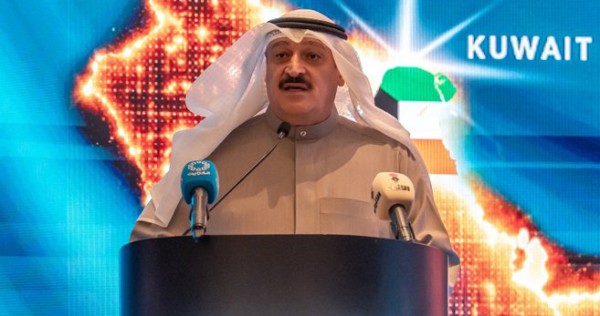
Opening of the Fourth Conference of the Kuwaiti Association and the First Gulf Gathering to Enhance Medical Cooperation
Translated by Qiyas from السياسة — Original source
Al-Awadi: Committed to Investing in National Talent and Supporting Training and Scientific Research to Enhance the Quality of Healthcare
- More than 2,000 advanced therapeutic endoscopy procedures and 1,200 using endoscopic ultrasound performed within a year
Health Minister Dr. Ahmed Al-Awadi expressed his pleasure at participating in the opening of the Fourth Conference of the Kuwaiti Association of Gastroenterologists and Hepatologists, and the First Gulf Conference on Gastrointestinal Diseases, held today with the participation of a select group of experts and specialists from nine countries.
Al-Awadi emphasized in his speech during the conference opening that the First Gulf Conference represents a significant milestone in the health cooperation journey among Gulf Cooperation Council (GCC) countries, serving as a platform for exchanging expertise, developing medical practices, and building scientific and professional partnerships that reflect positively on the quality of care provided to patients in GCC member states.
He noted that gastroenterology and hepatology specialties are witnessing rapid advancements in diagnosis, treatment, and therapeutic endoscopy, placing on healthcare institutions the responsibility to keep pace with developments, invest in talent, and support training, scientific research, and innovation.
He stated that, from this perspective, the Ministry of Health continues to develop gastroenterology and hepatology services and expand therapeutic endoscopy services in its hospitals, thereby enhancing the capacity to diagnose and treat complex cases and providing patients with advanced options requiring minimal surgical intervention.
He added that Al-Amiri, Mubarak Al-Kabeer, Jabir Al-Ahmad, Farwaniya, Sabah, and Adan hospitals performed more than 2,000 advanced therapeutic endoscopy procedures and 1,200 procedures using endoscopic ultrasound within a single year.
He pointed out that the medical team at Jabir Al-Ahmad Hospital successfully performed the first two procedures of their kind in Kuwait to drain bile ducts via the stomach using endoscopic ultrasound without surgical intervention. He clarified that the hospital houses a comprehensive inflammatory bowel disease unit, operating under an approach that integrates medical, surgical, and diagnostic specialties.
In the field of liver transplantation, the Minister confirmed that the unit, in coordination with international hospitals, has carried out transplant surgeries for more than 132 Kuwaiti patients, providing continuous medical follow-up through a specialized clinic.
He added that at Al-Amiri Hospital, the gastroenterology and hepatology unit follows up with more than 120 liver transplant recipients and provides precise interventions to treat gallbladder, bile duct, and pancreatic diseases.
He also congratulated Thunayan Al-Ghanim Gastroenterology Center on obtaining the first training center accreditation in the Middle East from the World Organization for Bowel Sonography, to train physicians in diagnosing and monitoring patients with inflammatory bowel disease.
He stated that medical staff at Jahra Hospital achieved progress in removing large polyps and early-stage tumors via endoscopy, and in using endoscopic myotomy to treat achalasia, thereby offering advanced and less invasive treatment options.
He noted that medical staff at Haya Al-Habib Gastroenterology Center at Mubarak Al-Kabeer Hospital completed more than 30 scientific research projects over the past five years, which were published and presented in prestigious conferences and scientific journals, underscoring the importance of integrating clinical practice with scientific research.
He highlighted the success of a specialized medical team at Adan Hospital, in collaboration with interventional radiology, in treating a bile duct obstruction caused by a rare congenital anatomical variation using advanced therapeutic endoscopy without the need for surgical intervention, noting that the hospital has performed more than 120 advanced endoscopy cases since the beginning of the year.
He clarified that Al-Farwaniya Hospital continues to develop its interventional endoscopy services, while Al-Sabah Hospital plays a key role in providing specialized care for cancer cases, within an integrated healthcare system that enhances continuity of care and the exchange of expertise among the Ministry’s hospitals.
Al-Awadi emphasized that these achievements are not merely numbers or procedures; behind them stand specialized medical, nursing, and technical staff working as a unified team to serve patients. He added that appreciation is extended to all national cadres who contributed to this journey, making science, training, and continuous improvement an integral part of daily practice.
He stated that the Ministry looks forward to this first Gulf gathering laying the foundation for a new phase of joint research initiatives and continuing medical education and training programs, with its outcomes yielding practical recommendations that contribute to improving service quality, treatment outcomes, and patient safety.
He concluded his speech by extending sincere gratitude and appreciation to the Kuwait Society of Gastroenterology and Hepatology, the organizing committee, the scientific committees, and all participating and supporting entities. He welcomed the presidents and representatives of Gulf associations, as well as Kuwait’s guests, experts, and speakers, and wished the conference proceedings success.
For her part, Dr. Heba Al-Farhan, President of the Kuwait Society of Gastroenterology and Hepatology, expressed her great joy and pride at the gathering of a distinguished elite of experts, physicians, and specialists at the opening of the Society’s Fourth Conference and the First Gulf Gathering for Gastrointestinal Diseases.
In her opening address, Al-Farhan noted that it is an honor for the Society to extend sincere thanks and appreciation to Minister of Health Dr. Ahmed Al-Awadi for his gracious patronage of the conference, his continuous support for scientific and medical activities, and his commitment to enhancing Kuwait’s status as a hub for scientific cooperation and the exchange of medical expertise at both regional and international levels.
She affirmed that today’s gathering is not merely a scientific conference to discuss the latest medical developments, but rather an important milestone in the journey of joint medical work and a new step toward strengthening cooperation and integration among physicians and specialists in gastrointestinal and liver diseases across the Gulf Cooperation Council (GCC) countries.
She mentioned that the Society is proud to host this scientific event in Kuwait, which brings together experts and specialists from nine countries: Kuwait, the Kingdom of Saudi Arabia, the Kingdom of Bahrain, the State of Qatar, the United Arab Emirates, the Arab Republic of Egypt, the United Kingdom, Canada, and the United States of America.
She clarified that this broad participation reflects the scientific stature the conference has achieved and the importance of building bridges of communication between Gulf and global expertise, thereby contributing to the exchange of knowledge and keeping pace with the latest developments in the diagnosis and treatment of gastrointestinal and liver diseases.
She emphasized that one of the Society’s most notable achievements is the establishment of the “Gulf Gastroenterologists Gathering,” with the participation of leaders and representatives of gastrointestinal and liver associations in GCC countries.
She pointed out that this initiative stemmed from the belief that the health challenges facing Gulf countries require greater coordination and scientific cooperation, and that the exchange of expertise and successful experiences constitutes a fundamental pillar for developing medical practices and improving the quality of healthcare.
She stated that this vision is today becoming a tangible reality through the convening of the First Gulf Gathering for Gastrointestinal Diseases, coinciding with the Society’s Fourth Conference, with active participation from colleagues in Gulf associations within the scientific and organizing committees, lectures, and specialized sessions.
She noted the Association’s aspiration for this gathering to serve as the beginning of a sustainable Gulf scientific partnership that contributes to the development of training programs, enhances joint research, facilitates the exchange of expertise, and improves the efficiency of medical personnel, ultimately achieving the highest standards of healthcare for patients in the Gulf Cooperation Council (GCC) countries.
She clarified that the Association was keen on preparing a comprehensive scientific program for the conference, keeping pace with the rapid developments in gastroenterology and hepatology, and integrating theoretical knowledge with practical application.
She indicated that the conference activities commenced with four specialized workshops covering liver diseases, scientific research related to gastrointestinal disorders, gastrointestinal motility disorders and their diagnostic and therapeutic approaches, alongside a workshop dedicated to nursing staff focusing on enhancing their skills in managing patients with inflammatory bowel disease and interventional endoscopy.
She added that the conference includes scientific sessions and specialized lectures presenting the latest diagnostic and therapeutic methods and medical technologies, while discussing challenges faced by physicians in clinical practice, with a focus on diseases and health issues of significance to the Arab Gulf countries.
She stated that the true value of such conferences extends beyond the exchange of information and research; it lies in translating scientific knowledge into medical practices that contribute to improving treatment outcomes, enhancing the quality of healthcare services, and strengthening patient safety.
She emphasized that what the Association has achieved over the past eight years would not have been possible without the combined efforts, spirit of teamwork, and shared belief in its scientific and humanitarian mission.
From this perspective, she expressed her deepest gratitude and appreciation to the Ministry of Health for its continuous support of scientific and medical activities, and to the presidents and representatives of Gulf associations for their fruitful cooperation and active participation in establishing this scientific gathering.
She also extended her thanks and appreciation to all participating lecturers and experts from within and outside Kuwait, members of the scientific and organizing committees, the Association’s board of directors, and all colleagues who exerted considerable efforts in preparing and organizing the conference, as well as supporting and sponsoring entities and all those who contributed to the success of this scientific event.
She affirmed that the Association’s ambitions do not stop at what has been achieved; rather, it looks forward to a future where it becomes an active partner in developing medical education and scientific research, enhancing Gulf and international cooperation, and contributing to the advancement of specialized healthcare services.
Al-Farhan concluded her speech by expressing hope that the conference would mark a new beginning toward more joint scientific initiatives, and that its discussions and recommendations would yield practical results that positively impact the level of healthcare provided to patients.
