Heritage Buildings: Latent, Sustainable Real Estate and Investment Treasures
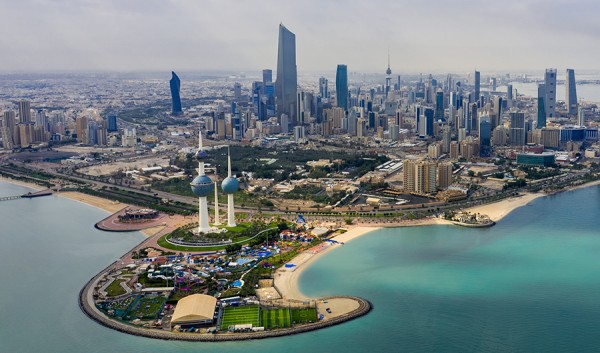
A real estate forum discussed the importance of specialized valuation of historical buildings and converting them into productive investment assets.
Translated by Qiyas from السياسة — Original source
During a forum organized by KIB, with the participation of international experts and national leaders to revive it
Historic buildings serve as a gateway to transforming urban heritage into sustainable economic and investment assets
Fahad Al-Saleh:
Property valuation is an art based on scientific foundations and professional expertise to arrive at a fair value
Verity Ramsden:
The value of homes within heritage areas is 23% higher than comparable properties
Jaber Al-Qallaf:
Changing the traditional view of historic buildings as productive assets with economic returns
As modern economies move to maximize the benefits of their historical and cultural assets, preserving heritage buildings is no longer limited to safeguarding national memory and protecting architectural identity. It has become a developmental and investment trend that opens new horizons for tourism and the creative economy, and launches numerous partnerships between the public and private sectors. From this perspective, specialized property valuation has emerged as one of the fundamental pillars for determining the true value of these assets, and achieving a balance between preserving their authenticity and their economic potential.
The Value of Memory
In this context, the "Value of Memory" Property Valuation Forum for Historic Buildings, organized by the Kuwait Real Estate Bank, discussed the future of valuation and repurposing heritage buildings. The forum featured the participation of Eng. Fahad Al-Saleh, Executive Director of the Real Estate Consulting and Digital Solutions Department at the bank; Verity Ramsden, representative of the Royal Institution of Chartered Surveyors (RICS) and specialist in the economic feasibility of heritage buildings; and Eng. Jaber Al-Qallaf, Director of the Creative Economy Program at the National Council for Culture, Arts and Letters. Discussions focused on developing professional practices, investing in the economic foundations of heritage, and finding sustainable models for managing historical assets.
Specialized Valuation and Market Value
Fahad Al-Saleh began by emphasizing that valuing historic buildings requires a specialized methodology that goes beyond traditional real estate approaches, given their historical, cultural, architectural, and social dimensions. He noted that property valuation is an art based on scientific foundations and professional expertise to arrive at a fair value. He clarified that the main valuation methods—based on market comparison, cost, and income—may not be sufficient on their own to determine the value of unique historical landmarks, citing the Kuwait Towers and Bayt Al-Qurain, whose value cannot be reduced to its area or location due to its representation of national memory associated with Kuwaiti resistance during the Iraqi invasion in 1990.
75,000 Property Inspections
Al-Saleh revealed that the bank has developed a digital database called the "Real Estate Memory Database," which includes more than 75,000 documented property inspections conducted between 1983 and 2026. This database has transitioned from traditional archives to an integrated digital system containing detailed data on properties, including age, construction costs, air conditioning specifications, land values, and consumption, thereby enhancing the accuracy of real estate studies and valuations.
He noted that the bank’s real estate management department has studied projects with a market value of approximately 2.6 billion dinars, while conducting nearly 21,000 property valuation operations annually. He expressed his aspiration to expand the scope of expertise to include the valuation of heritage buildings and sites in collaboration with specialized entities.
As part of efforts to develop the profession, a strategic partnership was announced with the Royal Institution of Chartered Surveyors (RICS), aimed at training and qualifying national talents in accordance with the best global professional standards. This includes specialized programs in the valuation of historical and heritage buildings, public-private partnership projects, and hotel and hospitality projects, including heritage buildings repurposed as boutique hotels and tourism facilities.
He noted that the bank continues to invest in national talents through its partnership with Kuwait University, where specialized workshops contributed to training more than 300 students, alongside providing field training opportunities for approximately 50 students, in collaboration with the College of Administrative Sciences.
KIB Real Estate App
On the digital transformation front, he clarified that the bank launched the "KIB Real Estate" app, which enables the completion of real estate valuation transactions entirely electronically, from application submission to report delivery. The bank is also preparing to launch the "Value Now" app in early 2027, specifically designed for real estate valuation offices to provide technological solutions that help them develop their businesses and keep pace with digital transformation.
Al-Saleh concluded by emphasizing the importance of strategic partnerships with the National Council for Culture, Arts and Letters and relevant authorities to contribute to the protection, revitalization, and economic utilization of historical buildings, thereby preserving their identity and transforming the legacy of the past into a sustainable value and a source of pride for future generations.
Heritage Buildings as Economic Assets
For her part, Vicky Ramsden stressed the necessity of adhering to international professional standards, foremost among them the RICS "Red Book" standards, and selecting valuation methodologies based on the nature and purpose of the property, whether through comparable sales, residual value, discounted cash flow, or replacement cost less depreciation.
She pointed out that heritage and architectural value, connections to historical figures and events, regulatory restrictions, and restoration and maintenance costs are all factors that influence the final value of the property. She cited a British study showing that homes located within heritage conservation areas sold at prices up to 23% higher than similar properties outside these areas, confirming that heritage protection can be a factor in enhancing value rather than necessarily reducing it.
Ramsden emphasized the importance of engaging structural engineers, building and quantity surveyors, and legal and planning experts, and preparing accurate technical and financial reports prior to valuation. She affirmed that heritage properties remain assets subject to market forces, and that arriving at a fair value for them requires combining reliable evidence, specialized knowledge, and objective professional judgment, thereby preserving these historical treasures and transforming them into sustainable economic opportunities.
The Creative Economy
In assessing the future of investing in these assets locally, Engineer Jaber Al-Qallaf emphasized that the challenge lies in shifting the traditional view of historical buildings as assets requiring expenditure and maintenance, to treating them as productive assets capable of generating sustainable economic and social returns.
He explained that the National Council for Culture is working to leverage the creative economy as a bridge between the public and private sectors, by transforming cultural assets into projects linked to tourism, arts, design, architecture, and creative industries. This approach aims to create value that extends beyond direct commercial returns to include improving the urban environment, strengthening national identity, and enhancing the country’s image.
Officials revealed that work is underway in collaboration with the Ministry of Finance, the Civil Service Bureau, and the Office of Fatwa and Legislation to draft a special decree-law on creative industries, aiming to provide the necessary legislative flexibility to forge partnerships with the private sector, attract creative talent, and nurture their potential.
Urban Memory
Al-Qallaf presented several projects the Council is developing, foremost among them the adaptive reuse of Al-Mubarakiya School as a generative hub for design, and the assessment of investment opportunities for the Faisal Al-Salem Palace opposite the Amiri Hospital. Additionally, the area stretching from the Qibli School to the National Museum and the Kuwait National Library is being developed into a cohesive cultural and urban space.
He also pointed to the reprogramming of the Sabah Al-Ahmad Cultural Center in Sabah Al-Ahmad City, and the development of a new business model for Bayt Al-Othman to transform it from a traditional museum into a space that hosts cultural and creative industries. Furthermore, he highlighted the revitalization of As-Safaher Souq, converting it into a center for crafts and creative manufacturing.
He noted that the strategy also includes reviewing the functions of approximately 56 public libraries, transforming them into cultural and social centers that integrate with schools, youth centers, parks, and local community components.
Balancing Preservation and Investment
Speakers agreed that the successful adaptive reuse of historic buildings requires overcoming challenges related to funding, limited awareness, and specialized expertise, alongside developing clear operational models, effective risk management, and cost control for restoration and maintenance.
Accurate Assessment Supports Investment Decisions
Ramsden emphasized the importance of engaging structural engineers, building and quantity surveyors, and legal and planning experts to provide accurate data supporting investment and valuation decisions. Al-Qallaf stressed that restoration is a specialized science requiring appropriate expertise and techniques to ensure the long-term sustainability of buildings for decades.
The outcomes of the forum reflect a shift toward building an integrated system that goes beyond merely protecting historic buildings, seeking instead to reintegrate them into the economic cycle and community life, transforming urban memory from a preserved heritage into a sustainable national and investment value for future generations.
