'Judicial Studies' and 'Nizah': Integration of National Efforts to Protect Public Funds and Combat Corruption
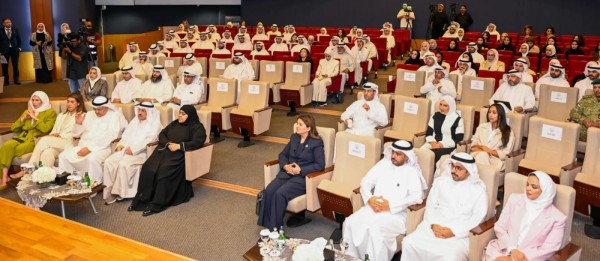
The Kuwait Institute for Judicial and Legal Studies and the Public Authority for Combating Corruption (Nizah) affirmed the importance of national integration in protecting public funds and combating corruption.
Translated by Qiyas from السياسة — Original source
- Al-Misned: Combating corruption requires shifting from addressing violations to prevention, early detection, and accountability.
- Al-Faris: Safeguarding public funds is a national responsibility grounded in the Constitution, requiring coordinated efforts by relevant authorities.
The Kuwait Institute for Judicial and Legal Studies and the Public Authority for Combating Corruption, “Nazaha,” emphasized on Monday the importance of integrating national efforts to protect public funds, prevent and combat corruption, and consolidate the rule of law, thereby serving the public interest and enhancing trust in state institutions.
This came during a panel discussion organized by the Institute at its headquarters, in collaboration with “Nazaha,” titled “Legal, Supervisory, and Security Integration in Protecting Public Funds and Combating Corruption,” as part of an institutional partnership and the activation of a memorandum of understanding signed between the two parties.
In a statement during the session, Director of the Kuwait Institute for Judicial and Legal Studies, First Advisor Badr Al-Misned, stressed that protecting public funds is not merely an administrative or financial duty, but a shared legal and national responsibility linked to safeguarding state resources, enhancing trust in institutions, and reinforcing principles of integrity, transparency, and accountability.
He explained that combating corruption, in light of the evolution of financial and technological transactions, requires shifting from addressing violations after they occur to building an integrated system for prevention, early detection, and accountability.
He pointed out the importance of integration across three main pathways: the legal path, through developing legislation and ensuring its proper implementation; the supervisory path, by strengthening preventive oversight, risk analysis, and early detection of transgressions; and the security path, by developing investigative and analytical tools, evidence collection, and tracking funds derived from crimes, while respecting legal safeguards.
Al-Misned emphasized the importance of specialized training and capacity building to develop legal, supervisory, and security capabilities, and to keep pace with the opportunities and challenges posed by modern technologies and artificial intelligence in detecting and combating corruption crimes.
He affirmed the Institute’s and “Nazaha’s” commitment to providing platforms for dialogue, exchanging expertise, and enhancing cooperation with national institutions, contributing to the development of institutional practices and supporting the public fund protection system in Kuwait.
For her part, Dr. Rana Al-Faris, President of the Public Authority for Combating Corruption “Nazaha,” stressed that safeguarding public funds is a national responsibility requiring the integration of legal, supervisory, and security roles, and the concerted efforts of relevant authorities, along with sustained cooperation and institutional dialogue.
In her speech, Al-Faris stated that protecting public funds is linked to society’s right to its resources and the state’s ability to fulfill its commitments and achieve development, citing Article 17 of the Kuwaiti Constitution, which stipulates that “public funds are inviolable, and their protection is obligatory on every citizen.”
She clarified that this principle is embodied in Kuwaiti penal legislation, foremost among which are the Penal Code, Law No. 1 of 1993 concerning the Protection of Public Funds, and Law No. 2 of 2016 concerning the Establishment of the Public Authority for Combating Corruption and Provisions on the Disclosure of Financial Status and its amendments, thereby strengthening the protection of public funds and holding violators accountable.
She added that the United Nations Convention against Corruption emphasized the importance of cooperation between national authorities and the exchange of information in accordance with domestic law, and the enhancement of specialized capabilities, noting that the effectiveness of public fund protection requires the proper application of legislation, sound procedures, and the integration of roles among competent authorities.
Al-Faris emphasized that safeguarding public funds and consolidating the rule of law are shared objectives that require continued coordination and exchange of expertise, affirming “Nizaha’s” pride in its partnership with the Institute of Judicial Studies and its commitment to further activating this collaboration to serve Kuwait and protect its resources.
The discussion session, which featured specialists from relevant authorities, reviewed the legislative framework for protecting public funds and combating corruption, the supervisory and preventive roles in enhancing integrity, as well as the security sector’s role in uncovering crimes against public funds and the investigative procedures involved.
Participants stressed that protecting public funds is both a national and legal duty, and that holding public office entails responsibility for preserving public funds and complying with laws. They noted that the Kuwaiti legislator has accorded special protection to public funds and the honor of public service through relevant legislation.
They emphasized that combating corruption extends beyond criminalizing offenses against public funds; it requires an integrated system that begins with legislation and sound management of resources and public service, proceeds through oversight of expenditures and enforcement of laws, and culminates in pursuing and holding violators accountable.
The session was moderated by Dr. Ahmed Al-Maqaled, Advisor and Deputy Director of the Institute’s Relations, Communications, and Research Sector, with the participation of Saud Al-Sane, Advisor and Deputy Director of the Institute’s Continuous and Specialized Training Sector; Abdulhamid Al-Hammar, Director of the Legal Affairs Department and Acting Director of the Technical Office Department at “Nizaha”; and Sergeant Salem Al-Humaid, representative of the Public Funds Crime Prevention Department at the Ministry of Interior.
