Yemen condemns Iran's interference in its internal affairs and accuses it of participating in managing Houthi militia operations
Press coverage 1 newspapers covered this event: KUNA →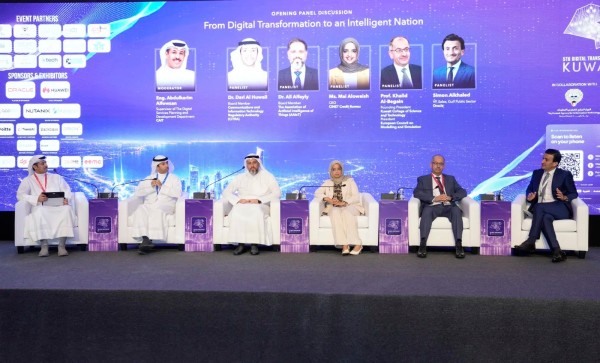
The Yemeni government condemned the Iranian statement, considering it blatant interference, and revealed the presence of Iranian and Hezbollah experts managing Houthi operations.
Translated by Qiyas from السياسة — Original source
- During the opening of the fifth edition of the Kuwait Digital Transformation Conference 2026
- Najah Ibrahim: 8,488 beneficiaries of the Authority’s training programs since January 2024
Najah Ibrahim, Acting Director General of the Central Authority for Information Technology (CAIT), stated on Monday that digital transformation is entering a new phase led by artificial intelligence (AI) and supported by data and smart technologies. This phase aims to create opportunities for developing services, enhancing government performance efficiency, and supporting decision-making, alongside responsibilities related to governance, data protection, cybersecurity, and building digital trust.
This statement was made in a speech delivered by Ibrahim during the opening of the fifth edition of the Kuwait Digital Transformation Conference 2026, titled “From Digital Transformation to the Smart Nation.” The conference is organized by OM Events in collaboration with CAIT, in partnership with the Public Authority for Communications Technology (PACT), and will last for two days.
She noted that AI represents a central pillar in Kuwait’s digital transformation journey, with a focus on its practical applications, frameworks ensuring its responsible use, and building national capacities capable of leading this transition.
She added that technological changes are accelerating at an unprecedented pace, with AI emerging as a primary driver of the future of government work, the economy, and society. She pointed out that the conference has solidified its position as a national platform for dialogue among policymakers, experts, and public and private entities on ways to leverage technology to serve development.
She clarified that CAIT places special emphasis on developing digital competencies and skills, noting that the number of beneficiaries of its training programs reached 8,488 trainees from January 2024 to August 2026.
She highlighted that the government’s (Microsoft Copilot) initiative, which covered 79 government entities, saw 13 entities successfully complete the adoption phase, with more than 40,000 licenses activated and over 170 use cases identified. This reflects a gradual transition from exploring AI’s potential to practically leveraging it to boost productivity and improve service quality.
She indicated that CAIT continues to work on developing digital infrastructure, data centers, and cloud computing, while strengthening cybersecurity and digital trust, developing government services, and supporting transformation in vital sectors such as health, education, the financial sector, transport, and smart cities.
Ibrahim emphasized that the real challenge lies not in possessing technology, but in transforming it into tangible and sustainable impact that translates into easier, faster, and more integrated services for citizens and residents, as well as enhanced institutional efficiency, productivity, and innovation capacity.
She stressed the importance of integrating the roles of government entities, the private sector, academic institutions, and technology providers to advance the digital transformation journey and support the aspirations of Kuwait Vision 2035 for a more innovative economy, a more efficient government, and a society better equipped to seize future opportunities.
For her part, Monal Al-Mutairi, Deputy Chairman of the Public Authority for Communications Technology (PACT), stated in a similar speech that digital transformation is no longer merely about adopting modern technologies or moving services and procedures to an electronic environment. Rather, it has become a comprehensive institutional transformation linked to management efficiency, decision quality, optimal resource utilization, and institutional responsiveness to changes.
Al-Mutairi said that the true value of digital transformation lies in delivering more reliable and accessible services, more efficient procedures, data-driven decisions, and an environment better capable of fostering innovation and attracting investment.
She added that effective regulation constitutes one of the fundamental enablers of digital transformation, by enhancing competition, protecting users’ interests, monitoring service quality, and supporting the responsible and orderly development of the telecommunications and information technology sector.
She clarified that the next phase requires a reliable and resilient digital infrastructure, high-quality data, effective institutional integration, and national competencies capable of leveraging modern technologies and managing their risks responsibly.
She noted that the growing reliance on digital services amplifies the importance of service continuity, network and system resilience, and their ability to respond to increasing demands and recover from failures and disruptions.
She emphasized that the true value of data depends on its accuracy, freshness, consistency, and the ability to use it securely and reliably, pointing out that genuine digital integration requires institutional agreement on data, its definitions, procedures, and management responsibilities, rather than mere technical interconnection between systems.
She explained that the responsible institutional adoption of artificial intelligence begins with identifying the problem, desired outcomes, performance standards, and acceptable risk levels before selecting, testing, and validating technical solutions, prior to scaling up implementation.
She noted that the use of generative AI must be accompanied by output verification, data protection, documentation of tests, and clarity of responsibilities, especially since its ability to produce highly convincing content does not necessarily imply accuracy.
She stressed the need to strengthen AI governance, accountability, and risk management, with tighter oversight standards as the impact of decisions on individual rights or the continuity of essential services increases.
She further highlighted that the latest World Bank data on the 2025 Government Technology Maturity Index confirms ongoing global progress in the digital transformation of the public sector and the expanding scope of digital government services, while the next challenge lies in integrating services, improving their quality, and achieving tangible benefits for beneficiaries.
For his part, Sheikh Mohammed Ahmed Al-Sabah, President of the Kuwait Artificial Intelligence of Things Association, stated in a speech that digital transformation has become a fundamental element in the strength of nations, the competitiveness of their economies, and their capacity to shape the future.
Sheikh Mohammed Al-Sabah said that Kuwait does not need more digital services alone, but rather a smarter, more integrated national ecosystem in which institutions communicate, exchange data securely, and deploy modern technologies to serve humanity.
He added that the success of digital transformation requires three key pillars: reliable and organized data as a strategic asset; strengthening digital trust, privacy protection, and cybersecurity; and investing in human capital through education development and the qualification of national competencies.
He clarified that building a smart nation requires transitioning from isolated digital initiatives to an integrated national system that combines artificial intelligence, digital identity, cloud computing, and the Internet of Things to deliver smarter, safer, and more efficient services.
He noted that Agentic AI represents a new stage in which systems can perform complex tasks and make decisions with increasing levels of autonomy, necessitating clear governance, effective accountability, human oversight, and qualified national competencies.
He affirmed that the goal is not to replace humans in decision-making with machines, but to assist them in making better and more accurate decisions, emphasizing that technology, no matter how advanced, will not achieve its objectives without humans capable of managing and guiding it.
He warned that the ease of using artificial intelligence does not necessarily guarantee its safe use, particularly in light of security and geopolitical challenges and the sensitivity of information related to infrastructure and strategic sites.
He emphasized that protecting state information is not the sole responsibility of security and technical agencies, but rather the responsibility of every employee who handles such data, calling for verification of data sources and access controls before entering sensitive information and documents into AI platforms.
Sheikh Mohammed Al-Sabah stressed that artificial intelligence should serve as a tool to enhance the state’s capabilities, not as a window that could be exploited to access sensitive information. He called for unifying efforts among government entities, the private sector, and academic institutions to translate technology and knowledge into tangible national achievements.
The conference featured a panel discussion titled “From Digital Transformation to the Smart Nation,” which explored ways to accelerate digital transformation, leverage modern technologies and artificial intelligence to develop services, enhance institutional efficiency, and support the direction toward building a smart state.
The conference also included an accompanying exhibition featuring several companies specializing in information and communications technology and digital solutions, which showcased their latest technologies and services in the fields of digital transformation and artificial intelligence, facilitating the exchange of expertise and exposure to modern technical solutions.
