'Gulf Statistical': 3.1% annual growth in global demand for crude oil by GCC countries
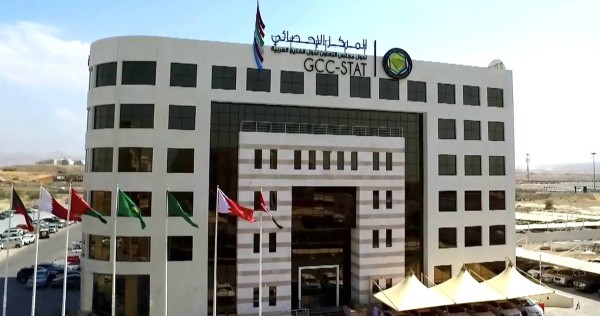
Indicators from the GCC Center for Statistics showed growth in oil and gas production and exports, with a shift towards renewable energy.
Translated by Qiyas from السياسة — Original source
The 2025 Energy Sector Indicators for the Gulf Cooperation Council (GCC) countries, issued by the Statistical Center of the Gulf Cooperation Council, revealed that the average annual growth rate of global demand for crude oil in the GCC reached 3.1% during the period from 2021 to 2025.
The indicators showed that crude oil production in the GCC countries rose by 5% in 2025 compared to 2024, reaching 16.9 million barrels per day, which accounts for 22.5% of global production, reflecting the continued weight of the Gulf region in the international energy supply system.
Regarding exports, crude oil exports from the GCC countries reached 12.2 million barrels per day in 2025, capturing 27.3% of global crude oil exports. This reinforces the region’s role in meeting international market needs and underscores the importance of stable Gulf supplies amid transformations in global energy markets.
In the natural gas sector, GCC countries produced approximately 460.9 billion cubic meters, representing 10.6% of global gas production. This highlights the significance of Gulf gas resources in meeting global energy demand, as well as the role of gas in supporting manufacturing industries and related economic activities.
Data showed fluctuations in crude oil production levels between 2021 and 2025. Production stood at 16.0 million barrels per day in 2021, rose to 18.2 million barrels per day in 2022, then recorded 17.0 million barrels per day in 2023, and 16.1 million barrels per day in 2024, before increasing to 16.9 million barrels per day in 2025.
Alongside the pivotal role of oil and gas, GCC countries are moving to reshape the energy landscape by expanding renewable energy sources, improving consumption efficiency, and enhancing clean energy projects. These efforts contribute to reducing emissions and achieving a balance between economic growth requirements and environmental preservation.
These trends are evident in the announced national targets for the share of renewable energy in the energy mix, which vary among GCC countries in terms of target percentages and timeframes.
