Defense Ministry: Committed to Supporting Cybersecurity System According to Kuwait's Vision
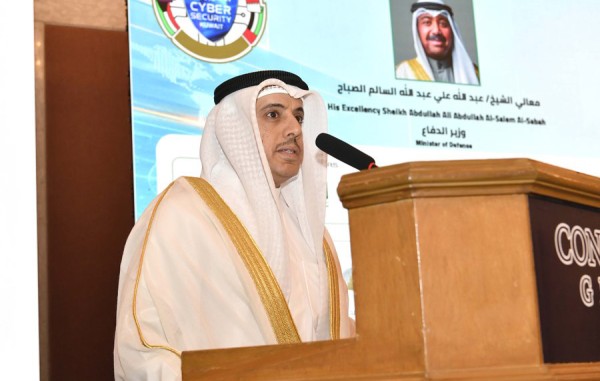
Kuwaiti officials emphasized the importance of enhancing cybersecurity and protecting data amid digital transformation.
Translated by Qiyas from السياسة — Original source
The Assistant Undersecretary for Support Services at the Ministry of Defense, Dr. Wael Nasser Hamoud Al-Sabah, emphasized the commitment to supporting the cybersecurity framework in line with Kuwait’s vision, ensuring the integrity of sensitive data and information, and maintaining operational continuity by establishing frameworks and policies and ensuring compliance with national standards, thereby making them more secure and advanced.
This statement was made by Dr. Wael Al-Sabah on Wednesday during the opening of the Seventh Gulf Conference and Exhibition on Cybersecurity Challenges, under the theme “Building Capabilities and Enhancing Readiness: Innovation and Governance,” sponsored by Minister of Defense Sheikh Abdullah Al-Ali. The two-day event is held in collaboration with the Public Authority for Communications and Information Technology (PACTI) and the Kuwait Banks Association.
He stated that cybersecurity currently constitutes one of the most critical elements of national security, particularly amid the digital transformation across various productive and service sectors. Protecting information infrastructure, technological systems, and vital facilities has become a primary requirement for safeguarding the security and stability of nations, necessitating the adoption of all necessary measures and means to protect these systems from cyber threats.
He noted that the conference represents a continuation of joint cooperation efforts with relevant and specialized entities to achieve greater successes and better prospects, reaffirming the importance of strengthening this trust-based and security-oriented collaboration while maintaining information confidentiality.
He pointed out that the conference focuses on researching and analyzing key cybersecurity strategies, highlighting the latest research and advanced technologies in the field, and stressing the importance of raising awareness about cybersecurity risks and building an informed society capable of addressing future challenges.
For his part, Dr. Khaled Al-Zamil, Chairman of the Board of Directors of the Public Authority for Communications and Information Technology (PACTI), emphasized in his speech that enhancing cybersecurity requires moving beyond formulating plans and policies to measuring the actual readiness of institutions through clear performance indicators that reflect their capacity to confront cyber threats and handle them efficiently.
Al-Zamil noted that one of the world’s largest digital asset platforms recently suffered the theft of approximately $6 billion within hours, marking one of the largest breaches of its kind, which originated from a single employee’s device. He highlighted the importance of digital services backed by actual cyber resilience that can be tested and measured.
On the local front, Al-Zamil noted that government entities in the country have been subjected to similar attacks. He explained that the average cost of a data breach in the region reached $8 million this year, compared to approximately $5 million globally, and that one in four breaches is carried out using artificial intelligence (AI-enabled attacks).
He stressed the importance of measuring the impact of cybersecurity investments through clear performance indicators that reflect institutional readiness. Every plan should be tested through simulation exercises (cyber drills), every training session should translate into tangible capability development, and every test should lead to clear remediation of identified shortcomings.
He pointed out that this readiness holds particular importance in the communications and information technology sector, as a single ransomware attack on a shared service provider could halt services for hundreds of entities simultaneously.
He affirmed the necessity for protection requirements and business continuity measures to advance in parallel with infrastructure development. He clarified that institutional leadership is responsible for defining roles, monitoring risks, and directing resources to make decisions based on a precise understanding of preparedness levels.
He noted that this requires investing in national competencies and providing practical training for youth and specialists on real institutional challenges, emphasizing that qualified teams are those that transform plans into effective incident response when needed.
Al-Zamil pointed out that the Authority stresses the importance of regulation in supporting trust in digital services and protecting users’ rights, having issued a data privacy protection regulation to govern the handling of personal data. He stressed the importance of compliance by entities subject to the regulation’s provisions with its requirements, and that these commitments should be reflected in the design, operation, and handling of user data for services.
For her part, Sheikhha Al-Eissa, Secretary General of the Kuwait Banks Union, affirmed in a speech that cybersecurity has become a fundamental element in economic stability, protecting institutions, and enhancing trust in digital services, particularly in the banking sector, which is one of the most technology-dependent sectors and a primary target for cyberattacks.
Al-Eissa added that the Kuwait Banks Union is committed to strengthening the cybersecurity framework through investment in modern technologies, developing protection systems, and applying global best practices in risk management and governance, thereby ensuring the protection of customers and maintaining the stability and integrity of the financial sector.
She clarified that the world is witnessing rapid expansion in the use of artificial intelligence technologies, opening wide horizons for innovation and improving operational efficiency, while simultaneously posing new challenges such as evolving fraud methods, social engineering, and digital forgery. This necessitates strengthening institutional capabilities and adopting more advanced tools to monitor these risks and address them effectively.
She noted that the focus is no longer limited to protection alone; it has become essential to enhance the concept of cyber resilience. True readiness is measured by an institution’s ability to respond quickly and recover from any cyberattacks or incidents, while maintaining business continuity under all circumstances.
She stated that close cooperation between Kuwaiti banks, the Central Bank of Kuwait, and official authorities through the Central Chamber for Handling Financial and Electronic Fraud has contributed to enhancing readiness and effective response to emerging risks, supporting the security and stability of the financial system in the State of Kuwait.
She added that the Union continues, in collaboration with the Central Bank of Kuwait and Kuwaiti banks, to implement awareness and educational campaigns, foremost among them the “Let’s Be Aware” campaign, aimed at raising awareness of cyber risks and evolving fraud methods, and promoting a culture of safe use of financial and digital services.
She emphasized that addressing cyber challenges requires collective action combining innovation, governance, technology, human resources, readiness, and resilience, contributing through this integration to building a more resilient and prepared system to meet future requirements and emerging challenges.
The conference was attended by ambassadors of friendly and allied countries, along with a number of leaders and representatives of government entities, accompanied by an exhibition in which sponsoring companies showcased the latest technologies and solutions in the field of cybersecurity.
