Finance Minister: Attacks on Regional Countries Threaten Global Security and Stability
Press coverage 2 newspapers covered this event: Al-Seyassah · Sarmad →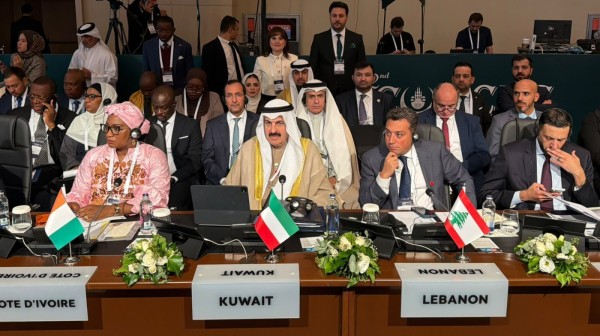
Kuwaiti Finance Minister holds meetings in Istanbul to discuss economic and trade challenges.
Translated by Qiyas from السياسة — Original source
- Closure of the Strait of Hormuz affects the global economy and supply chains... Kuwait reaffirms its solidarity with targeted nations
Finance Minister Dr. Yaqoub Al-Rafai affirmed that the repeated attacks targeting the Kingdom of Saudi Arabia and several Gulf Cooperation Council (GCC) countries, as well as Arab and Islamic nations, constitute a threat to the security and stability of the region. These attacks have cast a shadow over the global economy and supply chains due to the closure of the Strait of Hormuz, impacting countries worldwide.
This statement came during his leadership of the Kuwaiti delegation, representing the Prime Minister’s Deputy and Minister of Defense Sheikh Ahmad Al-Abdullah Al-Salim Al-Sabah, at the 42nd Ministerial Session of the Standing Committee on Economic and Commercial Cooperation (COMCEC) of the Organization of Islamic Cooperation (OIC). The session is hosted today, Monday, in Istanbul, Turkey, with participation from representatives of member states and institutions of joint Islamic action.
Al-Rafai, who also serves as Chairman of the Arab Group within COMCEC, emphasized Kuwait’s full solidarity with member states that have been targeted by these attacks, stressing the necessity of adopting urgent measures and policies to address their economic and commercial repercussions.
He noted that indicators of intra-trade among OIC member states, despite their potential, resources, and genuine demand in targeted markets, reveal challenges related to trade financing, particularly for small and medium-sized enterprises (SMEs), which form a fundamental pillar of national economies.
The meetings discussed the development of effective tools for trade financing and increasing exports of member states, alongside the adoption of technical reports, recommendations, and action plans covering sectors such as trade, transport, telecommunications, agriculture, tourism, financial cooperation, poverty alleviation, and digital transformation, all contributing to sustainable economic and social development.
Participants also explored innovative mechanisms to facilitate the movement of goods and services, enhance the role of the private sector, and leverage available investment opportunities in Islamic markets, as well as address the economic and developmental challenges facing member states and ways to strengthen the competitiveness of their economies.
Kuwait’s participation comes within the framework of efforts to strengthen economic and commercial cooperation among Islamic countries, expand areas of partnership, and support initiatives aimed at revitalizing intra-trade and achieving sustainable development.
The current session holds special significance amid challenges facing the global economy, supply chain disruptions, and the need to diversify trade partnerships and develop financing mechanisms, thereby enhancing the ability of Islamic countries to capitalize on their economic potential and shared markets.
COMCEC, established by a decision of the Third Islamic Summit Conference in 1981, is one of the main platforms for economic and commercial cooperation within the OIC. It is chaired by the President of the Republic of Turkey and brings together finance and economy ministers from member states to discuss common policies, initiatives, and international and regional economic and commercial issues and their implications for member states.
The Kuwaiti delegation, in addition to the Finance Minister, included Kuwait’s Ambassador to Turkey, Hamad Al-Shaboub, along with several officials from the Ministry of Finance, the Kuwaiti Embassy in Turkey, and the OIC.
