MoneyTech Summit... Investing in Times of Uncertainty
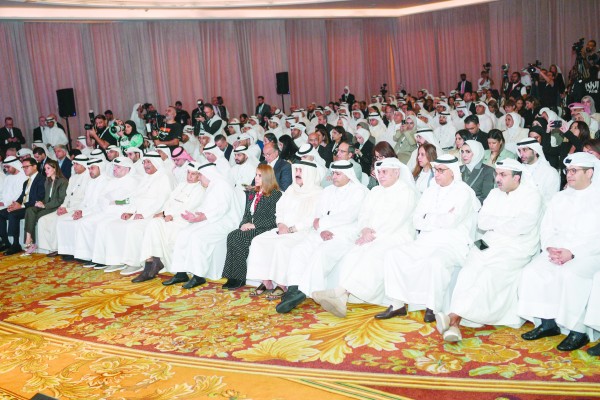
Participants at the MoneyTech summit discussed business continuity strategies and crisis readiness, focusing on the role of technology.
Translated by Qiyas from السياسة — Original source
The fifth edition concluded with a Gulf vision for regional capital destinations in partnership with Ooredoo Kuwait
Nasser Al-Otaibi: MoneyTech and Technology Community Launches the First Line of Defense for Business Continuity Amid Crises
Abdulaziz Al-Babtain: Diversifying Cable Routes and Artificial Intelligence Enhance Readiness to Face Crises and Ensure Communication Continuity
The fifth edition of the MoneyTech 2026 summit, organized by Al-Jarida newspaper in strategic partnership with Ooredoo Kuwait, concluded with the attendance of an elite group of wealth managers, investors, technology sector leaders, venture capital funds, and entrepreneurs.
The summit’s program included nine sessions, comprising keynote speeches, dialogues, and panel discussions, featuring 17 speakers from Kuwait, Saudi Arabia, and the UAE, alongside representatives from global firms BlackRock and Carlyle. This year’s edition highlighted the experiences of companies and leaders who overcame exceptional challenges, maintained business continuity, and opened new horizons for growth.
The summit kicked off with an opening address by Al-Jarida editor-in-chief Nasser Al-Otaibi, who emphasized that the fifth edition of the MoneyTech conference takes place amid geopolitical and regional developments that have reshaped the global economic and commercial landscape. He pointed out the Iranian attacks on Gulf countries’ economic sectors and infrastructure, as well as the threats and attacks targeting Saudi Arabia, and the resulting challenges for the finance and business sectors, particularly small and medium-sized enterprises.
He explained that the Gulf countries’ ability to overcome the repercussions of the closure of the Strait of Hormuz, air shipping disruptions, and rising transport costs, while maintaining business continuity, growth rates, and profits, reflects the importance of administrative preparedness, clear vision, and swift decision-making in facing crises. He stressed that technology is no longer a luxury or a supporting tool, but has become the first line of defense for business continuity, ensuring institutions maintain contact with their customers and economic activity continues. He affirmed that dealing with uncertainty requires risk reassessment and seizing opportunities.
He noted that the conference serves as a platform for dialogue and the exchange of expertise and practical experiences in managing challenges, stemming from Al-Jarida’s belief in the role of media in raising awareness and fostering serious discussion about the future.
Also, marking the fifth anniversary of the conference’s launch, he announced the establishment of the MoneyTech Community, which bridges technology and media, providing members with updates on key economic news and events, the conference, and its accompanying activities, while enhancing communication among private sector companies through the exchange of news, services, and products.
For his part, Ooredoo Kuwait CEO Abdulaziz Al-Babtain stated in his address that the company’s achievements were not a matter of chance, but the result of a clear strategy implemented over the past years, including diversifying customer segments and products, and learning from the lessons of the COVID-19 pandemic, which strengthened its capacity to handle the recent crisis.
Al-Babtain added that the company adopted an administrative framework encompassing analysis, design, development, implementation, and evaluation, with special emphasis on the evaluation phase. He clarified that the preparedness achieved after the pandemic helped manage the crisis, as operational processes continued according to business continuity plans despite several leaders being outside Kuwait at the onset, and middle management was able to continue working without disruption.
He clarified that enhancing international connectivity routes and backup alternatives is a fundamental element for ensuring communication continuity, noting the existence of approximately nine cables distributed across maritime and land routes. He emphasized efforts to diversify their distribution and routing to boost readiness and mitigate the impact of outages.
He stated that the government supported this direction after raising concerns regarding cable route risks in June of last year, explaining that the government, led by His Highness the Prime Minister, recognized that the issue concerned providing alternative routes and enhancing communication reliability, rather than merely focusing on fees and costs.
He pointed out that cables may be severed due to ships dropping anchor, particularly in congested areas off the coast of the United Arab Emirates. He noted that repairing a cable can take anywhere from two weeks to three months, and the absence of alternative routes could lead to slow internet speeds even if the service remains operational.
Al-Babtain affirmed that artificial intelligence has become a necessity across various sectors, especially cybersecurity, given the increasing number of cyberattacks and threats. He added that traditional monitoring methods are no longer sufficient, and protecting customer data and ensuring service continuity require the deployment of modern technologies. He praised the efficiency and capabilities of Kuwaiti youth, as well as the cooperation with relevant government authorities, which contributed to overcoming the crisis.
The first panel discussion, titled “Mergers and Acquisitions: A Step for Survival or an Opportunity for Buyers?”, featured Hassan Al-Jishi, CEO of Milz Financial; Abdullah bin Dasmal, Vice President of Investments at ADNOC Drilling; Sherif Al-Rafaei, CEO of ABK Wealth Management; and Ali Al-Ibrahim, Founder and CEO of Kovey Technology. Participants discussed company valuation mechanisms amid market volatility, the difference between forced sales and strategic acquisitions, and sectors poised for upcoming M&A deals. Mohammed Al-Othman, CEO of Personal and Digital Banking at National Bank of Kuwait, participated in a separate dialogue session.
The second panel discussion, titled “Investment Amid Uncertainty: Resilience, Risks, and Opportunities,” was moderated by Noura Al-Abdulkarim, Head of Markets at the Kuwait Stock Exchange. It included Ali Al-Qadi, Head of the BlackRock Kuwait Office, and Ahmed Al-Bushra, Executive Director at Carlyle Group. The session addressed whether current uncertainty is a temporary phase or a new reality likely to persist, how investors can strengthen their portfolios in listed and unlisted markets, manage risks not yet reflected in prices, and seize opportunities during periods of stress. The session concluded with a discussion on the factors that position Kuwait as a natural destination for long-term investments.
In another dialogue session, Noura Al-Bahr, Managing Director of Talabat Kuwait, shared her vision and experience.
The summit resumed with a dialogue session featuring Bader Al-Attar, Executive Director of Planning and Finance at the Kuwait Petroleum Corporation.
The third and final panel session, titled “Is It Time for Wealth to Return?”, featured Abdullah Abulqasem, Vice President – Wealth Management at Kuwait Investment Company; Raafat Al-Rashid, Vice President – Wealth Management and Business Development at Kuwait Financial Centre (Markaz); Ziad Al-Farhan, Portfolio Manager – Asset Management at KEF Invest; and Fawaz Al-Mutawa, Assistant Vice President – Private Investments at KAMCO Invest. Participants, who manage these assets on a daily basis, discussed the viability of redirecting a larger share of Gulf investments from abroad back to regional markets, the opportunities these markets currently offer, and the requirements necessary to sustain these investments within Kuwait and the Gulf states. The summit concluded with a dialogue session with Johnny Awad, Chief Executive Officer – Kuwait at CFI.
National Bank of Kuwait: Artificial Intelligence Shapes the Future
Mohammed Al-Othman, Chief Executive Officer of Personal and Digital Banking at National Bank of Kuwait Group, affirmed that the banking sector is undergoing a radical transformation driven by rising customer expectations and technological advancements. Competition is no longer limited to traditional products but now focuses on service speed, ease of access, and customization according to each customer’s needs.
He highlighted the availability of digital loan applications, credit card issuance, and management through the NBK Mobile service, alongside the success of launching the “Wiyah” bank five years ago, which attracted four times the targeted youth demographic.
He noted that the future of banking services increasingly relies on data, advanced analytics, and artificial intelligence to provide proactive and personalized recommendations and solutions. He emphasized the importance of partnering with fintech companies as drivers of innovation, a commitment reflected in NBK’s acquisition of a majority stake in UPayments, a company specializing in digital payment solutions.
Al-Othman stressed that innovation must be accompanied by continuous investment in cybersecurity and the protection of customer data and funds, as trust is the foundation of the banking relationship. He predicted that services in the next five years will become more integrated into daily life, smarter, and more personalized, asserting that the success of digital transformation is measured by its ability to simplify customers’ lives.
He confirmed that the future of the banking sector will not be determined by technology alone, but by the ability of financial institutions to leverage this technology to build more flexible and secure banking experiences.
“Talabat”: Gulf Consumers Have High Standards
Nour Al-Bahr, Managing Director of Talabat Kuwait, affirmed that managing a digital platform like Talabat primarily depends on achieving a balance among three key elements: the customer, who seeks reliability and value; the supplier, who aims to increase sales and grow their business; and the operations sector, including delivery and logistics, which must possess sufficient flexibility to handle order volumes while maintaining customer satisfaction and experience.
Al-Bahr clarified that customer experience is the primary driver of the platform’s success, as the journey does not end with completing the payment within the app but extends until the successful delivery of the order and customer satisfaction.
She pointed out that consumers in the Gulf region and Kuwait have very high and diverse standards, along with a wide variety of demographics, requiring the fulfillment of different groups’ aspirations, whether they are looking for deals and value or are interested in speed and quality.
Regarding the company’s collaboration with the public sector, Al-Bahr revealed that Talabat, in partnership with the National Fund for the Development of Small and Medium Enterprises, launched an initiative to support more than 1,000 local restaurants on its platform in terms of pricing, operations, and employee development. Some of these businesses achieved growth exceeding 100% over four months.
She also outlined Talabat’s future vision to expand as a comprehensive platform offering a wide range of products and services, including food, supplies, and even electronic devices, as an authorized agent for Metrona products. She emphasized that facilitating customers’ lives and delivering a distinctive experience remain the foundation for all upcoming expansion steps.
ABK Wealth Management: Family businesses need governance amid transformations
The third session discussed the theme of mergers, acquisitions, and takeovers in volatile markets. Sherif Al-Rafaei, CEO of ABK Wealth Management, stated that investment, financial, and wealth management services are undergoing rapid developments and increasing competition amid significant and qualitative shifts in the nature of services provided.
He pointed out that one of the key challenges facing family businesses is the transition of leadership to subsequent generations. The presence of multiple owners and managers leads to the distribution of authority, control, and management, whereas in many cases these were previously centralized and concentrated in the hands of a single generation.
Al-Rafaei stressed that good management, the implementation of effective corporate governance, proper planning, and engaging a specialized investment advisor constitute the primary protective tools that provide a safety net for family investments, support sound investment decisions, preserve wealth, and ensure its sustainable growth across generations. He added that wealth management services are no longer limited to portfolio management; they have evolved into an integrated system that requires business owners to build a comprehensive relationship with their wealth manager, based on assessing needs and evaluating requirements to grow wealth according to clear principles.
