Had the US Not Warred on Iran, Tehran Would Have Destroyed the Region
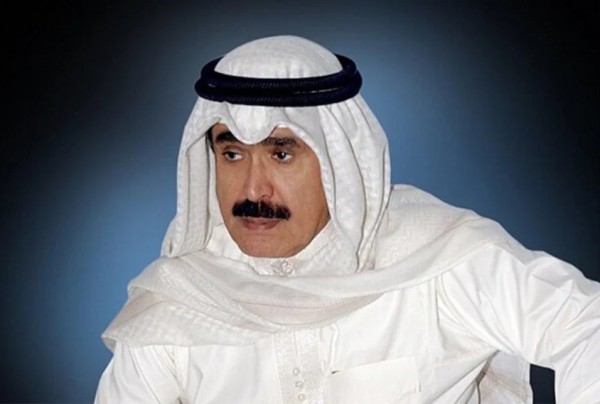
The text analyzes the results of the war on Iran and describes the demise of its regional influence.
Translated by Qiyas from السياسة — Original source
Today, a different kind of battle is unfolding: the threats issued by Tehran, Washington, and Tel Aviv, all of which speak of a major war, while reality suggests otherwise, at least based on the outcomes of the first round of the war launched by the United States and Israel against Iran. After the Iranian regime expanded its circle of threats to include Gulf Cooperation Council (GCC) countries and other Arab states, the regime appeared weaker than ever.
On this basis, it lacks the capacity to confront a large bloc comprising more than 30 countries. Consequently, it no longer exerts influence in its immediate neighborhood, nor does it possess the ability to mobilize the popular support it previously relied upon, particularly when it engaged in brainwashing through sectarian propaganda.
Here, we may need to look back at the past. If we consider what is stated in Iranian literature, particularly the writings of Khamenei Sr., as well as the traditions attributed to Khomeini, the fundamental objective was to change the cultural and religious creed, as they viewed it as essential for the revolution’s victory over “tyrants.”
Therefore, viewing the current war should not be confined to the pressing global economic situation, because the objective is far higher than that. Eliminating a cancerous tumor that threatens global stability is the criterion, just as it was with Nazi rule.
Taking into account what was issued by Khamenei Jr. the day before yesterday, including his fiery statement and his assertion that “the response will be without any geographical restrictions or borders on any new threat or attack targeting Iran by the United States or Israel,” he is thereby expanding the scope of terrorism, particularly toward neighboring countries that are seeking to de-escalate tensions, or even to halt hostilities through serious mediation efforts.
Previously, Iranian expansion in the region relied on courting sectarian minorities and raising slogans aimed at mobilizing support. However, with the latest round of the war, the reality of a regime built on propaganda has been exposed, while it remains incapable of marketing itself even among the countries it claimed to control. This includes Syria, which has emerged from the Iranian umbrella, while Hezbollah is now on the verge of disappearance. Meanwhile, the Iraqi militias resemble mere propaganda balloons, and the only remaining group is the Houthis, who are also on the path to disappearance, as disciplinary measures begin to bear fruit.
Here, we must speak frankly and state that God has blessed the region by sparing it from a terrorist behemoth. This is thanks to the war launched by the United States and Israel, which has laid the foundation for a new phase. This phase may not last long, allowing our countries and the Arab world to rid themselves of a regime that, if given the chance, would have forced the world to live under the constant threat of nuclear attacks.
To be honest, the Iranian nuclear project was never peaceful, as the regime’s leaders claim, while religious fatwas change in the blink of an eye. Therefore, what the United States began last February and has continued until now, which U.S. President Donald Trump has promised to resolve soon, is not for propaganda purposes. The military buildups and warnings issued by multiple capitals all confirm that a decisive resolution is imminent.
To avoid the destruction of Iran, the regime must submit to the conditions presented to it, not only by the United States but also by the Gulf Cooperation Council (GCC) countries. They are primarily and ultimately concerned with regional stability, and no one wants to leave the region at the mercy of Iranian terrorist harm, regardless of the cost.
