Kuwait: Protecting Human Rights Requires Respecting State Sovereignty and Holding Perpetrators Accountable
Press coverage 3 newspapers covered this event: Al-Rai · Al-Qabas · Sarmad →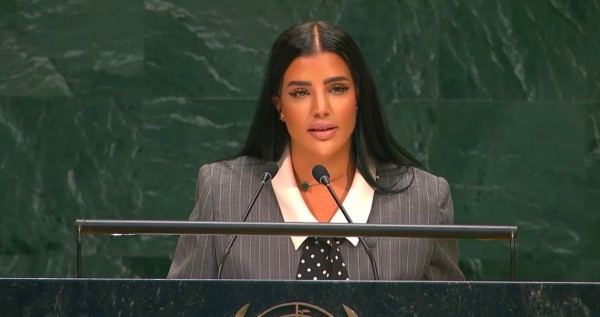
Kuwait Stresses That Protecting Human Rights Is an International Responsibility Requiring Respect for State Sovereignty and Accountability for Violations; Condemns Iranian and Emirati Aggressions
Translated by Qiyas from السياسة — Original source
- Our red line is not subject to negotiation... Iranian attacks constitute a blatant violation of international law
The State of Kuwait affirmed today, Friday, that the protection of human rights and the preservation of human dignity are shared international responsibilities that require respect for state sovereignty, international law, the protection of civilians, and holding violators accountable, free from selectivity, politicization, and double standards.
This was stated in a speech delivered by Kuwait’s representative, Second Secretary Wafaa Al-Mulla, before the United Nations General Assembly during the discussion of the agenda item concerning the report of the Human Rights Council.
Al-Mulla said that promoting and protecting human rights is not merely principles enshrined in international charters and conventions, but obligations incumbent upon all states without exception, forming the foundation for achieving security, stability, and peace.
She praised the pivotal role played by the Human Rights Council, emphasizing the importance of maintaining its credibility and ensuring it fulfills its mandate free from selectivity, politicization, and double standards.
She expressed Kuwait’s appreciation to the member states of the United Nations for the confidence they placed in the country by electing it as a member of the Human Rights Council for the term (2027–2029), considering this confidence an international responsibility to continue working on enhancing and protecting human rights in cooperation with Council members and all member states.
Kuwait reaffirmed its firm belief in international multilateralism and that the UN Charter must remain the primary reference for all states without exception, warning that the strength of the international system lies in adherence to international law, respect for state sovereignty, and the rights of peoples.
She noted that the United Nations was not established to be a witness to violations, but rather a collective framework to prevent and address them, and that diplomacy, dialogue, and peaceful means of dispute resolution represent a consistent approach in Kuwait’s foreign policy.
Al-Mulla said that talk of human rights loses its credibility when innocent civilians are attacked, civilian facilities are targeted, and claims of self-defense are used as a pretext to violate state sovereignty and threaten the security of peoples.
In this context, she reiterated Kuwait’s strongest condemnation of Iranian attacks on its territory since February 28, 2026, considering them a blatant violation of its sovereignty and territorial integrity, and a serious breach of the principles of the UN Charter and rules of international law.
She clarified that the attacks targeted residential areas and civilian facilities and critical infrastructure, including hospitals, energy facilities, ports, the airport, oil facilities, and water installations, thereby endangering the lives and safety of civilians and threatening their fundamental rights, foremost among which is the right to life, security, and safety.
She added that the gravity of these attacks is compounded by their occurrence during the holy month of Ramadan, when citizens and residents were going about their daily lives and practicing their religious rites in peace and security.
Kuwait firmly rejected Iran’s attempts to justify these attacks by invoking Article 51 of the UN Charter, stressing that the right to self-defense does not grant any state an open mandate to violate the sovereignty of other states or target civilians and civilian facilities.
Al-Mulla emphasized the importance of full compliance with UN Security Council Resolution 2817 (2026), which condemned Iranian attacks on Kuwait and other countries in the region, and called for respect for state sovereignty and territorial integrity and compliance with the provisions of the UN Charter.
She also referred to Human Rights Council Resolution (61/1), adopted by consensus in Geneva on March 25, 2026, concerning the repercussions of Iranian attacks on human rights in the Gulf Cooperation Council (GCC) countries and the Hashemite Kingdom of Jordan.
She noted that the resolution called for Iran to immediately and unconditionally cease its attacks, threats, and provocations, and to provide full, effective, and prompt reparation for the damage and losses resulting from its acts, which are unlawful under international law.
She emphasized that these resolutions reflect a clear international stance regarding the severity of these attacks, and that preserving the credibility of international institutions is not limited to adopting resolutions, but requires their implementation and ensuring accountability for violations and an end to impunity.
In this context, Al-Mulla expressed the State of Kuwait’s strong condemnation and denunciation of the attacks launched by the Houthi militia from Yemeni territory against the sister Kingdom of Saudi Arabia, which targeted civilian and vital facilities, including airports, resulting in casualties and injuries among innocent civilians.
She expressed Kuwait’s full and steadfast solidarity with the Kingdom of Saudi Arabia and its support for all measures taken to safeguard its security, sovereignty, and territorial integrity, stressing that the security of the Kingdom is an integral part of Kuwait’s security and the shared Gulf and Arab security architecture.
She called on the international community to shoulder its responsibilities in condemning these attacks, countering them, ensuring the protection of civilians, and holding those responsible accountable, while emphasizing the need to halt escalation and prioritize political and diplomatic solutions to preserve the security and stability of the region.
Al-Mulla questioned how one can speak of protecting the right to life while civilians are exposed to the danger of military attacks, and how one can demand respect for human rights when the sovereignty of states is violated and the safety of their peoples is threatened.
She stressed that human rights are indivisible, that the protection of civilians is not a selective issue, and that respecting state sovereignty is an obligation that must not be subjected to political calculations or double standards.
She pointed out that the State of Kuwait has pursued, throughout its history, a foreign policy based on dialogue, diplomacy, good neighborliness, respect for state sovereignty, and non-interference in internal affairs. However, her commitment to these principles does not imply leniency toward attacks on Kuwait’s sovereignty or threats to the security of its people.
She stated that “Kuwait’s sovereignty is a red line and not subject to negotiation,” affirming her country’s inherent right to self-defense in accordance with Article 51 of the UN Charter and international law, and to take all necessary measures to protect its security, sovereignty, and territorial integrity.
Al-Mulla concluded her speech by emphasizing that Kuwait’s election to the Human Rights Council renews its resolve to continue working within the United Nations to defend the principles upon which it was founded and to contribute to building a more just and equitable international system, where human dignity is upheld and states fulfill their responsibilities without selectivity or double standards in applying criteria.
She said that “there is no peace without justice, no protection of human rights without respect for international law, and no credibility for the international system unless its principles are applied to all without exception.”
