Widespread Protests in Over 50 Italian Cities Against Cost of Living and Military Spending
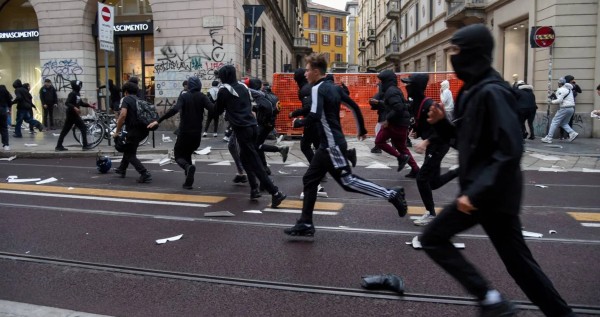
Protests and a general strike in over 50 Italian cities against the rising cost of living and declining purchasing power, demanding increased spending on public services instead of the military budget.
Translated by Qiyas from السياسة — Original source
More than 50 Italian cities witnessed a general strike and massive demonstrations on Friday, involving tens of thousands of workers and students, in protest against rising living costs, declining purchasing power, and deteriorating public services, while demanding increased spending on education and healthcare instead of bolstering the military budget.
The protests came in response to a call by the primary trade union confederation “USB” for a general strike encompassing workers in both the public and private sectors, with participation from employees, teachers, farmers, and retirees, amid growing anger over soaring fuel, housing, and general living expenses.
The marches extended to several cities, most notably Rome, Milan, Turin, Naples, and Bologna, where protesters waved slogans opposing the government of Prime Minister Giorgia Meloni, calling for priority to be given to improving economic conditions and public services at the expense of increased military spending.
In Milan, tens of thousands gathered near the main railway station before setting off on their march, under tight security measures. Organizers chose a route away from the city center’s commercial district to avoid a repeat of the riots that marred the protests on October 17 and 18.
Demonstrators held banners, one of which read “Down with the Meloni government… rebellion is justified,” while others chanted slogans rejecting the high cost of living, war, and rearmament.
In Turin, farmers threw manure into the streets to express their protest, while some demonstrators in Naples burned images of the Prime Minister.
In the transport sector, some workers backed out of plans to join the strike after Transport Minister Matteo Salvini threatened to impose sanctions. Meanwhile, the USB union urged taxi drivers to proceed with their action despite similar warnings.
The Italian Interior Ministry announced that preventive arrests were carried out before the demonstrations began, aiming to prevent violence. Limited clashes were recorded between protesters and riot police in some areas.
Despite security tensions, most of the protests remained peaceful. The marches continued into the afternoon, with varying local demands across cities, but participants agreed on rejecting the deterioration of living conditions and the government’s economic policies.
