Writing the Massacre... Forms of Addressing Sabra and Shatila
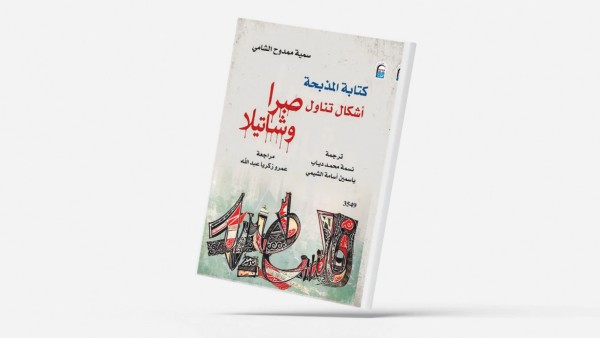
The book documents the massacre's facts and deconstructs the narrative from a cultural perspective
Translated by Qiyas from السياسة — Original source
The book “Writing the Massacre: Forms of Representing Sabra and Shatila,” published by the National Center for Translation in Cairo and authored by researcher Sumaya Mamdouh Al-Shami, documents many of its facts. It coincides with the forty-fourth anniversary of an event in which the political, the humanitarian, and the cultural intertwined, and about which narratives and testimonies have multiplied. Yet it remains indisputably a stain on the brow of every free person, even if they did not witness the extermination of the two camps in Beirut, which housed Palestinian refugees, between September 16 and 18, 1982.
According to United Nations reports, armed men from the “Lebanese Forces,” the military wing of the “Kataeb Party,” entered Sabra and Shatila. The mass killings lasted approximately 43 hours, leaving an unprecedented number of victims, including the bodies of children and women. However, the book, which was originally the final academic thesis in English discussed by the late writer and academic Radwa Ashour a few weeks before her death on November 30, 2014, deconstructs the narrative of the massacre from a cultural perspective, tracing its manifestations in both Western analysis and Arabic literature.
The book, translated by Nasma Mohamed Diab and Yasmine Osama Al-Shimi and reviewed by Amr Zakaria Abdullah, focuses specifically on the experiences of three Western intellectuals who chose to view the Palestinian tragedy outside of ready-made frameworks, relying instead on what they saw, read, and lived through, rather than merely reproducing the dominant media discourse of the time.
At the forefront of these figures is the French writer Jean Genet, particularly his article “Four Hours in Shatila,” in which he describes, in language charged with pain, the details of the shock caused by the scenes he witnessed. He also dwells extensively on the problem of the language used by political discourse to describe Palestinians, and how a single word or reductive characterization can obscure the victim’s humanity and erase their identity. Furthermore, he argued that, from his perspective, the incident evolved into a broader confrontation with tyranny, after he came to “smell the scent of death emanating from his body,” as he put it.
