Kuwait Finance House Holds Group Analytical Conference for the Third Quarter
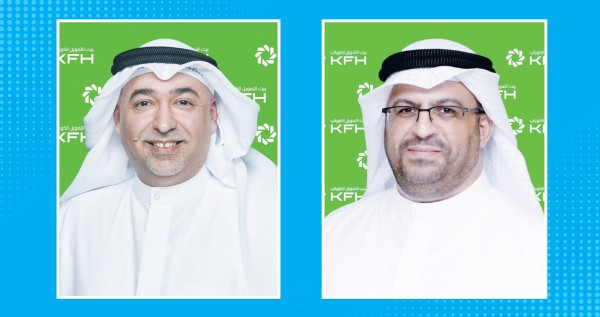
Kuwait Finance House achieves strong growth in profits and financing while enhancing digital transformation.
Translated by Qiyas from السياسة — Original source
Al-Samdan: Significant improvement in operating profit base, growth in financing revenues, and expense reduction
Al-Mikhaizim: Business results, growth indicators, and achievements confirm sound performance and confidence in the future
Kuwait Finance House (KFH) held its analytical conference on the Group’s performance and results for the period through the end of the third quarter of 2026, with participation from Abdul Karim Al-Samdan, Group Chief Financial Officer, and Fahd Khaled Al-Mikhaizim, Acting Head of International Banking and Group Chief Strategy Officer.
Abdul Karim Al-Samdan – Group Chief Financial Officer
The Group’s Chief Financial Officer, Abdul Karim Al-Samdan, stated that KFH Group’s financial performance through the third quarter of 2026 demonstrated strong growth in its core banking activities. He highlighted key financial performance indicators, noting that the results for the first nine months reflected an improvement in the operating profit base, supported by growth in financing and fee revenues and lower expenses. Net operating revenues increased by 11.7% year-on-year to approximately KD 1 billion, while the cost-to-income ratio stood at 30.8%. Net profit attributable to shareholders rose by 6.2% to KD 523.4 million.
Financing portfolio grew by 7.5% compared to the end of the previous year, reflecting continued deployment of liquidity to finance customers.
He added that the Group benefits from the geographic diversification of its operations. International operations accounted for approximately 38.6% of the Group’s financing and 49.6% of its deposits as of late September.
Regulatory Provisions
Al-Samdan noted that the differential between revenue and expense growth remained positive compared to the same nine-month period last year. Operating revenues increased by 6.7%, while expenses declined by 3.0% to KD 447.5 million. As a result, the cost-to-income ratio improved by 3.1 percentage points to 30.8%.
He clarified that the regulatory provisions balance remained higher than the expected credit losses under International Financial Reporting Standard 9 (IFRS 9). Against expected credit losses of KD 549.8 million, regulatory provisions stood at KD 1,049.7 million in accordance with Central Bank of Kuwait directives, resulting in a provision margin of KD 499.9 million.
Regarding liquidity indicators, Al-Samdan emphasized that they remained comfortably above current regulatory minimums as of September. The liquidity coverage ratio stood at 137.0%, and the net stable funding ratio at 120.7%, both exceeding the 80% minimum requirement. The financing-to-deposits ratio in Kuwait was 84.3%, below the 100% maximum limit.
The Common Equity Tier 1 (CET1) ratio was 13.2%, the Tier 1 capital ratio was 15.4%, and the total capital adequacy ratio was 17.2%. The corresponding current regulatory requirements were 10.5%, 12.0%, and 14.0%, respectively.
Fahd Al-Mikhaizim – Acting Head of International Banking, Group Chief Strategy Officer
For his part, Fahad Al-Muhezeim, Acting Head of International Banking at KFH Group and Group Strategy Head, highlighted during the meeting the operational performance, key performance developments, and strategic achievements in the third quarter of 2026. He stated: “Kuwait Finance House (KFH) entered the final quarter of 2026 from a position of strength, maintaining its status as the largest listed company on the Kuwait Stock Exchange by market capitalization as of September 30. The third-quarter results reflect the robustness of KFH’s business model and the diversification of its activities, alongside the continued efficient execution of its strategy. Our priorities are focused on enhancing customer focus, strengthening integration among group companies, accelerating the pace of digital transformation, achieving qualitative growth, and adhering to a disciplined approach in risk and liquidity management.” He expressed confidence in KFH’s ability to continue delivering sustainable value to shareholders, meeting its customers’ aspirations, and contributing to the long-term development trajectory of Kuwait.
Al-Muhezeim added: “KFH has continued to enhance its digital capabilities through the implementation of KFHOnline, smart branches, and upgraded ATMs, in addition to updating the eCorp platform to strengthen corporate banking services. With the opening of the Qairawan Center, the number of group service centers in Kuwait has risen to three, which contributes to enhancing customer service across our regional business network.”
300 Services
In Bahrain, KFH achieved tangible progress in digital transformation, recording a 40% year-on-year increase in the number of active customers using digital channels, and successfully automating more than 150 banking services, bringing the total number of digital banking services to over 300.
Customer Experience
These initiatives contribute to strengthening integration among group companies, elevating the customer experience, and improving operational efficiency. In recognition of these achievements, The Banker magazine ranked KFH as the best-performing bank in Kuwait in its list of the Top 100 Arab Banks for 2026.
National Initiatives
KFH continued to support strategic national initiatives, including a contribution of $13 million to the Kuwait Emergency Response Fund, as well as a planned contribution of $6 million to support power station infrastructure needs.
Awards and Recognition
KFH continued to receive international recognition, including being ranked as the best-performing bank in Kuwait in The Banker’s Top 100 Arab Banks list for 2026, winning Euromoney Awards for Wealth Management and ESG Governance, being named the Best Islamic Bank in the World by Global Finance, and receiving the Best Digital Bank in Kuwait award from MEED.
The Kuwaiti Economy
Kuwait’s future outlook reflects temporary pressures stemming from regional tensions and oil supply disruptions. In this regard, the International Monetary Fund (IMF) expects a contraction in GDP for 2026, followed by a strong recovery in 2027 with projected GDP growth of 17.1%, as energy production and transportation are expected to return to normal levels.
Meanwhile, the pipeline of planned and unawarded projects in Kuwait, valued at $122.7 billion, presents promising long-term financing opportunities. However, the energy and gas sectors accounted for more than 80% of awarded project contracts in the third quarter.
Monetary and Banking Environment
Inflation in Kuwait settled at 2.19% in July 2026. The International Monetary Fund (IMF) expects average inflation to reach moderate levels of 2.2% in 2026 and 2.4% in 2027, while the Central Bank of Kuwait kept the discount rate unchanged at 3.5% during September.
Legislative and Financial Developments
The recently issued Government Sukuk Law is expected to help establish a framework for diversifying sovereign funding sources, broadening the investor base, and providing investment instruments compliant with Islamic Sharia principles.
Meanwhile, the new Housing Finance Law expands banks’ participation in residential financing and allows eligible beneficiaries to combine subsidized and non-subsidized financing for terms of up to 25 years. As implementation progresses, both frameworks will offer promising opportunities for Kuwait Finance House.
Global Economy
While the global economy has maintained its resilience, the IMF raised its forecast for global GDP growth in 2026 to 3.1% in October, while keeping its 2027 projection at 3.4%, supported by investments related to artificial intelligence.
