'World Bank': Integration of Expertise Enhances Investment in Kuwait
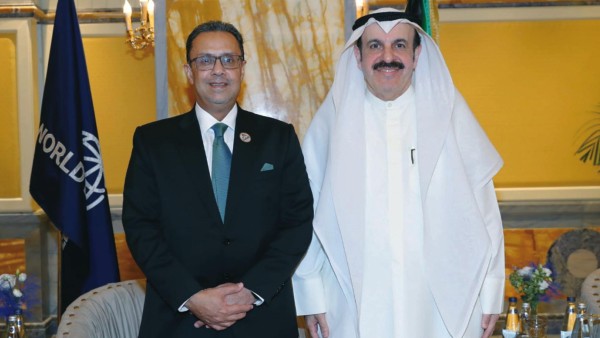
The director of the World Bank Group office in Kuwait confirmed that the integration of expertise among the Group's institutions enhances their ability to provide comprehensive developmental and financial solutions that support the government and private sector, contributing to expanding investments and creating job opportunities.
Translated by Qiyas from السياسة — Original source
During the “Al-Majmoua” Diwaniya, titled “Partners in Growth and Prosperity”
Azhar Iqbal Hussain, Director of the World Bank Group Office in Kuwait, affirmed that the integration of expertise among the Group’s institutions under unified leadership enhances their capacity to deliver comprehensive developmental, financial, and advisory solutions that support the government and the private sector, contribute to expanding investments, and create job opportunities. He noted that mobilizing private capital and directing it toward developmental projects constitutes a core pillar of the Group’s efforts to achieve sustainable growth.
This statement was made during an interview on the sidelines of the World Bank Group’s Diwaniya, held on Tuesday at the St. Regis Kuwait hotel, under the theme “Partners in Growth and Prosperity.” The event aimed to strengthen communication with the Kuwaiti community and highlight the dimensions of the developmental partnership between Kuwait and the Group, as well as the role of its institutions in supporting economic development and broadening cooperation with both the public and private sectors.
Hussain stated that the Group now brings together the expertise of five integrated institutions: the International Bank for Reconstruction and Development (IBRD), the International Finance Corporation (IFC), the Multilateral Investment Guarantee Agency (MIGA), the International Development Association (IDA), and the International Centre for Settlement of Investment Disputes (ICSID). This integration allows for the consolidation of efforts, expansion of service scope, and leveraging of global expertise in financing, investment, policy advice, and business environment development. He added that the World Bank works with the Kuwaiti government in areas of knowledge exchange and harnessing the Group’s accumulated expertise over eight decades. Meanwhile, the IFC focuses on supporting the private sector and assisting companies in growth and expansion, particularly in emerging markets. MIGA provides investment guarantee instruments to mitigate political and non-commercial risks, enabling investors to enter new markets with confidence. The IDA plays a crucial role in supporting low-income countries through grants and concessional financing, while ICSID offers a framework for resolving international investment disputes in accordance with its established procedures.
Hussain emphasized Kuwait’s significance within the World Bank Group, noting that the Group comprises 190 member countries and maintains operational presence in 110 countries. Kuwait represents a key partner in a collaborative journey spanning nearly six decades.
He pointed out that Kuwait’s representation on the Group’s Board of Directors reflects its standing within the international system, and affirmed that the Kuwaiti private sector possesses a solid foundation and innovative capabilities that qualify it to capitalize on opportunities in regional and international markets.
He added that the Group looks forward to continuing the development of its partnership with Kuwait by leveraging its global expertise and knowledge to support national developmental priorities, enhance economic policy efficiency, develop the public sector, improve the investment and business environment, and foster public-private partnerships while expanding the participation of private capital in developmental projects.
Regarding the Group’s priorities, Hussain stressed that job creation lies at the heart of the development agenda. He clarified that the Group’s various activities, whether related to the public or private sectors, aim to contribute to providing more employment opportunities and achieving sustainable economic and developmental impact.
He added that the challenge is not limited to the availability of private capital, but also encompasses how to mobilize and direct it toward projects that support development and deliver economic and social value. He noted that the group is working to facilitate investments and provide expertise and tools that help companies expand into new markets.
He pointed out that the transfer of Kuwaiti capital and expertise to markets in need of further development represents an important model for the role the private sector can play in supporting economic activity and broadening investment opportunities. He emphasized the importance of supporting companies in their external expansion and enhancing their contribution to job creation.
