Development media... our partner in Kuwait's sustainability
Development media is a key partner in building a sustainable future for Kuwait by unifying insights
Translated by Qiyas from السياسة — Original source
When one reflects on the trajectory of development in a rapidly changing world, it becomes quickly apparent that building bridges toward a sustainable future requires not only sound economic plans or grand engineering projects, but, above all, a “conscious word” capable of unifying insights and mobilizing action.
It is from this perspective that the significance of celebrating World Development Communication Day, observed on October 24, 2026, becomes evident. This annual milestone serves as a moment for reflection and evaluation of the nature of the media message we convey to our current and future generations.
Today, media is no longer merely a mirror reflecting events or a traditional conduit for news; it has become an authentic partner and a key architect of societal decision-making. In our Gulf and Kuwaiti context in particular, where economic diversification is accelerating and the shift toward sustainable development pathways is gaining momentum, the role of conscious media emerges prominently in highlighting the vital function of modern media and communication tools.
The environmental and societal challenges we face today—from water security and energy transition to resource management efficiency—demand a media discourse capable of deconstructing complex terminology and translating it into language accessible to the citizen, thereby transforming sustainability concepts from elite slogans into noble daily practices.
Directing public opinion toward sustainability goals and fostering a culture of environmental and societal awareness is not a marginal task; rather, it is a long-term investment in human capital.
When we examine the efforts made across various fronts, we find that the greatest challenge lies in mobilizing efforts to stimulate international and local partnerships. Social responsibility does not stop at the boundaries of major institutions; it extends to include the private sector, civil society, and individuals.
Here, the role of robust development communication comes into play as the link connecting these stakeholders, by highlighting inspiring success stories and shedding light on serious initiatives led by entities such as the “Sustainability for Social Responsibility Association,” which strives to entrench a culture of shared responsibility in Kuwait and beyond.
Furthermore, activating the role of institutions and individuals in supporting sustainable development projects requires us to move beyond the stage of seasonal awareness to that of “knowledge empowerment.” Individuals need to feel that their participation, no matter how small—whether through conserving consumption, volunteering, or adopting a pioneering environmental idea—is a fundamental cog in the wheel of national development. Successful development communication is that which gives the reader a genuine sense of ownership over their country and environment, encouraging them to transition from the position of a spectator to that of an active agent and influencer.
Kuwait possesses a rich heritage of societal awareness and supportive legislation for humanitarian and developmental work. The institutional and individual momentum we witness today signals a promising future, provided we continue to develop our media and communication tools. Let us make the celebration of this day a renewed starting point for shaping a collective consciousness that protects our resources, safeguards the gains of our future generations, and affirms that development communication is the living conscience that illuminates the path toward renaissance and sustainability.
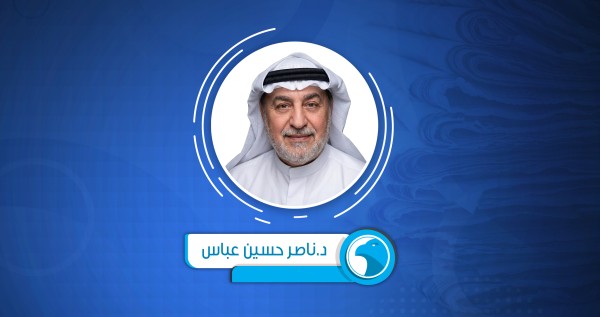
A Kuwaiti writer
