Anne-Claire Logerot to 'Al-Siyasa': Kuwait is a Partner in Enhancing European-Arab Cultural Dialogue
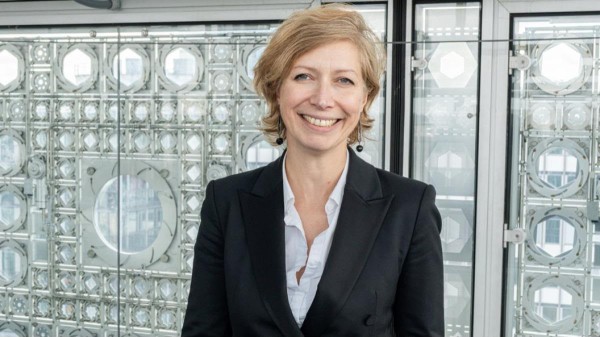
Anne-Claire Logerot visited Kuwait as part of the French presidential delegation to enhance cultural cooperation.
Translated by Qiyas from السياسة — Original source
President of the Arab World Institute Visits Kuwait as Part of the French Presidential Delegation
We cooperate with art museums and strive to enable Kuwaiti creatives to have a presence in Europe.
The Al-Sabah Collection is among the most important Islamic art collections... and it aligns with the Institute’s mission.
Kuwait’s cultural heritage deserves a broader presence in Europe... and its richness opens up new horizons for cooperation.
My meetings paved the way for new projects, including organizing exhibitions and facilitating encounters between artists and researchers.
The new National Museum project is among the most prominent anticipated areas of cooperation between Kuwait and France.
We are preparing for traveling exhibitions between Kuwait and France that showcase the region’s heritage to the European public.
What French expeditions discovered in Failaka is exceptional heritage that embodies the convergence of major civilizations.
Anne-Claire Lecomte, President of the Arab World Institute in Paris, affirmed that Kuwait is a key partner in enhancing cultural dialogue between France and the Arab world, expressing the Institute’s aspiration to expand cooperation with Kuwaiti institutions in the fields of museums, heritage preservation, contemporary arts, and literature, thereby opening broader horizons for Kuwaiti creatives in France and Europe.
Lecomte said in an interview with "Al-Siyasa" that her visit to Kuwait as part of the delegation accompanying the French President on October 19 allowed her to discuss joint projects, including organizing exhibitions, exchanging art collections, and museum cooperation, alongside supporting cultural and creative industries and encouraging the translation of Arabic literature into French. The following are the details of the interview:
What is the significance of your visit to Kuwait as part of the French presidential delegation?
I had the honor of accompanying the President of the Republic during his visit to Kuwait on October 19, 2026. The visit allowed me to hold a series of cultural meetings; indeed, culture, heritage, and human exchanges occupy a central place in the shared history of Franco-Kuwaiti relations.
This visit held a special significance for me; as France’s former ambassador to Kuwait, I returned with many memories, and I was delighted to meet friends who dedicate themselves to cultural life and heritage preservation. Furthermore, meeting these figures and conversing with a new generation of creatives gave the visit a distinctive character. Cultural relations are built over the long term and are nourished by trust and friendships that allow projects to be born and flourish.
Kuwait has been linked to the Arab World Institute project from the outset, which was established at the initiative of the late President Valéry Giscard d’Estaing. This historical commitment, which supports dialogue between Arab and European cultures, is a valuable pillar that gives our cooperation new momentum.
The Institute aims to highlight the diversity of Arab societies and their heritage, and to provide a platform for their contemporary artists, writers, and creatives. The visit allowed me to appreciate the richness of Kuwait’s cultural landscape and identify numerous horizons for cooperation.
I also had the honor of receiving His Highness Sheikh Nasser Al-Mohammed Al-Sabah, former Prime Minister and Honorary President of the Council for the Promotion of Francophonie. He is undoubtedly a prominent figure in Francophonie in Kuwait and has been a supporter of cultural dialogue between our countries over the years.
What were the most prominent meetings you held during the visit?
At the Dar Al-Athar Al-Islamiyyat (Institute for the Study of Islamic Art), I was received by its President, Sheikha Hessa Sabah Al-Salem. The Al-Sabah Collection is one of the most important Islamic art collections in the world; it reflects the richness of exchanges between civilizations and aligns with the Arab World Institute’s mission to highlight Arab heritage and showcase its contributions to human history.
I also visited the Bayt Al Sadu, accompanied by its president, Sheikha Bibi Duaij Al-Jaber. The institution is dedicated to the art of traditional Bedouin weaving and plays a vital role in transmitting this craft, which represents one of the symbols of Kuwaiti culture. At the "Qasr Al Salam," the museum dedicated to Kuwait’s history, I was received by Sheikha Mona Jaber Al-Abdullah and Sheikh Ahmad Al-Sabah, who are responsible for the historical documents and libraries center at the Diwan Amiriyah. The visit allowed us to explore ways to preserve archives and pass on national history to future generations.
Furthermore, during my meeting with Dr. Mohammed Al-Jassar, Secretary-General of the "National Council for Culture, Arts and Letters," we discussed prospects for cooperation between our institutions, particularly in the fields of museums, the valorization of national heritage, and the exchange of exhibitions between Kuwait and France. Dialogue with the Council, as a pivotal cultural actor in Kuwait, is essential to translate our shared ambitions into concrete steps.
How do art collectors and cultural figures contribute to cooperation?
Their participation is fundamental to preserving artworks, transferring knowledge, and enhancing the exchange of cultural heritage. My meeting with Sheikh Mubarak Abdullah Al-Mubarak, Vice Chairman and Chief Executive Officer of "Action Group Holding Company," an avid collector of ancient coins, exemplified the importance of this involvement. He loaned 430 gold pieces from his private collection to the "Treasure of Gold" exhibition, held at the Institute during the second half of 2022. This contribution reflects the trust between Kuwaiti art collectors and French cultural institutions, as well as the shared pursuit of knowledge exchange.
I also met Sheikha Dr. Suad Al-Sabah, the Kuwaiti writer and poet honored in France, who was recently awarded the rank of "Officer" in the "Ordre des Arts et des Lettres" (Order of Arts and Letters), in recognition of her career that has solidified literary life in Kuwait and underscored the importance of strengthening the presence of Kuwaiti writers in France and Europe—a goal aligned with the Institute’s mission.
These meetings aim to pave the way for new projects, including organizing exhibitions, exchanging artworks, highlighting the value of collections, and facilitating encounters between artists, researchers, and writers.
What are the main prospects for cultural cooperation between Kuwait and France?
There are several avenues worth exploring and deepening, including cooperation regarding the new National Museum, organizing traveling exhibitions between Kuwait and France, and showcasing Kuwaiti and regional heritage more broadly to French and European audiences. Efforts to reimagine and develop the new National Museum coincide with the renovation of the Arab World Institute Museum. I hope that a dialogue will begin between the teams of the two museums to explore ways of cooperation and partnership. The Institute’s new museum aspires to introduce the French public to the richness of heritage in Arab countries and highlight contemporary Arab creativity. I would be delighted to display artifacts discovered during excavations conducted by French missions in Kuwait, particularly on Failaka Island. For decades, French and Kuwaiti researchers have worked together to study and preserve this exceptional heritage, located at the crossroads of major ancient civilizations.
Beyond heritage, we seek to enhance the presence of Kuwait’s creative scene, support the development of local cultural and creative industries, and build bridges with the French and European landscapes. Fields such as design, fashion, visual arts, and publishing offer promising opportunities for cooperation that serve Kuwaiti talents and strengthen their international presence. I also hope that more Kuwaiti creative talents will participate in the awards granted by the Institute.
How does the "Arab World Institute" enhance the presence of the Arabic language in France, and in Europe generally?
The Institute aims to enhance the value of the Arabic language in France and Europe, promoting it as a language of culture. We will expand Arabic language courses for young people and adults to meet growing demand, and ensure that tours of our new museum are conducted entirely in Arabic. In addition to the Institute’s various activities, we are holding discussions with several French cities to provide Arabic-language books in their public libraries.
What are the key observations regarding the Kuwaiti creative scene?
One of the Arab World Institute’s tasks is to leverage the vitality of Arab cultural scenes. We seek to enhance the mobility of artists, facilitate their access to new audiences, and encourage exchanges between professionals in France, Kuwait, and the Gulf region on a broader scale.
What role does Arabic literature play in the Paris Institute’s plans?
Literature is a mirror reflecting the complexities, debates, imagined worlds, and transformations of societies. Kuwait, with its rich literary traditions and vibrant intellectual life, holds a prominent place in our efforts to promote the dissemination of Arabic literature in France and Europe. My meeting with Sheikh Dr. Suad Al-Sabah highlighted the role of writers and poets in Kuwait’s history of cultural influence. We aspire to encourage the discovery of contemporary authors and strengthen exchanges between writers and publishers, which requires an active policy of translating works from Arabic into French.
This would make Kuwaiti literature available to new readers and introduce French and European audiences to a deeper understanding of Kuwaiti and Arabian Peninsula societies. Thanks to its programs and network, the Arab World Institute can help bring authors, publishers, and readers closer together.
What are the Institute’s ambitions in the Gulf Arab countries?
Gulf countries possess an exceptional heritage and are developing their cultural infrastructure, museums, and creative industries. This dynamism opens wide horizons for the Arab World Institute, whose mission is to strengthen dialogue between France, Europe, and the Arab world.
During my recent visits to Gulf countries, I emphasized our desire to build cooperation based on reciprocity, in coordination with local institutions and according to their priorities. Such cooperation could include traveling exhibitions, museum exchanges, scientific partnerships, contemporary creativity, literature, and cultural and creative industries. Through its expertise and network, the Institute can help bring institutions and creators closer, support the emergence of new talents, and enhance the presence of Gulf heritage and artistic scenes. Given its history of relations with the Institute, Kuwait is a natural partner for renewing and expanding this ambition.
