Health Minister: Investing in National Workforce is a Key Pillar for Developing the Healthcare System
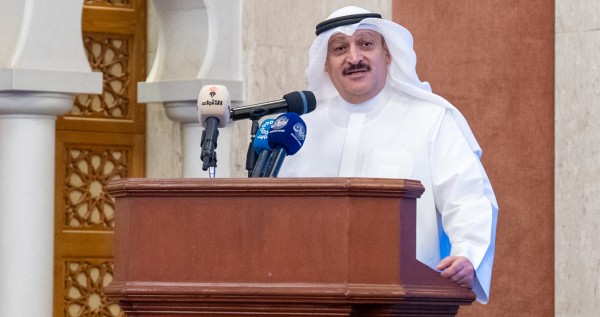
Health Minister Dr. Ahmed Al-Awadi emphasized the importance of investing in national workforce and developing healthcare infrastructure during the opening of the Second Internal Medicine Conference at Adan Hospital.
Translated by Qiyas from السياسة — Original source
- During the opening of the Second Internal Medicine Conference at Adan Hospital, Minister of Health Dr. Ahmed Al-Awadi emphasized that developing specialized services, updating health infrastructure, and enhancing collaboration among medical specialties are fundamental pillars for improving the quality of healthcare in the country. He stressed the importance of investing in national cadres and empowering them to keep pace with scientific advancements and modern technologies in medical practice.
Dr. Al-Awadi, in his speech during the opening of the Second Internal Medicine Conference at Adan Hospital held today, stated that scientific conferences serve as an important platform for exchanging knowledge and expertise among physicians and experts, and for consolidating a culture of scientific research and continuing medical education, thereby contributing to the development of clinical practice and improving patient outcomes.
He added that Adan Hospital has a long history of serving patients and the community, having begun providing health services in 1980 and officially opening in 1988. He noted that the hospital has witnessed gradual development in its facilities, services, and medical specialties, while the Internal Medicine Department has remained one of its core departments, playing a pivotal role in patient care, training medical competencies, and keeping abreast of scientific developments.
He clarified that the Internal Medicine Department has witnessed significant developments in its services and specialties thanks to the efforts of its medical, nursing, and technical staff. These developments include strengthening hematology and nephrology services, developing neurology, stroke, and movement disorders services, as well as specialized clinics for obesity and weight disorders, gastrointestinal and respiratory diseases, and geriatrics.
He pointed out the department’s contribution to developing clinical guidelines and protocols and participating in early detection and disease prevention programs, which support patient safety and elevate the quality of provided health services.
Dr. Al-Awadi stressed that the progress of health institutions is not measured by buildings alone, but by the qualitative leap they achieve in healthcare and the improvement of treatment outcomes. He affirmed that developing national cadres and empowering them scientifically and professionally is a priority in the strategy for developing health services.
He noted that holding the conference in its second edition, following the launch of its first edition in January of last year, reflects the commitment of its organizers to continue supporting scientific research and continuing medical education, and to provide a professional platform for discussing the latest developments in the diagnosis and treatment of internal medicine diseases.
He added that the rapid development in the fields of precision medicine, digital technologies, and artificial intelligence applications enhances the importance of scientific conferences in linking knowledge with clinical practice, and enabling physicians to benefit from scientific advancements, which positively reflects on patient care and the quality of health services.
He emphasized that a qualified physician capable of proper assessment and making clinical decisions remains an indispensable foundation in human care, explaining that investing in the scientific and professional capabilities of health cadres is the basis for sustainable development. From this perspective, the Ministry of Health continues to support scientific initiatives and training programs that enhance the efficiency of national cadres and consolidate concepts of quality, patient safety, and evidence-based medical practice.
Enhancing Communication
For his part, Dr. Khalil Al-Shuwaimer, Head of the Internal Medicine Department at Adan Hospital and Chairman of the Second Internal Medicine Conference, emphasized the importance of scientific conferences in enhancing communication among physicians from various specialties, exchanging experiences, and discussing the latest medical developments, which positively reflects on the quality of healthcare provided to patients.
Al-Shuwaikher expressed his pleasure at organizing the conference for the second consecutive year, looking forward to it becoming a fixed scientific event that brings together physicians and experts, and contributes to consolidating the culture of continuous learning and developing medical practices.
He extended his thanks and appreciation to Minister of Health Dr. Ahmed Al-Awadi for sponsoring and attending the conference, as well as for his ongoing support of scientific activities and medical education programs. He also commended the efforts of Adan Hospital’s administration in supporting the conference and providing the necessary conditions for its success.
He clarified that the idea of organizing the conference stemmed from the desire to create a platform that unites physicians from various specialties to exchange expertise, learn from professional experiences, and discuss the latest developments in the medical field. He emphasized that medical practice requires continuous learning and keeping pace with scientific advancements, regardless of a physician’s level of experience, as this has a significant impact on improving patient care methods and elevating the standard of care provided.
He noted that the importance of such gatherings extends beyond lectures and scientific sessions; it also includes fostering communication among colleagues, exchanging ideas, and benefiting from diverse experiences, thereby supporting the development of medical practice.
Al-Shuwaikher praised the efforts of the scientific and organizing committees, as well as the working teams that contributed to the conference preparations. He also expressed his gratitude to the Medical Artificial Intelligence and Informatics Association, the Internal Medicine Association, and the Kuwait Medical Association for their cooperation and contribution to supporting this scientific event.
He appreciated the support of the conference’s sponsoring companies, and directed his thanks to the lecturers, session chairs, and participants for dedicating their time to attend and exchange knowledge, despite their daily responsibilities and commitments.
He expressed his hope that the conference sessions would yield the desired benefits for participants, and that the scientific discussions would enrich their expertise and generate new ideas and information that can be applied in daily medical practice, thereby serving patients and enhancing the level of healthcare in Kuwait.
