AFC: Proposal to hold Asian Cup in even-numbered years instead of odd
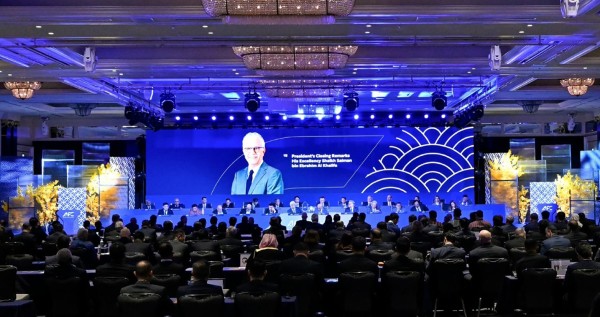
The Asian Football Confederation approved amendments to move the Asian Cup to even-numbered years and support Infantino.
Translated by Qiyas from السياسة — Original source
Sheikh Salman bin Ibrahim Al Khalifa, President of the Asian Football Confederation (AFC), announced that the AFC General Assembly approved a series of amendments to the Statutes during an extraordinary meeting in Tokyo on Friday, in light of the decision to shift the Asian Cup from odd-numbered years to even-numbered years, starting with the 2032 edition.
This came in a statement issued by the Kuala Lumpur-based AFC, which conveyed the President’s remarks during the extraordinary 2026 General Assembly meeting, where a series of amendments to the Statutes governing the AFC’s operations and management were approved.
He emphasized that the amendments would strengthen the governance framework and consolidate the principles of transparency and continuity, ensuring alignment with anticipated changes to the international and continental competition schedules.
Sheikh Salman stated in his address, “Your decision today strengthens our governance system and ensures that our regulations remain robust, transparent, and aligned with their objectives, guaranteeing continuity and enabling us to move toward a brighter and better future for Asian football.”
He called for a focus on the collective interest of Asian football and continued efforts to present a model for a continental confederation characterized by transparent governance, unity of purpose, and an inclusive vision.
The statement clarified that the General Assembly approved significant amendments to the Statutes in response to anticipated changes to the FIFA competition calendar, following consultations with FIFA to ensure alignment between the AFC’s electoral cycle and its major competition schedules.
It added that the amendments reflect the shift toward holding the Asian Cup in even-numbered years rather than odd-numbered ones, starting from the 2032 edition, which necessitated the adoption of transitional provisions in the Statutes to ensure continuity in executive oversight of the tournament during its critical stages.
These provisions also aim to maintain harmony between the AFC’s administrative responsibilities and operational processes amid anticipated changes to competition schedules and administrative cycles.
In a related development, Sheikh Salman reaffirmed his support for FIFA President Gianni Infantino in his bid for re-election, stressing the importance of unity within the Asian football family and enhancing partnership and trust among member national associations.
He said, “Our greatest strength lies in our unity,” emphasizing that the historic achievements of Asian football are built on strong partnerships, mutual trust, and a shared vision that unites national associations under the umbrella of the continental confederation.
He added that solidarity among Asian associations remains one of the key pillars for the game’s progress and its enhanced competitiveness at the international level, reaffirming the AFC’s readiness to continue supporting FIFA President Gianni Infantino.
Under the new amendments, elections for key leadership positions in the AFC will be held in 2027, in accordance with the first paragraph of Article 32 of the Statutes, covering clauses (a) through (e).
Elected officials will assume their positions on January 1, 2028, for a term extending until 2032, while current Executive Committee members elected for the 2023–2027 period will continue to perform their duties until the end of 2027, as per their mandate.
The AFC stated that further details regarding the electoral process would be announced in due course.
This step comes as part of aligning the AFC’s electoral cycle with the anticipated shift in the schedule of the Asian Cup starting from 2032, after it was previously held in odd-numbered years. The transitional provisions aim to ensure the continuity of administrative and executive oversight of the tournament during this transition, without compromising the term of office granted to the current members of the Executive Committee.
