Kuwait: Strengthening Integration Between International Justice Mechanisms, National Judiciary, and Combating Impunity
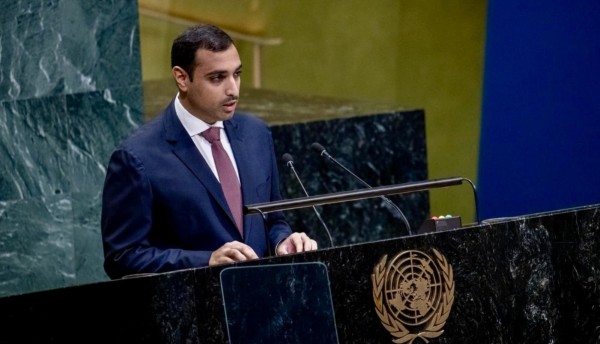
Mansour Al-Ahmad condemns Iranian aggression and calls for ending the Israeli occupation.
Translated by Qiyas from السياسة — Original source
Kuwait has affirmed the importance of strengthening the integration between international justice mechanisms and national judicial systems, noting that the fight against impunity is a shared responsibility requiring effective international cooperation, with full respect for the sovereignty and judicial jurisdiction of states.
This was stated in Kuwait’s address delivered by Diplomatic Attaché Mansour Abu Haimed on Wednesday evening before the United Nations General Assembly during the discussion of Agenda Item 130 concerning the International Residual Mechanism for Criminal Tribunals.
Abu Haimed highlighted Kuwait’s full support for the independence of the International Mechanism, commending its efforts to cooperate with member states and regional organizations to enhance its efficiency, facilitate its judicial and administrative work, and support the capacities of national judicial bodies.
He stressed that justice is fundamental to achieving sustainable peace, and that combating impunity serves as a guarantee against the recurrence of atrocities and serious violations, while reinforcing the rule of law and safeguarding international peace and security.
He appreciated the Mechanism’s efforts in fulfilling its mandate, emphasizing the importance of efficiently and effectively completing its remaining tasks, including overseeing the enforcement of sentences, protecting witnesses and victims, preserving judicial archives, making them accessible in accordance with established regulations, and enhancing cooperation with relevant national authorities.
He recalled the victims of serious crimes committed in the former Yugoslavia and Rwanda, noting that the establishment of the two tribunals pursuant to Security Council resolutions 827 (1993) and 955 (1994) marked a significant milestone in consolidating the principle of individual criminal responsibility.
He clarified that the International Mechanism was established under Security Council resolution 1966 (2010) to continue the remaining tasks of the two tribunals and preserve their judicial legacy.
Abu Haimed warned that the principles underpinning international criminal justice must not be subject to selectivity or double standards, and that the gravity of violations committed against civilians necessitates holding those responsible accountable under international law without discrimination or exception.
In this context, he stressed the necessity for the international community to fulfill its responsibilities in confronting war crimes committed by Israeli occupation forces against the Palestinian people, including acts of settler violence, repression, genocide, and ethnic cleansing.
He affirmed the importance of ending the Israeli occupation of all Arab territories and establishing an independent Palestinian state within the June 4, 1967 borders, with East Jerusalem as its capital.
Abu Haimed reiterated Kuwait’s strong condemnation of Iran’s unjust aggression, which began on February 28, 2026, and which involved targeting vital civilian assets, facilities, and infrastructure, in a blatant violation of Kuwait’s sovereignty and territorial integrity, and a direct threat to the security of its citizens and residents.
He called on Iran to adhere to the rules and principles of international law, including the UN Charter, principles of good neighborliness, and the prohibition of the use or threat of military force.
He emphasized the need for the full implementation of Security Council resolution 2817 and other international resolutions issued by the Human Rights Council and the International Maritime Organization, which condemned the Iranian aggression and called for its cessation.
He highlighted the importance of protecting human rights, witnesses, and victims, noting that Kuwait’s election to the Human Rights Council for the term 2027–2030 represents an additional responsibility to continue its efforts to promote and protect human rights at both the national and international levels.
At the conclusion of his remarks, Abu Hemed reiterated Kuwait’s support for the work of the international mechanism within the scope of its mandated functions, its judicial independence, and its cooperation with the relevant states, in order to ensure the completion of its tasks and the preservation of the judicial legacy of the two tribunals. He emphasized that justice and accountability are not selective choices, but rather a genuine commitment to the principles of international law, the dignity of victims, and a fundamental guarantee against the recurrence of serious crimes and the fight against impunity.
