Minister of Economic Affairs: Necessity of Transitioning Gulf-British Free Trade Agreement from Dialogue to Implementation
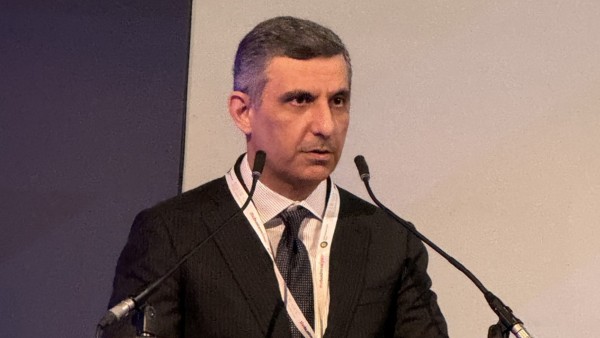
Gulf and British ministers decide to move from dialogue to implementation.
Translated by Qiyas from السياسة — Original source
- Completing the agreement will provide companies with greater clarity and broader opportunities to access markets and enhance investments.
- Kuwait aims to attract high-quality investments that support growth and innovation... and Britain calls for partnerships to invest in third countries.
The Minister of State for Economic Affairs and Investment, and Acting Minister of Commerce and Industry, Abdulaziz Al-Marzouq, stressed on Tuesday the necessity of moving the free trade agreement between the Gulf Cooperation Council (GCC) countries and the United Kingdom from the dialogue phase to implementation.
Al-Marzouq, in his speech at the Gulf-British Strategic Dialogue conference, considered that making decisions at this critical juncture is “of paramount importance,” as it is the means to transform opportunities into projects, partnerships, and tangible, measurable economic value.
He noted that the preparation of the free trade agreement between the UK and the GCC countries was done with precision, and its completion would provide companies on both sides with clarity and market access capabilities, helping them advance their investment plans.
Al-Marzouq believed that the next phase of Gulf-British relations should be based on the history of their strong ties and contribute to building a deeper partnership in trade, investment, technology, infrastructure, financial services, and advanced industries, alongside shared priority areas.
He also pointed out that the global investment landscape is undergoing rapid changes, as investors no longer look solely at market size but also seek stability, policy clarity, connectivity, innovation, and long-term opportunities.
Al-Marzouq explained that economic diversification in GCC countries continues to open new horizons for international partnerships. Kuwait, in particular, focuses on attracting high-quality investments that contribute to sustainable growth, support innovation, create high-value jobs, and enhance the role of the private sector.
For his part, UK Minister of State for Trade Policy, Anas Sarwar, called for the free trade agreement to enter the implementation phase without waiting for the completion of formal ratification procedures.
In a similar speech at the conference, he expressed his desire for the coming period to see an intensification of actual projects and the building of new partnerships that translate political declarations of ambition into tangible achievements.
Sarwar clarified that there are many areas he sees as offering “promising” opportunities for cooperation, such as the aviation sector, which is witnessing massive expansion in the Gulf region, as well as financial and legal services.
In this regard, he indicated his interest in exploring the idea of enhancing partnership between GCC countries and the UK for joint investment in third countries, rather than limiting discussions to bilateral investment opportunities, considering that this field could itself represent a “very large” opportunity to enhance cooperation between the two sides.
Participants at the conference discussed several key areas in the development of economic relations between the GCC countries and the UK, including trade, investment, financial services, capital market investments, and digital economies.
