Infrastructure Completion Boosts Income
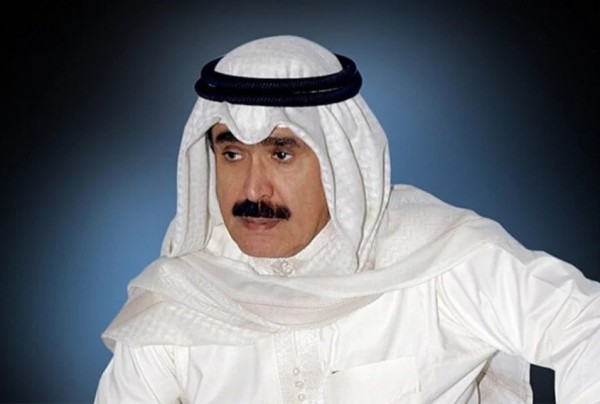
Analysis links transport development with increased GDP in the Gulf.
Translated by Qiyas from السياسة — Original source
A country’s infrastructure is a barometer of its development; it boosts gross domestic product (GDP) and significantly eases the burdens on the population. Consequently, governments are constantly working to upgrade all facilities. In this vein, Saudi Arabia and the United Arab Emirates have been advancing massive transportation projects.
In the UAE, travel between major cities no longer requires the long hours that were once the norm. Thanks to the high-speed rail network, the journey from Fujairah to Sharjah and Abu Dhabi takes no more than an hour, while travel between the capital and Dubai can be completed in just 22 minutes.
In Saudi Arabia, a railway network connecting major cities was established as early as the 1950s. It has been developed in recent years, with the addition of a high-speed line linking Medina to Mecca, greatly benefiting the public.
Investment in transportation in both the UAE and Saudi Arabia represents a qualitative leap, as it has increased the GDP of both countries. In contrast, Kuwait suffers from severe traffic congestion, with solutions often amounting to mere palliatives rather than root-cause remedies. For instance, an employee living in Fahaheel and working in the capital requires more than 1 hour and 20 minutes daily by car, whereas a metro or train system would reduce that commute to no more than 20 minutes.
A simple calculation reveals that the time wasted in traffic congestion, measured in work hours for employees and workers, amounts to approximately 73 hours daily. This is in addition to the extra fuel consumption and vehicle maintenance costs. Such waste delays business operations and significantly drags down GDP, whereas developing transportation infrastructure and other projects drives greater productivity.
The state possesses vast capabilities to implement these projects, either by collecting tolls or by contracting them out under a Build-Operate-Transfer (BOT) model for specified periods, after which they revert to state ownership.
This is not a difficult task. When Dubai planned its metro project, the objective was not merely to alleviate congestion but to increase individual productivity. As a result, today, Dubai—and the UAE as a whole—has emerged from the recent war crisis with minimal losses.
The recent war has permanently altered the equations. We must acknowledge that Kuwait has significant potential, a strategic geographic location, and vast undeveloped areas ripe for investment. Moreover, there is an urgent need to invest in logistics, a highly profitable sector. If the state were to initiate infrastructure projects, whether domestic or connected to neighboring countries, it would restore Kuwait as a major economic and maritime hub, as it was prior to the oil era.
These projects are productive and generate substantial revenue for the state. The government could partner with local and international companies and utilize the banking sector’s funds, which exceed 79 billion dinars, for investment in these projects. Additionally, the Social Security Fund holds approximately 40 billion dinars, which could also be deployed for these initiatives, along with funds from other investment vehicles.
All of this requires a decisive political will to set the wheels of national development in motion.
