Al-Tabtabaei: Governance and Institutional Evaluation Are Pillars of Educational Reform
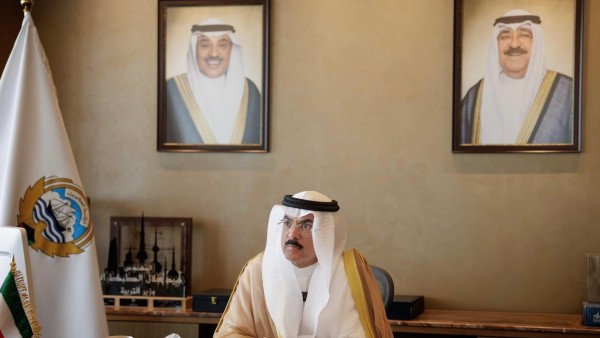
Minister of Education emphasizes the importance of governance and institutional evaluation in educational reform during a workshop with UNESCO.
Translated by Alqyas from Al-Seyassah — Original source
- Launched a remote training workshop organized by the Ministry of Education in collaboration with the UNESCO Regional Centre for Education
- Affirmed the continuation of implementing a comprehensive reform plan and developing a digital system to enhance transparency and performance efficiency
The Ministry of Education today, Monday, organized a remote training workshop in collaboration with the UNESCO Regional Centre for Quality and Excellence in Education, titled “Governance of General Education Assessment Institutions in Arab Countries: A Forward-Looking Perspective,” under the patronage and attendance of Minister of Education Sayyid Jalal Al-Tabatabai. The workshop aimed to enhance Arab integration in the governance of assessment and elevate the quality of educational systems.
In a press statement issued by the Ministry, Al-Tabatabai emphasized that the State of Kuwait views governance and institutional assessment as two fundamental pillars in the journey of educational reform, based on a firm conviction that developing education requires decisions grounded in data and evidence, taking into account the actual needs of the educational field, and subjecting outcomes to continuous monitoring and evaluation.
In his opening remarks, he stated that educational development is no longer measured solely by the volume of programs and initiatives implemented by educational institutions, but by their ability to achieve tangible results, measure their impact, and rely on reliable indicators in shaping policies and making decisions. He stressed the strategic importance of governing general education assessment institutions, which requires clear mandates, professional independence, procedural transparency, fair assessment, and reliable results.
Al-Tabatabai clarified that the workshop represents an important scientific and educational platform to discuss a strategic issue related to educational development, namely the governance of assessment institutions, enhancing their efficiency and the reliability of their results, thereby supporting the quality of educational policies, contributing to improving educational outcomes, and opening broader horizons for exchanging expertise and insights and strengthening joint efforts to develop educational systems in Arab countries.
He pointed out the importance of the study prepared by the UNESCO Regional Centre for Quality and Excellence in Education, which includes an analysis of the current state of governance of general education assessment institutions in Arab countries, comparing it with leading international experiences and practices, and forecasting alternatives and future scenarios for their development.
He noted that the ambition behind organizing this workshop extends beyond diagnosing the current situation and exchanging expertise; it aims to formulate practical visions and guiding frameworks that are adaptable and applicable, which would enhance the efficiency of assessment institutions, raise the reliability of their results, and support Arab countries’ capacity to make evidence-based educational decisions, while considering the specificity of each educational system and its national priorities.
He stated that Kuwait’s hosting of this workshop embodies its commitment to enhancing Arab and international educational cooperation, and represents an extension of the political leadership’s interest in developing education, elevating its quality, and supporting reform steps aimed at building a more efficient and sustainable educational system capable of keeping pace with changes and achieving national goals.
He affirmed that the Ministry of Education is proceeding with the implementation of a comprehensive reform plan addressing the development of regulatory and administrative frameworks, enhancing the efficiency of human resource distribution, promoting fairness in opportunities and procedures, and developing measurement and assessment systems, thereby achieving optimal utilization of capacities and raising the efficiency of educational institutions and the quality of their outputs.
He highlighted the Ministry’s parallel commitment, alongside reform efforts, to making digital transformation a key enabler for strengthening institutional governance, through the development of an integrated and electronic digital system that serves various aspects of the educational and administrative processes, supporting procedural transparency, fair application of standards, and efficient monitoring and accountability.
He expressed his hope that the outcomes of the cooperation would contribute to supporting educational reform efforts, developing policies and institutional practices, and enhancing the exchange of successful experiences, in alignment with Kuwait’s Vision 2035 and the aspirations of Arab countries for more high-quality, efficient, and sustainable education.
The workshop was attended by the Director General of the Center, Dr. Abdulrahman Al-Mudairis, along with a group of experts, educational leaders, and representatives of national, regional, and international institutions via the Zoom platform.
