'Nizah' trains over 60 executives and supervisors from 20 government entities to combat corruption
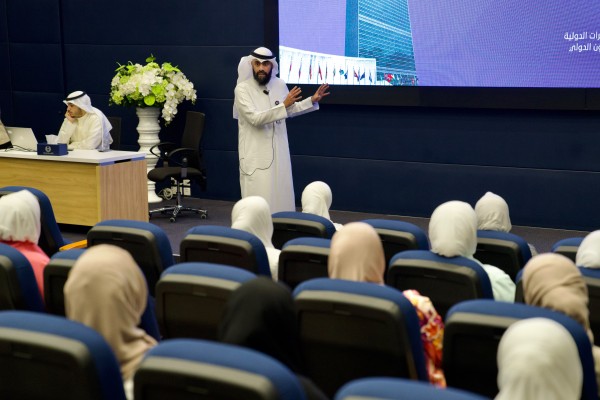
The Public Authority for Combating Corruption organizes a training program for executives.
Translated by Qiyas from السياسة — Original source
- Al-Eidan: Reporting corruption is a national duty to protect public funds... and the law provides safeguards to protect whistleblowers
- Al-Badr: Training programs running until February 2027 will cover the right to access information, conflicts of interest, and corporate governance
The Public Authority for Combating Corruption ("Nazaha") organized a training program titled "Enhancing Integrity and Combating Corruption: The Authority’s Role and Competencies" yesterday, with the participation of more than 60 leaders and supervisors representing over 20 government entities. The initiative aims to strengthen the culture of integrity and transparency and raise awareness of the legislation and mechanisms adopted to prevent and combat corruption in the government sector.
Nawaf Abdulhamid Al-Eidan, Senior Legal Auditor at Nazaha, stated that the program, held at the Authority’s headquarters, targets leaders, supervisors, and representatives of government entities. It seeks to familiarize them with the corruption offenses stipulated in the law establishing the Authority, the mechanisms for detecting and reporting them, and the legal safeguards provided to protect whistleblowers, as well as the rewards allocated to them.
Al-Eidan clarified that the program is conducted in coordination with government entities to entrench a culture of integrity and transparency within institutions, and to highlight the Authority’s competencies and types of corruption offenses. It also aims to clarify the legal and personal protections guaranteed by the law to whistleblowers, thereby enhancing trust and encouraging reporting.
He emphasized that reporting corruption offenses is not merely a legal obligation but a national duty and a shared responsibility to protect public funds and expose instances of corruption. He stressed the importance of legal safeguards in encouraging individuals to report without hesitation.
For her part, Nadin Rashid Al-Badr, Director of the Administrative Development and Training Department at Nazaha, said the program targets supervisory categories in government entities, including inspectors, managers, and department heads. It is part of a series of training programs implemented by the Authority from October 2026 to February 2027 to raise awareness of integrity and anti-corruption concepts among government sector employees.
Al-Badr explained that the three-day program covers the United Nations Convention against Corruption, the establishment of the Authority, its founding law, competencies, objectives, and its role domestically and internationally. It also addresses the financial disclosure system, the categories subject to it, the deadlines for submitting declarations, the mechanisms for reviewing them, and the penalties for late or non-submission.
She added that the program also covers allegations of corruption offenses, mechanisms for receiving reports and protecting whistleblowers, tracking and monitoring funds abroad, and the role of prevention in enhancing integrity and transparency.
Al-Badr revealed that government entities are continuing to register for upcoming training programs, which will cover the right to access information law, the conflict of interest law, the professional code of conduct and business ethics, corporate governance, and the fight against financial and administrative corruption.
She noted that the number of government entities registered for other programs has exceeded 50, with a growing number of participants, as part of the Authority’s efforts to enhance cooperation with government entities and develop the legal and professional knowledge of their staff, while reinforcing the principles of accountability and the protection of public funds.
