Shortage of Treated Water Poses Major Challenge to Al-Abdali Farms' Production
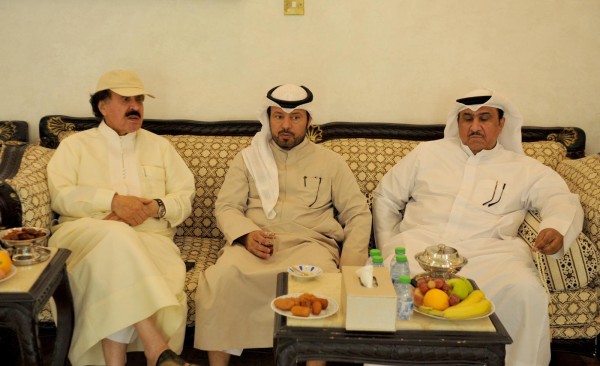
Ahmed Al-Jarallah visits Al-Ratam and Al-Hayfi farms in Al-Abdali to discuss water and agricultural production challenges.
Translated by Qiyas from السياسة — Original source
Editor-in-Chief Tours the Al-Rutam and Al-Haifi Farms
Al-Jarallah Calls for Model Farms Including Sheep, Camel, and Horse Breeding
Al-Rutam: Quadruple-treated wastewater is the optimal support for local agricultural production
Al-Haifi: Ready to commercially produce watermelons and muskmelons as soon as fresh water is available
In the far north of Kuwait, amidst the lush vegetables and dewy fruits of the Al-Abdali farms, Editor-in-Chief Brigadier General Ahmed Al-Jarallah arrived on a field tour that included the Al-Rutam and Al-Haifi farms. He inspected a variety of crops, including tomatoes, cucumbers, peppers, pumpkins, zucchini, okra, eggplants, and corn, as well as watermelons and muskmelons grown in open fields within greenhouses.
Al-Jarallah was welcomed at the Al-Rutam farm diwan by Engineer Rashid Al-Rutam, Saad Al-Rutam, former Minister Dr. Amer Al-Rutam, their sons, their nephew Mohammed, along with several farmers from Al-Abdali. The group toured the fields, the fruit reserve, and ornamental plants, with discussions focusing on the challenges of farming in border areas, primarily the availability of irrigation water.
The Most Suitable Irrigation Option
During a tour of the fruit reserve, which contains numerous fruit-bearing shrubs and ornamental plants, as well as the expansive green fields, farmer Saad Mohammed Al-Rutam and his son, Dr. Ali, spoke about the importance of treated wastewater for agriculture in border areas, particularly Al-Abdali and Al-Wafra. They noted that these areas lack natural irrigation sources such as rain, rivers, and groundwater. They explained that relying on purchased fresh water delivered by tankers from sales stations in agricultural zones is not economical and fails to yield the expected profit for Kuwaiti farmers despite their arduous labor along the country’s northern and southern borders.
Editor-in-Chief Al-Jarallah believed that providing irrigation water for farmers should begin with the quadruple treatment of sewage wastewater, followed by delivering the required quantities to producing farms. He stated that the use of treated wastewater is practiced in many countries, even those with abundant rain and rivers, to conserve water resources and protect rivers from pollution by sewage.
Based on his experience at the family farm in Plot Six, Saad Mohammed Al-Rutam said that the insufficient pumping of treated wastewater, especially during the summer, poses a challenge for farmers in Al-Abdali and Al-Wafra. He clarified that water used to reach their farm in small, intermittent quantities, sometimes cutting off for long days, prevented the cultivation of larger land areas.
With the return of water, albeit in limited quantities, at the start of the current agricultural season, the family planted areas of corn, pumpkins, zucchini, and eggplants, along with several leafy greens. They also intensified the cultivation of ornamental plants and fruit trees within a cooled reserve. Al-Rutam pointed out that the absence of natural irrigation sources in border agricultural areas makes treated wastewater the least costly option for most field and protected crops, compared to purchasing and transporting fresh water by tankers. He affirmed that providing treated wastewater, particularly quadruple-treated water, allows for increased Kuwaiti agricultural production and the release of fresh products at a lower cost.
The Model Farm Combines Production and Hobby
During the tour, Al-Jarallah and Al-Rutam agreed that a model farm in Kuwait should not be less than 50,000 square meters in area and should include diverse agricultural activities, including the breeding of sheep and camels.
Al-Jarallah stated that “sheep are a prize” in the expansive farm, as camel rearing provides meat and milk, while purebred Arabian horses enable children to learn equestrian skills. He added that the farm offers benefits beyond production and economic returns, encouraging family members to engage in agricultural work and bringing them together in one place to spend their holidays.
Fresh Water Increases Costs
From the Al-Rutam farm, the tour moved to Khaled Rashid Al-Haifi’s farm in Plot Six, where Al-Jarallah and agricultural journalist Adnan Mkaoui inspected the watermelon and muskmelon crops. The farm owners said they were cultivating these crops commercially for the first time, and the quality of the produce attracted visits and purchases from other farmers and enthusiasts, including farmer Ali Fadel and some of his relatives and acquaintances, who visited the farm for the third time within a week.
Khaled Al-Haifi and his son, Muassad, said that access to treated water would allow them to expand their cultivated areas. However, water does not reach the farm despite its proximity to the main treated water reservoir on Nizal Al-Masab Street. Consequently, they rely on fresh water tankers transported from the Qashwaniyah station, which increases production costs.
Al-Haifi explained that watermelons and muskmelons require daily irrigation with fresh water to grow large and sweet, and their water needs exceed those of other crops such as tomatoes, cucumbers, zucchini, and eggplants. He noted that the watermelon area in the farm covers approximately 300 square meters and requires five water tankers daily, at a cost of about five dinars per tanker—a cost difficult to recoup from crop sales. Al-Haifi and his son concluded their remarks by affirming their success in producing red watermelons and delicious muskmelons at their farm in Abdali, chanting, “Ammar, oh Kuwait.”
Al-Jarallah: Expand into Sheep and Horse Rearing
Ahmed Al-Jarallah called for diversifying and expanding farm activities, including the rearing of sheep, camels, and horses, due to the productive and social benefits of these activities.
Al-Rutam: Water Scarcity Hinders Agricultural Expansion
Saad Al-Rutam said that the insufficient pumping and summer interruptions of treated water prevented them from cultivating larger areas of their farm in Abdali.
Al-Haifi: Five Tankers Daily to Irrigate 300 Square Meters!
The watermelon area, covering approximately 300 square meters at Al-Haifi’s farm, requires five fresh water tankers daily, at a cost of about five dinars per tanker.
