Finance Minister: Economic Diversification, Private Sector Role, and Digital Transformation are Kuwait's Key Priorities
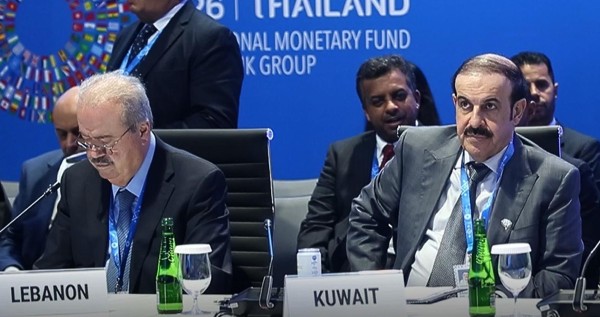
Finance Minister Yaqoub Al-Rafai affirmed Kuwait's developmental priorities during meetings in Bangkok, discussing cooperation with the World Bank and IMF to enhance fiscal and economic reforms.
Translated by Qiyas from السياسة — Original source
- Discussed with IMF officials ways to enhance technical and advisory cooperation and support fiscal and economic reforms
- Al-Rafai emphasized the importance of investing in infrastructure and human capital, supporting innovation, and creating job opportunities for youth
- IMF mission to visit Kuwait from November 3 to 9 to conduct Article IV consultations
Finance Minister Dr. Yaqoub Al-Rafai stated that economic diversification, enhancing the role of the private sector, improving the business environment, and digital transformation represent key priorities for the State of Kuwait. He stressed the importance of strengthening cooperation with the World Bank Group to support sustainable economic growth in the Middle East and North Africa region.
This came during Al-Rafai’s participation in the meeting of Arab Governors with Ajay Banga, President of the World Bank Group, held on the sidelines of the Annual Meetings of the Boards of Governors of the World Bank Group and the International Monetary Fund (IMF), which took place in Bangkok, Thailand, from October 12 to 18.
The Ministry of Finance stated in a press release on Friday that the Minister emphasized in his remarks the importance of investing in infrastructure and human capital, supporting innovation, entrepreneurship, and job creation, particularly for youth. He commended the World Bank Group’s efforts in supporting economic reforms, stimulating investment, and enhancing competitiveness.
He further stressed Kuwait’s commitment to continuing partnership and cooperation with the Group to contribute to development and prosperity in the region’s countries.
Arab Governors’ Meeting
The Arab Governors’ meeting discussed several priority economic and developmental issues, foremost among them supporting growth, creating jobs, enhancing the resilience of economies to recover and face challenges, as well as mobilizing private sector investments to finance development and reconstruction efforts.
The meeting addressed the importance of increasing investments in energy, water, food security, and digital infrastructure sectors, strengthening regional connectivity to boost productivity and support growth, and supporting small and medium-sized enterprises (SMEs) while enhancing their role in economic activity.
It also discussed ways to leverage digital transformation and artificial intelligence, and develop human capital by upgrading digital infrastructure and enhancing countries’ readiness to adopt modern technologies. Additionally, it covered developing training and qualification programs aligned with labor market needs, with a focus on empowering youth and women to benefit from emerging economic opportunities.
Arab governors also discussed the importance of enhancing the representation of Arab talent within the World Bank Group, particularly in managerial and leadership positions, and expanding professional development opportunities to enable Arab experts to reach decision-making roles based on principles of meritocracy, diversity, and geographic representation.
IMF Meetings
In a related development, Al-Rafai held discussions with Jihad Azour, Director of the Middle East and Central Asia Department at the IMF, and Mohamed El-Mehdi, Managing Director of the Arab Group and Maldives at the IMF, on ways to enhance technical and advisory cooperation in financial and economic fields, in line with Kuwait’s priorities and its direction toward achieving fiscal sustainability and improving public financial management efficiency.
The Ministry of Finance clarified that Al-Rafai’s meeting with Azour covered fiscal reforms aimed at diversifying revenues, improving public expenditure efficiency, and enhancing fiscal sustainability. It also addressed the priorities that the IMF mission will discuss during its visit to Kuwait from November 3 to 9, as part of the Article IV consultations.
She noted that Al-Azour reviewed the topics he discussed with His Highness the Prime Minister, Sheikh Ahmad Abdullah Al-Ahmad, during his visit to Kuwait last December, including ways to enhance relations with the Fund in the fields of fiscal and economic policies.
Al-Rifa’i affirmed the deep ties between Kuwait and the International Monetary Fund, praising the technical expertise and advisory support provided to bolster national efforts aimed at developing fiscal and economic policies.
In his meeting with Al-Mutairi, both sides emphasized the importance of continuing cooperation and leveraging the Fund’s expertise in technical advice and capacity building, in alignment with Kuwait’s economic and fiscal priorities.
General Session
On another note, Al-Rifa’i chaired the Kuwait delegation participating in the General Session of the Annual Meetings, which was presided over by the Governor of the Central Bank of Paraguay and Chair of the 2026 Annual Meetings, Carlos Carvalho Spalding.
The President of the World Bank Group, Ajay Banga, outlined the Group’s key financing and development trends, noting that its financing reached $230 billion during fiscal year 2026, and mobilized $112 billion in private capital.
He revealed the Group’s plan to increase its business volume in the critical minerals sector fivefold over the next five years, contributing to supporting local industries and enhancing economic development.
For her part, IMF Managing Director Kristalina Georgieva highlighted the major challenges facing the global economy, foremost among them the rapid transformations in artificial intelligence technologies and their implications for labor markets and tax policies, alongside sovereign debt challenges and the need to strengthen financial stability.
She stressed the necessity of balancing the containment of inflationary pressures stemming from energy shocks with the utilization of growing technological investments to support global economic growth.
Also present at the session were Bassel Al-Haroun, Governor of the Central Bank of Kuwait; Rashid Al-Badr, Acting Managing Director of the Kuwait Fund for Arab Economic Development; Saad Al-Rashidi, Director General of Economic Affairs at the Ministry of Finance; and Ahmed Al-Amran, Director General of General Budget Affairs and General Accounting Affairs.
The Annual Meetings of the Boards of Governors of the World Bank Group and the International Monetary Fund are attended by finance and development ministers, central bank governors, senior executive officials, and representatives from the public and private sectors.
