GCC Secretary-General: Gulf-Asian partnership is a cornerstone for enhancing economic and investment cooperation
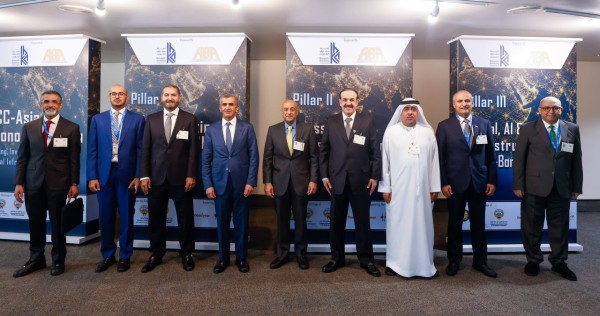
GCC Secretary-General Jassem Al-Budaiwi affirmed that the Gulf-Asian partnership is a strategic cornerstone for enhancing economic and investment cooperation, as well as financial and banking integration.
Translated by Qiyas from السياسة — Original source
- Al-Bidawi: GCC economies have demonstrated their ability to handle economic and financial challenges
The Secretary-General of the Gulf Cooperation Council (GCC), Jassem Al-Bidawi, affirmed on Wednesday that the economic partnership between GCC member states and Asian countries represents a strategic pillar for enhancing economic and investment cooperation, expanding the horizons of financial and banking integration, and developing digital infrastructure, thereby contributing to achieving sustainable development and shared prosperity.
The Council’s General Secretariat stated that this remark was made by Al-Bidawi during his speech at the opening of the Gulf-Asian Economic Forum in Bangkok, the capital of Thailand, under the theme “Banking, Investment, and Digital Infrastructure.” The event was organized by the Kuwait Banks Union and the Asian Bankers Association, on the sidelines of the 2026 Annual Meetings of the International Monetary Fund and the World Bank Group.
Al-Bidawi noted that the global economy is undergoing rapid transformations where geopolitical developments intersect with changes in trade, investment, and technology, underscoring the importance of building reliable economic partnerships capable of addressing challenges and ensuring the sustainability of financing and trade, while opening broader horizons for economic growth.
He pointed out that GCC economies have proven their capacity to cope with economic and financial challenges, thanks to the economic and fiscal policies pursued by GCC member states, their strong financial reserves, robust banking sectors, and their efforts to diversify their economies, develop infrastructure, and deepen Gulf economic integration.
Al-Bidawi emphasized that the historical and extensive trade relations between GCC countries and Asian nations form a solid foundation for building long-term economic and investment partnerships. He explained that integrating Gulf financial and investment capabilities with Asian industrial and technological capacities and markets provides opportunities to launch joint projects that contribute to knowledge transfer, technology localization, and enhancing added economic value.
He added that economic diversification programs in GCC countries offer growing opportunities for Asian companies and institutions to participate in major development projects, while Asian markets provide opportunities for Gulf institutions to expand their investments and international partnerships.
In outlining future areas of cooperation, Al-Bidawi identified three main pathways to enhance economic partnership between the two sides: logistics and infrastructure, through strengthening links between ports and economic centers and developing transport and storage networks, thereby facilitating trade flows and enhancing the efficiency and resilience of supply chains.
He clarified that the second pathway focuses on digital infrastructure and artificial intelligence, by expanding joint investments in data centers, cloud services, and advanced technological applications, and exchanging expertise and knowledge, thereby boosting productivity, improving service efficiency, and supporting digital transformation in the economies of both sides.
He added that the third pathway emphasizes enhancing financial and banking cooperation through expanding trade and project financing, developing joint investment platforms, strengthening interconnections between capital markets, and facilitating cross-border payments. He stressed that providing reliable and effective financing is a fundamental element in transforming economic opportunities into executable investment projects.
Al-Badawi reviewed a number of economic and financial indicators reflecting the resilience of the Gulf Cooperation Council (GCC) countries’ economies, based on the latest data issued by the GCC Statistical Center. He noted that the assets of Gulf sovereign wealth funds amount to approximately $5.2 trillion, while the market capitalization of Gulf financial markets reached around $4 trillion by the end of June 2026.
He added that the total assets of commercial banks operating in GCC countries amounted to approximately $4.1 trillion by the end of June 2026, while the net foreign assets of Gulf central banks reached around $829 billion during the same period. He emphasized that these indicators reflect the financial and economic strength of the GCC countries and their capacity to finance long-term investments, support business growth, and build economic partnerships with sustainable impact.
Al-Badawi stressed the importance of advancing Gulf-Asian partnership from the stage of exploring opportunities to the actual implementation of joint projects and investments, by enhancing communication between economic and financial institutions, identifying priority opportunities, and taking practical steps to develop them. He reaffirmed the pivotal role of the private sector in supporting innovation and transforming economic initiatives into tangible developmental projects.
He concluded his speech by affirming that shared economic interests and integrated capacities between the GCC countries and their Asian partners provide a solid foundation for elevating economic relations to more advanced levels, thereby serving mutual interests and supporting sustainable economic growth.
