Brigadier Al-Shamali to 'Al-Siyassa': Three Support Centers to Address Emergencies from North to South Kuwait
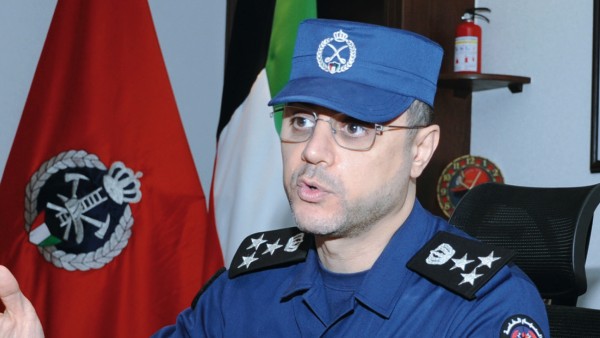
The Director of the Special Tasks Department in the General Fire Force emphasized its importance in reducing response times.
132 support dispatches in 2026... Teams are ready to handle various incidents.
Giant pumps to handle the rainy season... capable of drawing 30,000 liters per minute.
Thermal cameras and sensors to support search operations... and modern winches for rescue.
Participation of Kuwaiti teams in Turkey and Greece reflected their efficiency in confronting fires and earthquakes.
Continuous development in support mechanisms, technical support, and hazardous materials handling equipment.
A fleet of heavy machinery and giant pumps on standby to support firefighting teams.
The Support Center in the General Fire Force represents a specialized field arm that moves behind firefighting teams and accompanies their operations during major incidents and emergencies, equipped with a diverse fleet of heavy and specialized vehicles and equipment, as well as the ability to provide water, sustenance, and all other necessities required by teams to sustain their field operations.
In an interview with "Al-Siyasa," the Director of the Special Tasks Department in the General Fire Force, Brigadier General Hussain Al-Shammari, explained that the Support Center is the primary backer of firefighting teams, especially in incidents requiring additional capabilities and equipment. He noted that the Special Tasks Department includes the Support, Hazardous Materials, and Search and Rescue centers, and handles various types of incidents requiring specialized capabilities.
Al-Shammari revealed that the Support Center has handled 132 support dispatches since the beginning of the current year. They have a plan to distribute support centers across three locations, including the current center in the Central Region, along with two additional centers in the north and south of the country, aiming to reduce response times to incident sites and accelerate support for field teams.
He pointed out the development witnessed by the center in vehicles, equipment, and technologies used in firefighting and rescue, including thermal cameras, motion and heat sensors, winches, large pumps, marine boats, and specialized vehicles. He emphasized that readiness for the rainy season is a crucial aspect of the center’s preparedness, noting that pumps undergo preparation, maintenance, and operation to handle water accumulation. He added that the center possesses large pumps capable of drawing approximately 30,000 liters of water per minute.
Al-Shammari also addressed the external participation of the General Fire Force in Turkey and Greece, explaining that support and technical rescue teams successfully carried out their missions during operations involving fires and earthquakes, using specialized equipment and vehicles for firefighting, rescue, and search under rubble. He confirmed that the center continues to develop its capabilities and equipment to keep pace with various types of incidents and emergencies, enhancing the readiness of General Fire Force teams to handle exceptional conditions both within Kuwait and abroad. The following are the details of the interview:
What is the primary role of the Support Center in the General Fire Force?
The Support Center falls under the Special Tasks Department, which includes Support, Hazardous Materials, and Search and Rescue. These centers handle various types of incidents.
The Support Center provides necessary support to field centers in terms of vehicles, water, sustenance, and equipment, as well as everything teams need during incidents.
What are the most prominent tasks undertaken by the center during emergencies?
The center handles various types of incidents, whether fires, traffic accidents, building and tunnel incidents, or other incidents requiring additional support. It also provides heavy vehicles and equipment, water, and sustenance according to the nature of each incident.
How does the Support Center contribute to supporting firefighting teams in the field?
The equipment at the Support Center differs from that in other fire stations, as the center houses specialized equipment and machinery that are deployed to incident sites as needed, and it also provides the necessary equipment and water for teams on-site.
How is the center prepared to handle large-scale incidents?
The center is ready to deal with various types of incidents, including fires, traffic accidents, building and tunnel incidents, as well as incidents requiring specialized machinery and equipment. Equipment and machinery are mobilized according to the nature of each incident, while fire stations across all governorates remain on high alert to respond to all reports as quickly as possible to protect lives and property from any risks. Support teams have previously handled major incidents.
How are cases involving multiple simultaneous emergency reports handled?
Reports are handled according to priority and the nature of each incident, with the Operations Center directing appropriate stations and machinery to each report based on need.
Support teams inherently include a comprehensive fleet of heavy machinery and high-reach ladders, and they are dispatched to most major incidents to support fire teams on-site.
What are the statistics for the Support Center?
During the current year, 2026, the Support Center responded to 132 support requests.
Has the Support Center seen advancements in the use of modern technologies?
Yes, the center has seen significant developments in machinery and equipment. We have modern and advanced equipment such as thermal cameras, motion and heat sensors, lifting machinery, winches, marine boats, and other specialized equipment.
Are there future plans to develop the center’s capabilities?
There is a continuous trend toward developing machinery and equipment and adding new, advanced facilities that suit the nature of incidents and the special tasks performed by the center. We continuously update equipment and machinery with the latest available technology.
How important is continuous training for center staff?
Training is very important, as the nature of the center’s work involves various incidents and unusual tasks. Therefore, staff require continuous training on using modern machinery and equipment and handling different conditions. We have ongoing, non-stop training courses in this field.
What are the most notable achievements of the Support Center?
The center has participated in numerous incidents and missions within Kuwait and abroad. It also took part in fires and earthquakes in Greece and Turkey, using specialized equipment for rescue, sensing, thermal imaging, and earthquake response during these participations.
The center also participated in major incidents within Kuwait that required large quantities of water and specialized machinery, including a 90-meter ladder, along with tanks with a capacity of up to 10,000 gallons of water, to ensure the continuity of firefighting operations and prevent water supply interruptions.
Has the Support Center participated in missions outside Kuwait?
Yes, it has participated in external missions, including responding to forest fires and earthquakes in Greece and Turkey. Specialized teams, machinery, and equipment were dispatched to participate in rescue operations. The support and technical rescue teams deployed to Greece and Turkey successfully carried out their missions, reflecting the competence of the General Fire Force in handling various challenges, including the earthquakes that occurred in Turkey in February 2023, where teams dealt with building collapses.
What is the nature of the equipment used to respond to earthquakes?
Specialized equipment is used in search and rescue operations and sensing, including motion and heat sensors, thermal cameras, and other gear that helps teams locate individuals trapped under rubble.
What are the key modern mechanisms and equipment available at the center?
The center features marine boats, equipment-carrying vehicles, winches, and modern, advanced machinery, alongside specialized equipment for various types of incidents.
What is the "Boom Tower" mechanism?
It is a mechanism resembling a ladder, equipped with a hose that can be directed to elevated areas for use in firefighting operations.
What is the nature of the Special Tasks Department’s work?
The Special Tasks Department encompasses support, search and rescue, and hazardous materials units. These departments carry out specialized tasks, in addition to supporting fire stations operating in the field.
What is the role of winches at the Support Center?
Winches are used in lifting and rescue operations, as well as for towing heavy machinery and vehicles. They are also employed in situations requiring the lifting or extraction of people or equipment from hard-to-reach locations.
What message do you convey to citizens and residents regarding safety and fire prevention?
Adhering to safety and prevention procedures is crucial. Furthermore, cooperation with the General Fireforce during incidents facilitates a swift response, helping to save lives and protect property.
How can the public cooperate with firefighters during incidents?
One of the most important measures is to avoid approaching the incident site, allowing the General Fireforce and relevant authorities to perform their duties without obstruction. The public should not impede the movement of machinery or block roads leading to the incident site.
Colonel Sultan: A complete fleet of heavy and specialized vehicles
Colonel Raed Sultan, Head of Vehicle Follow-up at the Support Center, confirmed that the center possesses a comprehensive fleet of specialized vehicles and equipment to support firefighting teams during major incidents and missions requiring additional capabilities.
He explained to "Al-Siyasa" that the support fleet is fully integrated and supports firefighting operations.
He added that the center includes vehicles for transporting sand, excavators, construction equipment, and other specialized machinery for lifting and towing operations. These assets are deployed in coordination with operations, based on the nature, scale, and field requirements of each incident.
He noted that the center continues to enhance the readiness of its vehicles and equipment and develop its capabilities to strengthen the speed of support provided to firefighting teams at incident sites.
Three support centers reduce response time
Brigadier General Hussein Al-Shamikh revealed a new concept for distributing support centers across three locations in the country. This plan involves maintaining the existing center in the Central Region, alongside two additional centers in northern and southern Kuwait.
He clarified that this new geographical distribution aims to reduce the response time for specialized vehicles and equipment to reach incident sites, accelerating support for field teams, particularly during major calls requiring additional capabilities and heavy equipment.
30,000 liters per minute to combat rain
The Support Center prioritizes readiness for the rainy season by preparing, maintaining, and operating pumps designed to handle water accumulation through its workshops and maintenance complex.
The center owns large pumps capable of extracting massive volumes of water, with the largest having a capacity of approximately 30,000 liters per minute, thereby enhancing the firefighting teams' ability to manage sites with widespread water accumulation.
Extraordinary rescue of a 400-kilogram person
Brigadier General Hussein Al-Shamikh disclosed an unusual humanitarian case handled by the Support Center, involving a call regarding a person weighing approximately 400 kilograms who was trapped inside a room on the sixth floor.
He clarified that removing him through the usual route was impossible due to his weight and the nature of the site, necessitating the use of a crane to extract him through the house’s balcony. The operation took several hours and required coordination between the Support and Medical Emergency Center, before he was lowered and transported by medical emergency services to the hospital.
