GCC Secretary-General: Completing the customs union and Gulf market will enhance the competitiveness of member states' economies
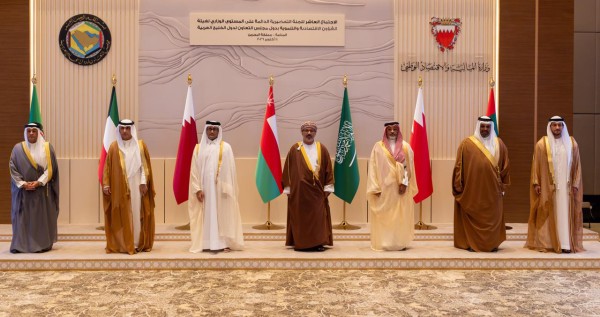
The GCC Secretary-General affirmed that accelerating economic unity and the customs union are pillars for enhancing competitiveness and facing global changes.
Translated by Qiyas from السياسة — Original source
Secretary-General of the Gulf Cooperation Council (GCC) Jassem Al-Budaiwi stated that accelerating economic integration pathways, completing the customs union, and establishing the Common Market of the Gulf States are pillars for enhancing the competitiveness of the GCC economies, strengthening their capacity to face global changes, and achieving sustainable development.
This came in a speech by Al-Budaiwi during the tenth meeting of the Standing Ministerial Preparatory Committee of the Economic and Development Affairs Authority of the GCC states, held in Manama today, Sunday, under the chairmanship of Bahrain’s Minister of Finance and National Economy, Sheikh Salman bin Khalifa Al Khalifa, and attended by members of the Standing Ministerial Preparatory Committee of the Authority for Economic and Development Affairs of the GCC states, including Minister of State for Economic Affairs and Investment and Acting Minister of Commerce and Industry, Abdulaziz Al-Marzouq.
Al-Budaiwi said that the Standing Ministerial Preparatory Committee of the Authority for Economic and Development Affairs of the GCC states is gaining increasing importance in supporting and monitoring these projects through the formulation of policies, initiatives, and practical projects, thereby achieving tangible impacts on the process of economic integration among GCC states.
The Secretary-General added that the meeting takes place amid rapid economic and geopolitical changes, which underscore the importance of enhancing coordination and integration among GCC states, boosting their collective capacities and integration, anticipating changes and their repercussions, and dealing with them efficiently and flexibly. This approach aims to mitigate the impact of these changes on GCC economies and enhance their readiness, resilience, and ability to adapt and respond.
He highlighted the importance of leveraging the effects of these developments to support growth and economic diversification, enhance competitiveness, support localization programs, and achieve sustainable development. He noted that GCC leaders, may God protect and care for them, emphasized during their consultative meeting held in Jeddah on April 28, 2026, the urgency of accelerating the achievement of the desired economic integration, including completing the requirements for reaching the final stage of the customs union, implementing the targets of the Common Market of the Gulf States on the ground, and expediting the execution of the railway project.
During his speech, he pointed to several economic indicators confirming the resilience of GCC economies and the progress made in economic diversification and integration pathways, according to statistics issued by the Gulf Cooperation Council Statistical Center for 2025. The GCC’s gross domestic product (GDP) at current prices reached approximately $2.4 trillion, making the GCC collectively the ninth-largest economy in the world.
He stated that, at the same time, the non-oil sector’s contribution reached about 79 percent of GDP, reflecting progress in diversifying the economic base. Furthermore, intra-GCC trade volume, measured by the value of intra-GCC exports, exceeded $177 billion, recording a growth rate of 125 percent compared to 2007, which reflects the significant role of the Common Market of the Gulf States.
He noted that the stock of intra-GCC investments exceeded $171 billion, representing more than 21 percent of the total stock of foreign direct investment inflows to GCC states.
