Rajavi: Hanging Ropes Will Not Stop the Iranian People's Uprising
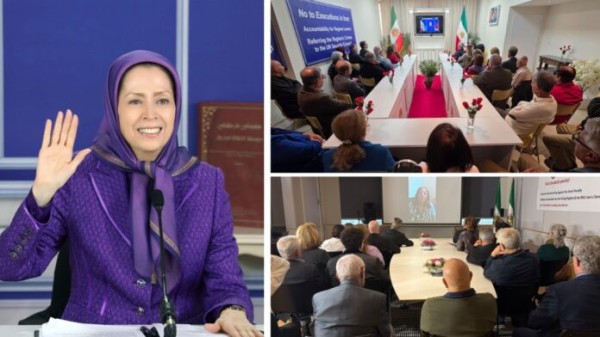
Calls for UN Action to Halt Executions and Hold Perpetrators of Crimes Against Humanity Accountable
Maryam Rajavi, the elected President of the Iranian Resistance, stated that the execution and massacre policies pursued by the Iranian regime will not be able to stop the people’s uprisings or save the regime from collapse. She made these remarks in a message marking the World Day Against the Death Penalty, addressed to an international conference organized by activists and human rights defenders online.
Rajavi said the occasion represents an opportunity to honor those executed in Iran for their struggle for freedom, noting that several political prisoners are still awaiting the execution of their death sentences, including Mohammad Javad Vaei II, who has been imprisoned since 2019.
News Services
She also paid tribute to the youth executed this year for their participation in the uprisings, the prisoners who have been continuing their “Tuesdays Against the Death Penalty” campaign for two years, and the families protesting death sentences.
Executions and Massacres
Rajavi recalled the massacres in the early 1980s that claimed tens of thousands of political prisoners, the 1988 massacre of 30,000 political prisoners, the killing of 1,500 protesters during the November 2019 uprising, 750 in the autumn of 2022, and thousands of young people during the January 2026 uprising.
She stated that the number of executions recorded during the Iranian year 1404, which runs from March 20, 2025, to March 19, 2026, reached 2,657, including at least 60 women.
She added that the regime executed at least 46 political prisoners in the past six months, including nine members of the People’s Mojahedin Organization of Iran (PMOI) and 37 detainees from the uprising. In the last two weeks alone, dozens of prisoners were executed, including five young men arrested during the January uprising.
Uprisings Will Not Stop
Rajavi said that the continuation of executions reflects, in her description, the regime’s fear of rising public anger, emphasizing that the Iranian people’s uprisings will not cease.
She pointed out that the collapse of the currency and the worsening economic crisis have placed a heavy burden on citizens, considering that the new Supreme Leader has lost many of the tools the regime relies on, leaving him with no option but to resort to executions, particularly against political prisoners.
She noted that the Fars News Agency, affiliated with the Islamic Revolutionary Guard Corps, published a call in July of last year to repeat what it described as the “successful experience of 1988.” She also referred to a statement by a judicial authority official on March 6, 2026, expressing readiness to follow the same approach against members of the PMOI.
She affirmed that the regime will not be able to dictate the destiny of the Iranian people with hangman’s nooses, nor will its remnants be able to preserve it. Similarly, the remnants of the Shah’s regime will not be able to return Iran to the Shah’s dictatorship.
Iran Without Executions or Torture
Rajavi said that the National Council of Resistance of Iran (NCRI) advocates for the abolition of the death penalty in “free Iran tomorrow,” and seeks to establish a society free from executions and torture, and a democratic republic based on human rights, peace, freedom, separation of religion from state, and equality between women and men.
Call to the United Nations
Rajavi also addressed a message she sent three days ago to the UN Secretary-General, calling for a global initiative to halt executions, killings, and crimes against humanity in Iran.
She demanded recognition of the executions of the 1980s, the 1988 massacre, and the massacres of protesters in 2019, 2022, and 2026 as genocide and crimes against humanity, and called for immediate cessation of executions, particularly against political prisoners and protesters.
She also called for the establishment of an independent international mechanism to investigate, collect evidence, and hold officials accountable, as well as for an end to impunity for regime leaders. She urged referring the file of serious violations to the UN Security Council, and the files of crimes against humanity and genocide to the International Criminal Court and relevant bodies.
She demanded that the UN Special Rapporteur on human rights in Iran, the independent international fact-finding mission, and international experts be granted access to prisons, detention centers, victims, and witnesses. She also called for making economic, political, and diplomatic relations with the Iranian regime contingent on halting executions and the killing of protesters.
Regayi concluded her message by calling for support of these demands and for action to stop executions and hold those responsible for crimes against humanity in Iran accountable.
