Al-Rumayhi analyzes 'Iranian Negotiating Mindset': The decision extends beyond the negotiating table
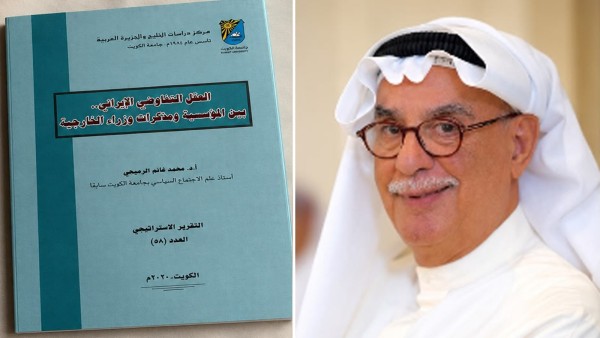
- A study published by the Gulf Studies Center highlighted the overlap among decision-making centers and the stability of strategic objectives.
- It emphasized the need to build institutional Gulf negotiation expertise and understand Iranian decision-making centers before evaluating statements.
The study by Dr. Mohammed Ghanem Al-Rumaihi, titled “The Iranian Negotiating Mindset: Between the Institution and Foreign Ministers’ Memoranda,” was released as Strategic Report No. (58) by the Gulf and Arab Peninsula Studies Center at Kuwait University for the year 2026. It examines the nature of Iran’s negotiating behavior and the institutional and historical factors governing the decision-making process in Tehran.
News Services
The study posits that Iranian negotiation is not an independent diplomatic activity, but rather an extension of the political system’s nature, its institutional structure, and its history. Understanding it requires looking at the centers of power that define objectives, grant authority, and make final decisions, rather than relying solely on officials’ statements or negotiation outcomes.
It clarifies that Iran’s foreign policy is not formulated by the Ministry of Foreign Affairs alone; rather, it involves a network of institutions, most notably the Supreme Leader, the Supreme National Security Council, the Islamic Revolutionary Guard Corps, the Presidency, and the Ministry of Foreign Affairs, with varying roles and influence depending on the nature of the issue. The study also notes that disagreements among these institutions may concern means and priorities, while shared strategic objectives remain constant. Furthermore, an negotiator’s approval does not necessarily guarantee the implementation of an agreement unless it is accepted by influential institutions.
Al-Rumaihi links Iran’s negotiating behavior to a historical accumulation extending from the Persian imperial experience, the Safavid state, and the modern state to the Islamic Revolution of 1979, as well as the impact of the Iran-Iraq War and international sanctions. The study argues that these experiences have helped shape an approach combining rhetorical rigidity with flexibility in means, allowing for phased concessions when circumstances dictate, while distinguishing between the stability of strategic objectives and the changing methods to achieve them.
The study examines the experience of Iranian Foreign Minister Abbas Araghchi in nuclear negotiations, highlighting the importance of technical preparation, legal, technical, and economic details, patience, tactical flexibility, and coordination between the negotiating team and decision-making centers. At the same time, it warns against relying solely on Araghchi’s memoranda to understand Iranian policy, stressing the need to compare them with official sources, historical facts, and testimonies from other officials.
The study presents Iran’s negotiation philosophy as a means to achieve state objectives, utilizing time in the negotiation process and waiting for changes in political, economic, and international conditions. It also clarifies that the continuation of communication channels does not necessarily mean proximity to an agreement, and that hardline political rhetoric can coexist with ongoing negotiations, while ensuring that all dialogue channels remain open even during periods of escalation.
Finally, the study reviews the 2015 nuclear agreement, noting that it demonstrated Iran’s ability to manage complex technical and political files, but it emphasizes that progress on the nuclear file does not necessarily signify a change in its regional policy. Relations with Gulf states involve considerations of maritime security, energy, regional influence, and international balances, alongside the impact of developments in Iraq, Syria, Lebanon, and Yemen.
Regarding the Arab Gulf states, the study emphasizes the importance of building institutional negotiating expertise that does not rely solely on individual skills, by training specialized personnel, documenting experiences, and developing research and analysis centers. It also underscores the necessity of linking political, security, and economic dimensions, maintaining communication channels during periods of disagreement and escalation, understanding Iranian institutions and their influence before assessing the statements of their officials, and developing specialized expertise in international law, security, energy, economics, and regional politics.
