'Nizah' examines Saudi experience in financial investigations and tracking suspicious funds
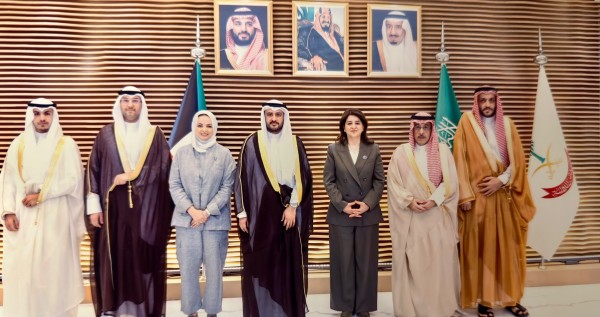
Visit by the General Commission for Combating Corruption delegation to the General Department of Financial Investigations to review mechanisms for tracking suspicious funds
Translated by Qiyas from السياسة — Original source
- Al-Faris: Tracing funds and uncovering their pathways is a cornerstone in combating corruption and recovering illicit proceeds
- Al-Daihani: Smart technologies and information integration enhance the accuracy of analysis and detection of financial suspicions
A delegation from the General Commission for the Fight against Corruption (Nazaha), led by the Commission’s Chairperson, Dr. Rana Abdullah Al-Faris, visited the Saudi General Directorate of Financial Investigations, under the Presidency of State Security, to observe Saudi Arabia’s experience in financial investigations and the tracking of suspicious funds.
News Services
The delegation was received by the Director General of the Directorate, Major General Mohammed bin Abdulrahman Al-Muhanna, in the presence of Dr. Nasser Aba Al-Khail, Vice President for International Cooperation at the Saudi Anti-Corruption Authority.
The delegation included Dr. Majid Mohammed Al-Daihani, Vice Chairman of Nazaha’s Board of Directors; Mr. Dhiyab Isam Al-Otaibi, Board Member; Mr. Fawaz Mahail Al-Mudhaf, Assistant Secretary General for the Corruption Detection and Investigation Sector; and Mr. Abdulrahman Al-Wazan, Representative of the International Cooperation Department.
The delegation learned about the mechanisms for receiving and analyzing reports of suspicious financial transactions, the use of smart programs and modern technologies to detect financial suspicions, as well as coordination with relevant government entities and information exchange with them, thereby enhancing the accuracy and effectiveness of investigations.
Dr. Al-Faris emphasized that tracing funds and uncovering their pathways constitute a fundamental pillar in confronting corruption. She noted that pursuing criminal proceeds requires specialized capabilities in financial data analysis, information linking, and coordination among relevant authorities.
She stated, “Combating corruption is not complete merely by exposing the incident. It is essential to know where the money went, how it was transferred, and who benefited from it. The stronger our ability to answer these questions, the more effective the pursuit and recovery of illicit proceeds become.”
She clarified that the Saudi experience is distinguished by combining advanced technologies with institutional integration, through analyzing information and linking it with data available at relevant entities. This helps uncover relationships between transactions and associated parties, forming a more comprehensive picture of fund movements.
She stressed the need for continuous development of detection and analysis tools to keep pace with evolving methods of concealing funds, and to strengthen cooperation among competent authorities. This ensures integration between financial information and investigative work, in accordance with the legal frameworks governing each entity’s operations.
For his part, Mr. Al-Daihani emphasized the importance of financial analysis in transforming scattered data into information that enables competent authorities to understand suspicious transactions and uncover links between individuals and entities involved.
He noted that a single financial transaction may not reveal the full picture, but linking it with other transactions and information may expose patterns warranting further examination and investigation. He affirmed that leveraging smart technologies and integrating information among entities enhance the accuracy of analysis and the efficiency of detecting financial suspicions.
He added that coordination with relevant government entities provides information supporting financial investigations and verifying related links, pointing out that the effectiveness of this system depends on the integration of technology, specialized expertise, and data quality.
He explained that observing the Saudi experience allows for benefiting from its expertise in analyzing reports and coordinating with local entities and international peer units, thereby contributing to the development of technical capabilities and a better understanding of fund flows linked to corruption suspicions.
The Saudi General Directorate of Financial Investigations is responsible for receiving reports of suspicious transactions from designated financial institutions and non-financial businesses and professions, analyzing the data, preparing reports on them, referring cases that warrant action to the competent authorities, and exchanging information and expertise both domestically and internationally.
Al-Faris expressed her appreciation to Major General Al-Muhanna for the warm reception, emphasizing the importance of exchanging expertise in the use of modern technologies and enhancing institutional cooperation to uncover illicit financial flows and track the proceeds of corruption.
The visit is part of the program of the “Nizahat” delegation in the Kingdom of Saudi Arabia, aimed at learning from specialized institutional experiences in preventing and detecting corruption, pursuing its proceeds, and protecting public funds.
