Washington imposes wide-ranging sanctions on 'International Criminal Court' amid rejection from the court and EU
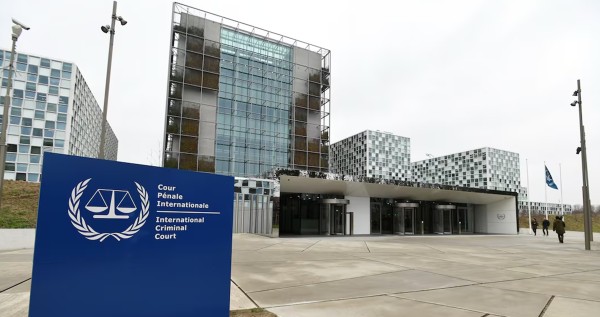
The United States imposes wide-ranging sanctions on the International Criminal Court, sparking strong rejection from the court and the European Union, while Washington affirms its non-recognition of the court's jurisdiction over its citizens.
Translated by Qiyas from السياسة — Original source
The United States announced on Friday the imposition of broad sanctions on the International Criminal Court (ICC), aimed at prohibiting financial dealings with the court, cutting off its resources, and undermining its operational capacity. The ICC and the European Union expressed their rejection of these measures.
U.S. Secretary of State Marco Rubio stated in a declaration that Washington took this step after the Court and its member states failed to address U.S. concerns. He emphasized that the United States does not recognize the Court’s jurisdiction over its citizens, members of its armed forces, or political leaders, and has not joined the Court since its establishment.
Rubio stressed that President Donald Trump would not allow Americans to be prosecuted before the Court, noting that Washington had delayed imposing sanctions for over a year in hopes of reaching an understanding, but without any concrete steps taken to address its concerns.
News Services
He clarified that the measures were designed to allow for their reversal in the event of a diplomatic resolution, urging ICC member states, particularly U.S. allies, to work on addressing these concerns, and warning that further U.S. actions against the Court would continue if this did not happen.
ICC Rejects Sanctions
For its part, the International Criminal Court rejected the U.S. sanctions, describing them as an attempt to obstruct justice and undermine the rule of law and the independence of the international judiciary. It called on member states to support it and ensure its continued operation.
The Court affirmed that it would continue to carry out its judicial functions, investigate crimes within its jurisdiction, and prosecute those responsible, despite the U.S. measures.
Nazhat Shah, Deputy Prosecutor of the Court, told Reuters that the sanctions target the undermining of the rule of law at the international level and the functioning of an independent judicial institution, reaffirming that investigations and prosecutions would continue.
European Union Supports the Court
For his part, the European Union expressed deep regret over Washington’s decision, reiterating its support for the independence of the International Criminal Court and its ability to continue its work.
The European Commission stated in a declaration that it would work in coordination with the Court and the 125 states party to the Rome Statute to ensure its continued independent and effective operation.
It noted that the six-month deadline specified for the U.S. measures provides an opportunity for dialogue with Washington, affirming the EU’s readiness to take necessary measures to protect the Court’s work and the interests of European economic entities within the single market.
For his part, Dutch Foreign Minister Tom van der Linde described the sanctions as a deeply regrettable step, reaffirming his country’s commitment to defending the Court, which is headquartered in The Hague, and calling for the six-month period to be used for dialogue.
