Kuwait: UN Force Measured by Implementation, Not Just Resolutions
- Kuwait reiterated its condemnation of Iranian attacks and its commitment to the full implementation of Resolution 2817, despite the continuation of attacks after its adoption.
- It called for the implementation of international legitimacy resolutions without selectivity and affirmed support for Yemen and the Palestinian people’s right to establish their independent state.
The State of Kuwait affirmed today, Thursday, that the strength of the United Nations is not measured solely by the number of resolutions adopted by its organs, but by the extent to which those resolutions are respected and implemented, and by the system’s ability to translate what member states agree upon into tangible results on the ground.
News Services
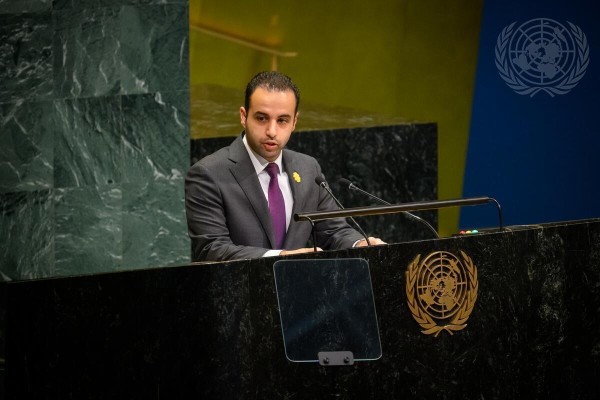
This came in a statement by Kuwait, delivered by Third Secretary of its Permanent Mission to the United Nations, Abdulaziz Al-Saadi, during a general debate of the UN General Assembly to discuss the agenda item entitled “Implementation of United Nations resolutions.”
Al-Saadi said that the purpose of adopting resolutions is not fully realized by merely approving their texts, but by achieving the objectives for which they were issued. He emphasized the need to strengthen systematic follow-up mechanisms for implementing resolutions of UN organs, particularly the Security Council, to enable the assessment of implementation levels, identify cases of non-compliance, and address them.
In this context, he recalled Kuwait’s experience during the brutal Iraqi invasion in 1990, citing it as a prominent example of the effectiveness of multilateral international action when international legitimacy resolutions are coupled with serious political will for their implementation.
He noted that Security Council resolutions—from Resolution 660, which demanded the immediate and unconditional withdrawal of Iraqi forces from Kuwait, to Resolution 687—contributed to restoring the country’s freedom, independence, and territorial integrity.
He affirmed that this experience proved the UN’s capacity to protect state sovereignty, deter aggression, restore rights, and safeguard international peace and security, calling for this model to be maintained as the norm for international action rather than an exception in its history.
In a related context, Al-Saadi reiterated Kuwait’s strong condemnation and rejection of Iranian attacks on the country since February last year, involving ballistic missiles, cruise missiles, and drones, despite Kuwait’s non-involvement in the ongoing regional conflict and its refusal to allow its territory, airspace, or territorial waters to be used for any military operations against Iran.
He pointed out that these attacks repeatedly targeted civilian objects and vital infrastructure, including Kuwait International Airport, power and water stations, and oil facilities, resulting in martyrs and civilian casualties, injuries to others, and significant material and economic damage.
He referred to the Security Council’s adoption of Resolution 2817, which affirmed the sovereignty and territorial integrity of Kuwait, the Gulf Cooperation Council (GCC) countries, and Jordan. He warned that attacks continued after the resolution’s adoption by Iran and its loyal militias in Iraq.
He added that Kuwait has been keen to document these attacks and keep the Security Council informed through successive official letters, reaffirming its commitment to the full implementation of Resolution 2817 and the necessity of adopting a single, consistent standard in respecting and implementing international legitimacy resolutions without selectivity.
Regarding the Yemeni issue, Al-Saadi affirmed Kuwait’s support for the legitimate Yemeni government, as well as Yemen’s sovereignty, independence, and territorial integrity. He reiterated Kuwait’s full solidarity with the Kingdom of Saudi Arabia in the face of Houthi militia attacks on its territory, targeting civilians, civilian objects, and navigation in the Red Sea and the Bab al-Mandab Strait.
He emphasized that the security of the Kingdom of Saudi Arabia is an inseparable part of the security of the State of Kuwait and the Gulf Cooperation Council countries, calling on the UN Security Council to ensure the full implementation of its relevant resolutions, particularly Resolutions 2216 and 2722, thereby putting an end to such attacks and preserving the security and stability of the region.
Regarding the Palestinian issue, Al-Saaidi stated that the continued failure to implement resolutions of international legitimacy represents a clear example of the gap between the adoption and application of resolutions, despite decades having passed since their issuance.
He affirmed the Palestinian people’s right to self-determination and to establish their independent state on the June 4, 1967 borders, with East Jerusalem as its capital, noting the continued incomplete implementation of UN Security Council Resolution 2334, which called for the immediate and complete cessation of all settlement activities in the occupied Palestinian territory.
He called for the consistent and non-selective application of UN resolutions, using the same standard for all issues and countries, thereby enhancing the credibility of international legitimacy and safeguarding the legitimate rights of peoples.
Concluding Kuwait’s statement, Al-Saaidi reaffirmed the State of Kuwait’s firm commitment to the UN Charter and the international rule-based order, calling for a renewed collective commitment to respecting and fully and consistently implementing the Organization’s resolutions.
He stressed that the challenge facing the United Nations does not lie in its ability to adopt more resolutions, but rather in bridging the gap between the adoption and implementation of resolutions, thereby strengthening the confidence of states and peoples in the UN system and its capacity to safeguard international peace and security.
