Siyah Shaie Abushaiba: The Agricultural Sector is a Pillar of the National Economy... Professional Farmers in Kuwait Are Increasing
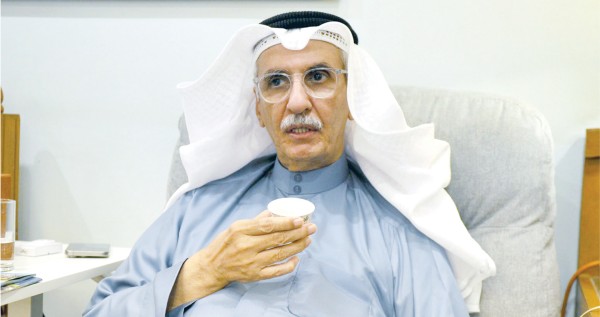
Former President of the Kuwaiti Farmers Union, Siyah Shaie Abushaiba, emphasized the agricultural sector's role in the national economy, praising the achievements of Abdali farmers and the role of Sheikh Ibrahim Al-Duwaish Al-Sabah in modernizing agriculture.
Translated by Qiyas from السياسة — Original source
Praising the agricultural and urban achievements in "Al-Abdali"... and the future is better
Sheikh Ali Jaber Al-Ahmad restored the Farmers Union to its proper standing
Agricultural loans, government support, treated water, and conversion are necessities
Pioneer farmers stormed the Al-Abdali desert, and abundance... thanks to them
Sheikh Ibrahim Al-Duwaish deserves great credit for modernizing Kuwaiti agriculture
Adnan Makkaoui Jarada
The former President of the Kuwaiti Farmers Union, Sayyah Shaie Abou Shaida, praised the magnificent agricultural and urban achievements realized by Kuwaiti farmers, with the assistance of successive governments, in the Al-Abdali agricultural area, located at the far north of Kuwait along the Kuwaiti-Iraqi border. In an extensive agricultural interview conducted with him by "Al-Siyasa" in the presence of several regulars at his diwaniya, Abou Shaida stated that he is proud of what has been accomplished in the Al-Abdali agricultural region, and that the future will be better, God willing.
He did not forget to commend and praise the participation of resident Arabs in achieving these proud agricultural and urban accomplishments for Kuwait and its people, in all agricultural areas, especially remote border regions.
[Advertising Services]
[Digital Subscriptions]
[Al-Siyasa News]
Abu Nasser also spoke highly of the elite of the pioneer farmers who stormed the Al-Abdali desert in the early 1960s, thereby establishing the Al-Abdali agricultural area. Thanks to them, and to those who followed them—his Kuwaiti brothers and sons—this long, wide border region has become a destination for Kuwaitis seeking spacious fields, greenery, and relaxation, particularly during winter and spring.
He said: "We currently have, praise be to God, thousands of farms in Al-Abdali, whereas there were once only dozens; they are extremely luxurious and peak in production, genuinely contributing to achieving a vital part of the country’s and people’s food security."
Among the elite farmers and officials mentioned by Sayyah Abou Shaida in this context are: Sheikh Mubarak Sabah Al-Nasser, who, in addition to establishing the Al-Abdali agricultural area, founded the Kuwaiti Farmers Union, along with farmer Abdul Rahman Al-Safran, Fahd Thunayan Al-Ghanim, Nasser Al-Sayer, Abdullah Al-Muhaini, Abdullah Al-Bedaiwi, Abdullah Al-Rashed Al-Wasmi, Abbas Habib Manawer, Lafi Al-Lafi, Abdullah Al-Lafi, Abdul Rahman Al-Majhem, Khalaf Al-Awalig, Saier Zaid Al-Shammari, Abdullah Ghudnan Al-Shammari, Muaid Al-Suwarij, Abdul Khaliq Al-Nouri, Badr Al-Jarri, Mohammed Shaie Al-Azmi, Mardhi Al-Azina, and Marzouq Al-Tamar.
He also spoke highly of the good efforts of the late Khaled Al-Masoud Al-Falih, and many others "may God reward them all with goodness in this world and the hereafter."
Abu Nasser said: "There is an elite of Kuwaiti farmers and officials who have rendered great services to Kuwaiti farmers in the battle to transform the Al-Abdali desert into lush, flourishing, and vibrant farms that yield the most delicious types of vegetables, produce, and fruits, both in the past and present. They are numerous, and I specifically mention here Sheikh Ibrahim Al-Duwaish Al-Sabah, the first president of the Board of Directors of the Public Authority for Agriculture and Fishery Resources in the early 1980s. This venerable Sheikh deserves great credit for encouraging the veteran farmers of Al-Abdali and Al-Wafra to adopt protected agriculture through greenhouses and modern agricultural complexes."
He added: "Before I forget; we, the farmers in the Kuwaiti Farmers Union, were among those who called for the state to establish an independent general authority for agricultural affairs in Kuwait; thus, this authority was established in 1982 and remains in existence to this day."
He said: "It is our good fortune as farmers that the first president of this authority was Sheikh Ibrahim Al-Duwaish Al-Sabah; he, thankfully, modernized agriculture and initiated a genuine, modern agricultural renaissance, after agriculture had been merely traditional field cultivation, and agricultural affairs were just a department subordinate to the Ministry of Public Works."
Abu Shiba also spoke highly of all the chairmen of the Kuwait Farmers Union’s boards of directors since the 1970s, specifically thanking Sheikh Ali Jaber Al-Ahmad Al-Sabah, who rendered significant services to agriculture and farmers, thereby elevating the Kuwait Farmers Union to a prestigious standing among all government ministries and institutions.
He said: “We will never forget that he was instrumental in resuming operations at the Kuwait Farmers Union building immediately after liberation, and in reviving the publication of ‘Al-Muzari’ (The Farmer) magazine, which I had the honor of managing for the first time in June 1978, when I served as secretary of the first board of directors of the Kuwait Farmers Union. This magazine holds a special place in my heart, and I take pride in its existence to this day.”
“Our Achievements Are Substantial”
Abu Nasser stated: “What we accomplished, as the pioneering members of the Kuwait Farmers Union at that time, was a national duty that we will proudly cherish as long as we live. We thank God that successors followed us to continue this work. Among the initiatives undertaken by my colleagues and me in the first board of directors of the Kuwait Farmers Union were the establishment of reputable marketing channels for local products, the adoption of a government policy providing direct cash subsidies to farmers, and the permission for farmers to transfer agricultural land leases to others. Additionally, we ensured that producing farmers could obtain loans from the Agricultural Credit Bank. Here, I extend my gratitude to the bank’s president at that time, Abdul Rahman Al-Majhem, may God strengthen him.
“On the international front, we hosted in Kuwait, with the knowledge of the relevant official authorities, an agricultural conference for Arab farmers and agricultural cooperatives, which included participation from numerous Arab countries. The conference was held at the Agriculture Authority in Al-Rabiyah. I had the honor of subsequently becoming president of the General Union of Arab Farmers and Agricultural Cooperatives.
“Furthermore, during our tenure leading the Kuwait Farmers Union, we opened marketing centers in Al-Jahra, Al-Ruqqa, and Al-Andalus to promote Kuwaiti products.
“From Good to Better”
Regarding agricultural, infrastructural, and general activities in the Abdali agricultural zone, the interviewee, farmer Sayyah Abu Shiba, stated: “Agricultural conditions have improved from good to better, God willing. Kuwaiti farmers, in general, are diligent and creative in their work, ready to endure hardships for the elevation of their country and the prosperity of its people. I add nothing new when I say that Kuwait’s professional farmers have proven their competence and resilience in times of ease and hardship. Today, they produce dozens of varieties of vegetables, fruits, and other crops, offering them in local markets at competitive prices. May God increase and bless their efforts.
“He added: “Kuwaiti farmers are well-equipped to deliver even more and better agricultural output, provided that treated water is made available, government cash subsidies are increased to keep pace with the steady growth in agricultural production, and its development in both quantity and quality.
“Supporting the Kuwaiti producing farmer is akin to supporting the consumer brother and serves the national economy. Many Kuwaitis have become professionals in agricultural work or maintain direct or indirect ties with this vital sector. No one can deny that the agricultural sector is large, rich, and abundant, and currently constitutes one of the pillars of the nation’s flourishing economy, God willing.
“By the way, the Kuwaiti farmer does not fear imported agricultural products. Personally, I do not advocate for banning imports even during peak production seasons, because I do not fear that fresh Kuwaiti agricultural products will be outcompeted by imports in their own domestic market. Kuwaiti agricultural products currently enjoy a good reputation among the growing number of conscious consumers in Kuwait. I also commend the presence of the ‘Farmer’s Corner’ in every consumer cooperative.”
He has opened new, prestigious marketing outlets in additional prime locations within residential areas. In this context, I call on the relevant authorities to activate a rapid and secure laboratory inspection process for imported agricultural and food products before they are released to the market, as the health of the people is the most precious objective sought from the Lord of all beings.
Furthermore, I urge the expansion of using quadruple-treated wastewater for agricultural irrigation in Al-Abdali and Al-Wafra, as we have no alternative to these waters due to our scarcity of natural freshwater suitable for agricultural irrigation.
I also advocate for adhering to sound scientific and practical decisions, specifically that the area of the model farm in Al-Abdali and Al-Wafra should not be less than 50,000 square meters, and that every owner of a farm in these areas should be encouraged to engage in productive agricultural output. Given that our agricultural land is limited, we must cultivate all of it with crops that benefit both the people and the nation.
We look forward to further initiatives from the wise government in the form of new future visions and projects to encourage Kuwaiti farms and provide them with moral and material support, enabling them to secure the desired food security.
