Deputy Minister of 'Educational Affairs': 66 Islamic Education teachers in a single school
- We inherited disparities in the distribution of staff from previous administrations.
- One kindergarten without a supervisor, while another has 12... and three department heads for the same specialization in a single school!
- The transfer of supervisory staff was aimed at addressing disparities and achieving balance among schools.
- We maintain a reserve ratio of 7 percent for male teachers and 20 percent for female teachers.
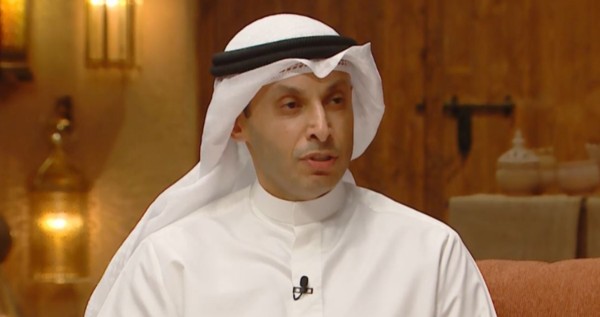
Hamad Al-Hamad, Assistant Undersecretary for Educational Affairs at the Ministry of Education, confirmed the existence of "unacceptable disparities in the number of teachers across different programs," revealing that there are 66 Islamic education teachers in one school in Ahmadi and 12 decoration teachers at the Religious Institute.
News Services
Al-Hamad stated during a televised interview today that "we inherited disparities in staff distribution from previous administrations." A committee was formed to address the issue, and they found significant imbalances in numbers. For instance, there were major disparities in the number of technical supervisors in kindergartens; one kindergarten had no supervisor, while another had 12. He noted that the manual transfer mechanism previously used caused distribution imbalances.
He revealed that three department heads for the same specialization were found in a single school. Two of them were transferred to rectify the imbalance and achieve equilibrium in the distribution of supervisory positions. He added, "The Ministry formed a specialized committee to redistribute teachers fairly among schools, ensuring balance across various specializations."
He emphasized that the decision to redistribute teachers was based on an automated program, following the determination of the actual need for each specialization in every school. The transfer of supervisory staff was aimed at addressing disparities and achieving balance among schools.
He pointed out that the Ministry had suspended certain specializations at the University of Kuwait and contacted colleges of education to halt student admissions in specializations suffering from significant surpluses. He clarified that teacher transfers, based on the latest appointment criteria, relied on the principles of justice and transparency, taking into account the surplus size at each school and its geographical location.
While confirming that the appeals process remains open for teachers, considering humanitarian and special cases, with a specialized committee reviewing each case individually, he explained that the large number of teachers affected by transfer decisions is due to schools suffering from shortages in their teaching staff.
In a related matter, Al-Hamad mentioned linking the teacher and student registries to determine the actual need for each subject, based on the required number of teachers for each specialization. He stated that the Ministry maintains a reserve ratio of 7 percent for male teachers and 20 percent for female teachers.
The Assistant Undersecretary denied that any teacher had been transferred to a kindergarten, calling for accuracy and affirming that the Ministry applies governance according to the organizational structure. He noted that the transfer of supervisory staff was based on the "most senior" criterion for promotion.
Al-Hamad confirmed that the Minister had directed the review of humanitarian and exceptional cases related to distance, noting that the electronic appeals platform allows teachers to easily object to transfer decisions.
In messages to teachers and parents, the Assistant Undersecretary stated that "teacher transfers typically continue until October 1 of each year. We reassure parents that a teacher will be available for students in every subject. Our message to teachers is that our goal is to stabilize the school environment, and reform is a long journey requiring patience."
