NATO: Looking forward to enhancing security cooperation with Kuwait and Gulf states in 4 vital areas
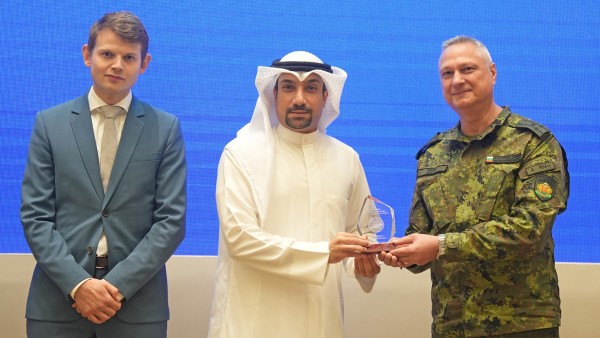
NATO team head confirms the Alliance's commitment to enhancing security partnership with Kuwait and Gulf states in counter-terrorism, maritime security, and nuclear threats.
Translated by Qiyas from السياسة — Original source
Bursma: Countering Drones and Terrorism, Enhancing Maritime Security, and Addressing Chemical, Biological, Radiological, and Nuclear Threats
Frans Bursma, head of the NATO team at the NATO Regional Center and Istanbul Cooperation Initiative (ICI) in Kuwait, affirmed the Alliance’s commitment to strengthening its security partnership with Kuwait and the Gulf Cooperation Council (GCC) countries in four key areas: countering drones and terrorism, maritime security, and defense against chemical, biological, radiological, and nuclear threats.
News Services
Bursma, in a statement to the Kuwait News Agency (KUNA) following the conclusion of the “Crisis Management and Disaster Response” course, said that NATO has launched four projects to deepen security cooperation with countries in the region and exchange expertise in addressing common challenges, as part of a renewed approach to enhancing Gulf partnerships amid current security developments.
He stressed the importance of expanding cooperation to include all GCC member states, praising Kuwait’s role in hosting the NATO Regional Center and the Istanbul Cooperation Initiative, which serve as platforms for dialogue, coordination, and knowledge exchange between the two sides.
He noted that the Center, which opened in 2017 and is preparing to celebrate its tenth anniversary next year, offers the capacity to host experts and specialists, organize training programs, and launch joint initiatives.
He pointed out that the partnership between NATO and Gulf countries is based on the exchange of knowledge and expertise, leveraging the region’s experience in handling security challenges and crisis management, alongside NATO’s expertise in these fields.
He added that the Center works to enhance mutual understanding and share best practices through training courses, political dialogues, interactive exercises, and tabletop simulations.
Regarding the “Crisis Management and Disaster Response” course, Bursma expressed his appreciation for the cooperation with the Bulgarian Center of Excellence for Crisis Management and Disaster Response, which delivered the training program for the second time after its participation last year.
He emphasized that crisis management and disaster response are priorities for all countries, particularly GCC nations amid current regional conditions, stressing the need to develop capabilities and raise readiness levels to handle emergencies.
News Readings
Read News
News
For his part, Emad Al-Kandari, Director of the NATO Regional Center and Istanbul Cooperation Initiative, stressed the importance of joint training programs in developing regional capabilities and enhancing the exchange of expertise and knowledge in crisis management and disaster response.
In a similar statement to KUNA, Al-Kandari said that Kuwait’s hosting of these programs underscores its role as a key partner in the Istanbul Cooperation Initiative and reflects the Center’s commitment to developing capabilities and strengthening partnerships with relevant countries in line with developments and meeting their needs.
He explained that the course, held from October 5 to 8 in cooperation with the Bulgarian Center of Excellence, saw the participation of 31 trainees from GCC countries. It aimed to develop their skills in planning, preparedness, crisis management, mitigating the impacts of disasters, and reaching the recovery stage.
He praised the participants’ engagement and their contributions to enriching discussions and practical experiences, confirming that this helped achieve the program’s objectives and gain shared expertise that can be applied in their respective fields.
He noted the Center’s keenness to continue organizing specialized training programs and activities in cooperation with relevant institutions in NATO member states, to enhance the exchange of knowledge and expertise with countries in the region.
The session is part of a series of activities organized by the NATO Regional Centre of Excellence and the Istanbul Cooperation Initiative in Kuwait, aimed at strengthening partnership and developing shared capabilities in security, crisis management, and disaster response.
