Assistant Al-Zamil: 'Dasma Theater' is in Trustworthy Hands!
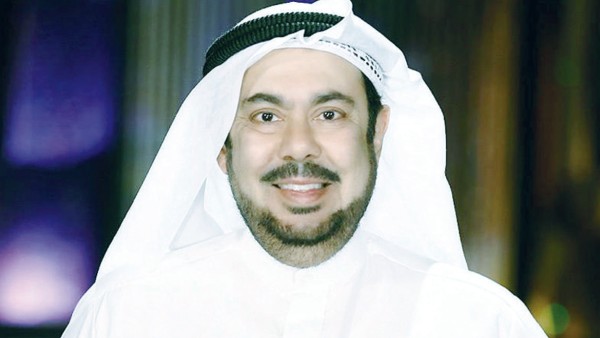
Complete rehabilitation of Dasma Theater and its official opening in October 2026
Translated by Qiyas from السياسة — Original source
Al-Salam Al-Awwal Snatches the Contract from Competitors... Name, Reputation, Standing, and Bid
Professor Al-Muslem: We spared neither money nor thought nor resources for a “symbol” known to all generations
Dr. Tariq Al-Ali: We all have high hopes and confidence in the National Council for Culture, Arts and Letters’ support for the arts and culture industry
“In Trustworthy Hands”... Three words that summarized everything that could be said about the partnership agreement uniting the public and private sectors, represented by the National Council for Culture, Arts and Letters and Al-Salam Al-Awwal for General Trading and Contracting, to restore life and spirit to Al-Dasmah Theater through a five-year investment project that will establish a cultural front and a theatrical edifice with global capabilities. Many details were unveiled at a press conference held on the stage of Al-Dasmah Theater, attended by Assistant Secretary-General for Financial, Administrative, and Supporting Artistic Affairs at the National Council for Culture, Arts and Letters, Muassad Al-Zamil, representing Council Secretary-General Dr. Mohammed Al-Jassar; and the Chairman of the Board of Directors of Al-Salam Al-Awwal for General Trading and Contracting, and its branch, Al-Salam Media Group, Professor Dr. Abdulaziz Abdullah Al-Muslem, alongside artist Dr. Tariq Al-Ali, as well as representatives of local media and press.
“Trust and Trustworthy Hands”
Al-Zamil began by stating that the Al-Dasmah Theater development project is the fruit of institutional work and a genuine partnership between the National Council for Culture, Arts and Letters and the private sector. He clarified that six companies submitted bids, three of which met the requirements, before the contract was awarded to Al-Salam Al-Awwal as the highest bidder that fulfilled the specified conditions and requirements. He emphasized that this partnership was not built merely on the concept of assigning the project to a traditional contractor, but rather on selecting an entity that combines executive capability with artistic and theatrical expertise, thereby ensuring the preservation of the theater’s historical identity and its development by specialists who understand the needs of the theater, artists, audiences, and producers.
He pointed out that the first challenge they faced at the time was staging the Kuwait Theater Festival; coordination was carried out with the General Fire Force to obtain temporary licenses, while fire trucks were provided throughout the festival period, given that the old theaters were not equipped with modern fire suppression systems.
News Services
Al-Zamil stressed that putting Al-Dasmah Theater up for investment and development was a pivotal step in reviving theater facilities, expressing his satisfaction with what has been achieved over three months and his confidence that the theater is now in trustworthy hands.
“Global Capabilities”
For his part, Professor Dr. Abdulaziz Abdullah Al-Muslem affirmed that the development of the Dasma Theater does not merely represent the reopening of a building, but rather the restoration of a cherished artistic and cultural memory, and the opening of a new chapter in the history of one of Kuwait’s most important theaters. He praised the vision of the political leadership and the government in supporting culture and the arts and enhancing partnerships between state institutions and the private sector. He commended the efforts of the National Council for Culture, Arts and Letters under the leadership of its Secretary General, Dr. Mohammed Al-Jassar, and the prominent role played by Assistant Secretary General Muassad Al-Zamil in proposing the project, following it up, overcoming its challenges, and expediting its procedures until it transformed from an idea into a realized achievement. Al-Muslem stated that the Dasma Theater “does not belong to a specific entity, generation, or artist; rather, it is part of Kuwait’s cultural memory.” He emphasized that its development honors the pioneers, stars, and creators of Kuwaiti theater, and extends their great legacy across generations. He noted that the Dasma stage has hosted works deeply embedded in Kuwaiti and Gulf memory, including “Bye Bye London,” “Hello Bangkok,” and “Hami Al-Diyar,” as well as the first play performed after liberation, “Kuwait is Free,” and the two national plays, “Desert Storm” and “Sword of the Arabs,” among other works that made this theater a witness to landmark moments in Kuwait’s artistic and national history. Al-Muslem also recalled his historical relationship with the Dasma Theater after Kuwait’s liberation, when he personally funded, in cooperation with steadfast Kuwaiti volunteers, its restoration, repair of its facilities, and rehabilitation of its infrastructure following the damage and looting it suffered during the brutal Iraqi invasion.
“Three Months”
Al-Muslem clarified that the current development project was completed in just three months, despite regional challenges, disruptions in some shipping and supply lines, delays in the arrival of certain materials and equipment, and exceptional conditions including high temperatures. He affirmed that the work team continued execution at an intensive pace to bring the theater to a level befitting its history and the Kuwaiti public.
The works included the complete removal of the building’s roof and installation of a new one, supply and installation of security, safety, fire-fighting, electrical, and sanitary systems, rehabilitation of the stage, backstage areas, and its lifts, and installation of advanced lighting and sound systems. Additionally, the audience hall, seats, and wall cladding of the theater hall, as well as interior and exterior ceilings, were renovated. The project also involved equipping and furnishing artists’ rooms, corridors, reception areas, and support service zones.
Al-Muslem stressed details in theatrical production, stating that “hearing is the foundation of theater,” and that one of the project’s main objectives is to restore the natural relationship between the actor’s voice and the audience, while reducing over-reliance on microphones whenever the nature of the performance allows. This is complemented by providing modern technical infrastructure to support lighting, sound, visuals, effects, and scenography.
He explained that theater management has already begun receiving booking requests from producers, artistic troupes, government and private entities, and civil society organizations to utilize the theater, its hall, facilities, and artistic and technical services, thereby enabling the preparation of an active cultural and artistic agenda throughout the year. He affirmed: “We spared no expense, thought, or resources for a ‘symbol’ known to all generations.”
“Official Opening”
Al-Muslem revealed that the official opening of the theater will take place on October 29, 2026, with the launch of the play “Al-Taqqa Noura – Jinn’s Wedding,” starring the veteran actress Huda Hussein. He emphasized that the production will be presented in a new format that leverages advanced stage, sound, lighting, effects, and scenography capabilities, adopting an artistic and technical form that aligns with global theatrical performances. He added that the choice of this work for the theater’s opening stems from its popular and production value, as well as its ability to showcase the potential of the Dasmah Theater after its renovation, offering an experience that blends the authenticity of Kuwaiti theater with the latest artistic technologies.
“Omra”
For his part, artist Dr. Tariq Al-Ali began his remarks with a comedic tone, quoting the Egyptians: “The Arabic audience wants Omra,” referring to the comprehensive renewal the theater has undergone and the revival of its facilities and equipment.
Al-Ali stated that Dr. Abdulaziz Al-Muslem played a prominent role in restoring the Dasmah Theater after the liberation of Kuwait and addressing the destruction left by the invasion, emphasizing that these efforts contributed to restoring morale among young and creative artists at the time.
He added that the Dasmah Theater holds beautiful memories for Kuwaitis, and its current development returns one of its most important platforms to the theatrical scene, especially at a time when producers struggle to find suitable and equipped venues for performances, prompting some to convert cinema halls and other locations into temporary theaters.
He clarified that Kuwaiti producers reinvest the returns from their works into theater development, and that support from the state, the National Council for Culture, Arts and Letters, and the private sector is a key factor in sustaining artistic activity. He called for completing the development of other Kuwaiti theaters in accordance with safety, security, and fire prevention standards.
