Vance: Iran Must Reduce Uranium Enrichment Capacity to End War
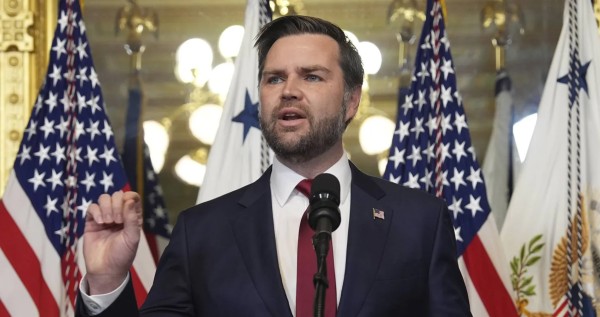
US Vice President Vance conditions concrete steps from Iran to reduce enrichment to end the war
Translated by Qiyas from السياسة — Original source
“We want concrete steps from Tehran, not just commitments… and we remain open to an agreement.”
US Vice President JD Vance said Iran must make a “concrete” reduction in its uranium enrichment capacity to meet US demands and end the seven-month war, emphasizing that Washington wants practical steps from Tehran rather than mere pledges.
In an exclusive interview with Reuters, Vance clarified that any agreement to end the war would require Iran to reduce its uranium enrichment capacity, rather than providing assurances that it would do so in the future.
He asked, “If you don’t want a nuclear weapon, why do you need 60 percent enriched fuel?” adding that Iran must take a concrete step regarding its enrichment capacity if it wishes to demonstrate its commitment to not developing a nuclear weapon.
Vance affirmed that the United States remains open to reaching an agreement with Iran, but insisted on actual nuclear concessions, stating that Washington “will not trade words for actions.”
Over recent weeks, the United States and Iran have exchanged proposals aimed at ending the war and reopening the Strait of Hormuz, but these have not yet resulted in an agreement. Earlier, US President Donald Trump rejected Iran’s latest offer and hinted at escalating military operations following the US midterm elections.
Vance revealed that the United States is holding talks with Iranian President Masoud Pezeshkian and Foreign Minister Abbas Araghchi, but noted that Washington is uncertain about the extent of their authority within Iran’s decision-making structure.
On the same day, Trump stated that the “biggest problem” he faces is that no one knows who is running Iran, adding that the country’s leaders and the “second tier of its leadership” have departed.
In response, Ismail Baghai, spokesperson for the Iranian Ministry of Foreign Affairs, insisted that US officials are well aware of their Iranian counterparts and Iran’s decision-making mechanism, arguing that the problem lies in the contradictory positions and messages issued by US officials.
Vance said that Iranian forces remain capable of occasionally targeting commercial ships in the Strait of Hormuz, but are largely unable to prevent energy exports from transiting through the waterway.
