'Education': Investing in teachers' capabilities is a key pillar for improving education quality
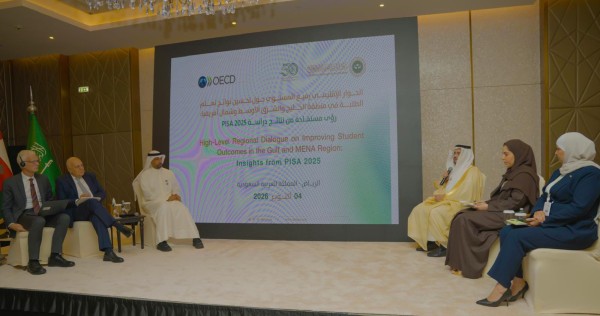
The Ministry of Education emphasized that investing in teachers' capabilities is a key pillar for improving education quality, during Khaled Al-Rashid's participation in a regional dialogue on the results of the PISA 2025 study
Translated by Qiyas from السياسة — Original source
Khaled Al-Rashid: Empowering students with scientific reasoning and critical thinking skills is an educational priority
The Ministry of Education affirmed that investing in teachers’ capabilities represents a core pillar in enhancing the quality of the educational process and achieving better learning outcomes, emphasizing the importance of linking teachers’ professional development to classroom practice and curriculum development, thereby strengthening students’ thinking and scientific reasoning skills.
This came during the participation of Deputy Minister of Education Dr. Khaled Al-Rashid in the high-level regional dialogue on improving student learning outcomes in the Gulf, Middle East, and North Africa region, held in Riyadh under the title “Insights from PISA 2025 Results,” organized by the Arab Bureau of Education for Gulf Countries in cooperation with the Organisation for Economic Co-operation and Development (OECD).
Al-Rashid clarified during one of the dialogue sessions that teaching students how to think scientifically goes beyond merely adding an activity or experiment to a science lesson. The objective is to empower students to observe phenomena, pose testable questions, gather evidence, interpret results, and review their conclusions in light of the evidence they obtain, thereby enhancing their capacity for scientific reasoning and evidence-based thinking.
He stressed the necessity of developing curricula to equip teachers with stimulating questions, experiments, and practical tasks that contribute to nurturing students’ skills in scientific reasoning, critical thinking, and problem-solving.
Al-Rashid outlined Kuwait’s efforts and projects aimed at developing the educational system and elevating the quality of education, foremost among which are the Teacher Licensing Project, curriculum development, and gifted schools, alongside initiatives designed to empower teachers with the necessary skills and competencies and to strengthen students’ capacities to meet the demands of the coming stages.
The event aimed to present international study results at the regional level, explore ways to leverage PISA 2025 findings in developing educational policies, and exchange experiences and successful practices among participating countries and organizations.
The Ministry of Education delegation, in addition to Al-Rashid, included Badr Fouad Al-Shatti, the technical supervisor for Arabic language in the Mubarak Al-Kabeer educational area.
The dialogue saw the participation of representatives from the education ministries of Gulf Cooperation Council countries, the OECD, the Arab Organization for Education, Culture and Science (ALECSO), the Islamic World Organization for Education, Science and Culture (ISESCO), the United Nations Educational, Scientific and Cultural Organization (UNESCO), the International Institute for Educational Planning in Paris, the Arab Bureau of Education for Gulf Countries, and a number of regional and international educational organizations and bodies.
