Oil Ministry: Digital Transformation Technologies Key to Anticipating Sector Risks
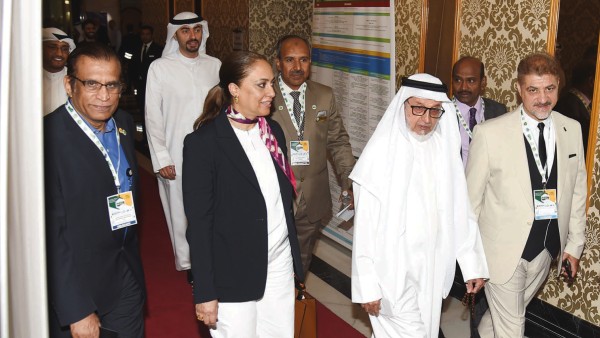
Al-Attar delivered a speech on behalf of the minister at the opening of the 13th Conference on Occupational Safety, Health, Environment, and Loss Prevention
Al-Ali: The AI revolution is reshaping occupational safety standards
Najah Bilal
Deputy Minister for Oil Affairs Nadia Abdul Aziz Al-Attar emphasized that worker safety and the protection of lives represent a fundamental priority in the oil and gas sector, a responsibility rooted in building a solid institutional safety culture so that every individual is aware of their role in preventing risks.
Al-Attar noted in her speech, delivered on behalf of Oil Minister Tariq Al-Roumi during the opening of the 13th International Conference on Occupational Safety, Health, Environment, and Loss Prevention for 2026, that amid rapid developments, it has become necessary to shift from a reactive approach to handling risks after they occur to a more advanced concept focused on anticipating risks, predicting them, and mitigating their effects in advance.
Article Archive
Newsletter
Live Broadcast
She pointed out that modern technology and digital transformation contribute to developing the safety system through monitoring and early warning systems and data analysis, noting that this development is closely linked to human capital development and enhancing workers' skills. She also highlighted that achieving advanced levels of safety requires the integration of three main elements, led by advanced technology, followed by a qualified human element, alongside strengthening institutional culture.
In media statements on the sidelines of the conference, Al-Attar stated that the private sector is a genuine partner in carrying out tasks and developing oil and environmental operations, commending the efforts of the American Society of Safety Professionals (ASSP) Kuwait Chapter in organizing this event, which represents an important opportunity to exchange expertise and translate knowledge into practical applications that enhance the safety and sustainability of the oil and gas sector.
For his part, Engineer Fadel Al-Ali, President of the American Society of Safety Engineers (ASSE) Kuwait Chapter, said the conference aims to reduce accidents and injuries and provide a safe workplace for workers through training and awareness programs, and by presenting technical papers that showcase the latest developments and technologies in this field.
Al-Ali added that this year's conference theme focuses on harnessing artificial intelligence to serve health, safety, and environment goals to achieve loss prevention, noting that AI has made a significant difference across all industrial and medical fields. He stressed the necessity for users of these technologies to possess expertise and awareness to distinguish correct information from incorrect, confirming that the conference discusses this aspect through several specialized papers.
He mentioned that the conference allows participating companies to access the latest products and ideas, form partnerships, and conclude contracts. He explained that the Society is a non-profit entity that provides a platform to serve members and explore all new developments in the industry to prevent losses, in addition to organizing an exhibition featuring innovative products that contribute to improving the work environment and preventing accidents.
Al-Ali clarified that workshops form an essential part of the conference, with approximately 10 workshops covering various aspects of health, safety, and environment, featuring strong participation from companies to enhance their resilience and ability to handle challenges and proactive plans to manage emergencies.
On his part, Ahmed Al-Shatti, Chairman of the 2026 Health, Safety, and Environment Conference Committee, stated that oil sector companies must have high flexibility in dealing with local challenges in Kuwait and regional challenges in the area. He pointed out that there are always proactive plans to address issues, and even if production stops, there must always be alternative plans and lessons learned from past experiences that enable us to achieve our desired goals.
Al-Shatti added in statements to journalists that there must be a balance between our commitment to safety and security standards and the avoidance of major risks, noting that while we may take some minor risks, these are undertaken in accordance with specific studies and standards to achieve our objectives. He emphasized that the conference, in its current iteration, has been launched with the support and confidence of both government and private institutions, aiming to present the best possible image. He affirmed that the combined efforts and expertise over the years have resulted in the conference’s launch with such distinction in this edition.
Regarding current global and regional developments and their impact on safety and the environment, Al-Shatti stated: “In light of the new circumstances and challenges, we are studying the market and drawing on the experience of companies around us, whether in the public or private sectors, to learn what they have achieved.”
