Abdulaziz Al-Mutairi: Partnership Between 'National Council' and 'Al-Salam' Revives 'Dasma Theater' with Global Capabilities
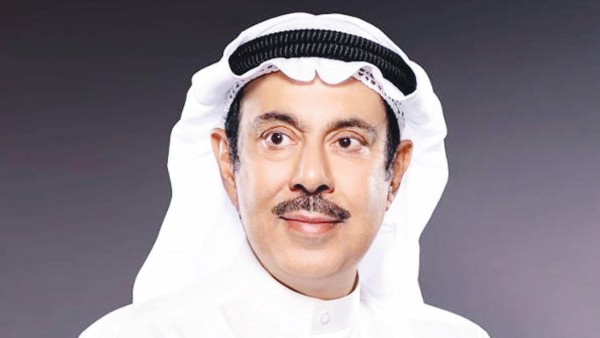
Faleh Al-Anazi
After years of deep involvement with Kuwait’s artistic and theatrical scene, the Dasma Theater is entering a new phase centered on development, rehabilitation, and expanded usage, as part of a five-year development and operations project undertaken by Al Salam Al Oula for General Trading and Contracting, a member of the Al Salam Media Group, following the award of the bid. This step is not merely an investment in a public facility or a project to rehabilitate a building and prepare it to receive audiences; rather, the Dasma Theater is linked to a firmly rooted artistic and cultural memory that has made it one of the most prominent venues to host Kuwait’s theatrical movement over decades. From this perspective, its development represents an effort to reintroduce the theater to artists, producers, and audiences in a manner that aligns with its historical stature, while simultaneously providing a more specialized artistic environment better prepared for the future.
The project reflects a shift within the National Council for Culture, Arts and Letters toward broadening the concept of partnership with the private sector, so that reliance on it extends beyond executing construction works or restoring buildings, to include leveraging the expertise of specialized entities capable of combining engineering development requirements with practical knowledge of theater needs and operational dynamics. The awarding of the bid to Al Salam Al Oula followed an evaluation process that did not rely solely on the financial offer, but also considered a range of elements, including the proposed price, specifications, services, and experience, reflecting a trend toward selecting the entity best equipped to execute an integrated project combining development, operations, and artistic expertise.
Council Leadership
In this context, the role of Dr. Mohammed Khaled Al-Jassar, Secretary-General of the National Council for Culture, Arts and Letters, and his deputy, Assistant Secretary-General Muassad Al-Zamil, stands out in supporting the partnership approach between the cultural institution and the private sector, and in harnessing the capabilities of specialists to rehabilitate one of the key facilities in Kuwait’s cultural landscape. During his tenure in the arts sector, Muassad Al-Zamil contributed to including the Dasma Theater development and investment project among the proposed initiatives and worked to pave the way for its launch. Meanwhile, the National Council’s follow-up and commitment to supporting the project reflect a vision that measures the success of the development not merely by the building’s appearance, but by what the theater can offer artists, troupes, and audiences once it resumes operations.
Al-Muslem Initiative
On the other side of this partnership stands the name of the esteemed artist, Professor Dr. Abdulaziz Al-Musallam, Chairman of the Board of Directors of Al-Salam Media Group, recognized as a figure whose expertise combines artistic knowledge with practical experience in theater design, preparation, and operation. His connection to Dasma Theater carries additional significance, dating back to an early period in the theater’s history following Kuwait’s liberation. In the aftermath of liberation, and with the approval of the then-Minister of Information, the late Dr. Badr Jassim Al-Yaqoub, Al-Musallam initiated the restoration of Dasma Theater at his own expense, relying on the efforts and support of a group of Kuwaiti volunteers who had endured the Iraqi occupation. This initiative came at a time when the theater had suffered damage affecting parts of the building and its contents. The restoration works included repairing electrical and sanitary facilities, repainting, and carrying out necessary preparations to return the venue to operational readiness. This step was more than merely addressing damage to a cultural building during an exceptional period; soon after, Dasma Theater resumed its role in Kuwaiti artistic life, becoming one of the venues that hosted expressions of the liberation era, along with the accompanying feelings of pain, resilience, and hope for rebuilding the nation.
In 1991, the theater hosted the play “Kuwait is Free,” also known as “Free Kuwait,” which was among the first Kuwaiti theatrical works to appear after liberation. Its content carried a message of gratitude to the countries that supported Kuwait, alongside a call to move beyond the effects of the occupation and begin reconstruction. The theater’s hosting of works related to the occupation and liberation did not stop there; it also staged “Desert Storm,” which depicted the suffering of Kuwaitis during the Iraqi occupation. In 1992, it hosted the national play “Sword of the Arabs,” which became a prominent work addressing that era and its associated events and patriotic sentiments. Thus, in the early years following liberation, Dasma Theater transformed into an artistic space through which Kuwaitis expressed their experiences and regained, on its stage, the ability to present works reflecting what the nation had endured. This scene blended art with the expression of national memory and the restoration of normalcy. However, Dasma’s relationship with the Kuwaiti theatrical movement did not begin with the post-liberation period, nor did it end there. Throughout its history, the theater has remained one of the sites associated with artistic and theatrical works that left a lasting presence in Kuwaiti memory.
Timeless Works
Among the most notable works associated with its stage are “Bye Bye London,” “Knights of the Climate,” “Halloween Bangkok,” and “Defender of the Homeland.” These works have helped cement the theater’s presence within the local artistic landscape, making Dasma a prominent fixture in the memory of successive generations of artists and audiences. Therefore, the current development process of the theater goes beyond the idea of renovating a performance hall or improving the building’s facade; the project addresses a site that holds a significant part of Kuwaiti art history. It aims to rehabilitate the venue in a way that preserves its identity and role, while simultaneously enabling it to continue operating in accordance with the requirements of modern cultural facilities. The ongoing development works cover both the interior and exterior parts of the building, extending to artists’ dressing rooms, audience seating, and the stage, as well as wall and floor cladding, and the artistic and technical equipment related to performances. Additionally, the project includes replacing interior and exterior ceilings and installing a fire suppression system.
Voluntary Initiatives
The company also carried out, at its own expense, a series of additional works aimed at bringing the building to a level more appropriate to the role it is preparing to resume. These works included renewing wall cladding, repainting the building, installing carpets, and using fire-resistant materials, alongside attention to service facilities, cleaning water tanks, and treating accumulated deposits within them. These efforts are part of rehabilitation works targeting the improvement of the internal environment and supporting services for the theater, as well as elements related to acoustics and the listening environment inside the hall. This was achieved by selecting materials and fabrics suited to the nature of theaters and helping to enhance the venue’s acoustic properties, in parallel with updating the necessary technical equipment.
Al Salam Media Group, led by Al-Muslem, aims to preserve the Dasmah Theater’s historical value and status, while simultaneously elevating the level of quality, safety, and equipment to align with standards applied in modern cultural and artistic facilities.
Force Majeure Conditions
The project implementation period was not free of challenges imposed by supply conditions. The work faced difficulties related to procuring certain materials and equipment, as well as delays in several shipments, which posed an additional challenge to completing the development works within a short timeframe.
Under these circumstances, the importance of coordination and cooperation between the National Council for Culture, Arts and Letters and the company responsible for the development works became evident, aiming to overcome supply-related obstacles and complete the required works. This reflects the nature of the relationship that should underpin partnerships between government entities and the private sector when it comes to a public cultural facility. The vision for Dasmah Theater is not limited to reopening it to host theatrical performances only; rather, it aims to transform it into a multi-purpose cultural and artistic facility capable of hosting a wide range of activities and events throughout the year.
Vision
With this vision, Dasmah Theater returns to the public primarily as a theater, but at the same time, it becomes a venue available to producers and event organizers, enabling the facility to play a continuous role in cultural and artistic life rather than limiting its activity to specific performances. The current phase of the theater carries special significance given its history. On one hand, the venue is reclaiming its place in the memory of Kuwaiti theater, having contributed to hosting important works. On the other hand, it is preparing for a new operational phase based on developing its structure and equipment and expanding its functions. Between the initiative that revived Dasmah Theater after Kuwait’s liberation and the current project aimed at rehabilitating it for the coming years, it appears that the theater’s history moves from one stage to another, while the core idea remains constant: preserving its status as an open space for art, safeguarding the memory it carries, and keeping it as a living part of Kuwait’s cultural landscape.
