British Ambassador: We Deployed 'Rapid Centurion' System to Counter Drones in Kuwait, Provided Additional Support via 'Orca'
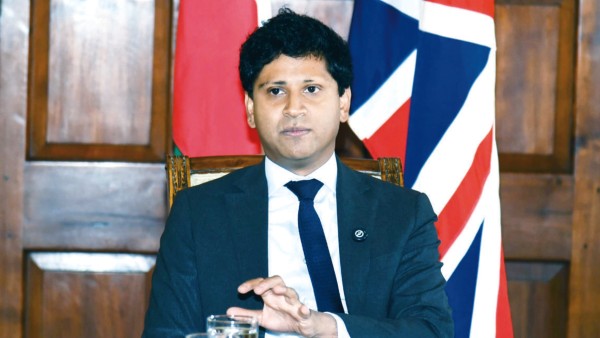
Bilateral relations are moving toward expanding cooperation in investment, technology, artificial intelligence, and cybersecurity.
Our commitment to Kuwait’s security and stability is embodied in a broad and extensive partnership encompassing defense cooperation and military training.
Explore Space
Press Photos
E-Publishing
We have issued approximately 244,000 electronic travel permits for Kuwaiti citizens as of June 2026.
14,000 Kuwaiti students are studying at British universities, including government-sponsored scholars.
London has shifted its stance on the Israeli occupation of the West Bank as part of its efforts to preserve the two-state solution.
The official British position now considers the occupation itself illegal and unacceptable under international law.
Fares Ghalib
UK Ambassador Qudsi Rashid confirmed that his country has changed its position regarding the Israeli occupation of the West Bank in the context of its efforts to maintain the two-state solution. He noted that the official British stance now regards the occupation itself as illegal and unacceptable under international law, whereas the previous position focused solely on the illegality of settlements.
"Rapid Sentry" System
Rashid, during a press conference, emphasized the United Kingdom’s commitment to Kuwait’s security and stability, as well as the continuation of defense cooperation between the two countries. This includes the "Rapid Sentry" anti-drone system, support for air defense capabilities, training, and the exchange of expertise. He affirmed that bilateral relations are heading toward expanding partnerships in investment, technology, artificial intelligence, cybersecurity, clean energy, education, and healthcare.
He clarified that the British position change will be accompanied by specific measures, including expanding sanctions related to illegal settlements, banning the import of products originating from them into the United Kingdom, and preventing British companies from providing services that support those settlements.
Regarding Kuwaiti-British affairs, Rashid affirmed that his country’s commitment to Kuwait’s security and stability is reflected in a wide and extensive partnership that includes defense cooperation, military training, professional exchanges, strategic dialogue, and close diplomatic communication.
He added that Britain stood by Kuwait during the crisis with Iran, working closely with Kuwaiti partners to support regional security and stability. He explained that the UK deployed the "Rapid Sentry" air defense and anti-drone system in Kuwait following Iranian strikes in the region, to help protect British and Kuwaiti personnel and interests.
He confirmed the continued presence of the system in Kuwait since last April, noting that British military personnel responsible for operating it remain in the country and will continue their work within air defense efforts in coordination with the Kuwaiti side.
"Orca" Capabilities
He pointed out that the United Kingdom provided additional support through "Orca" capabilities against unmanned aerial systems, continuing the exchange of expertise, training, and operational experiences to enhance Kuwait’s readiness and capacity to address evolving threats.
He clarified that cooperation also includes British air surveillance officers at the air defense operations center, and British military personnel working alongside their Kuwaiti counterparts and military personnel from other countries within command headquarters, contributing to the protection of Kuwaiti airspace. Additionally, British companies are holding discussions with Kuwaiti military authorities regarding supplying the country with modern defensive technologies.
He affirmed that Britain views defense cooperation with Kuwait on two levels: addressing current threats, and joint work over the next three to five years to develop the capabilities needed to confront future threats.
He noted that the British military mission represents a cornerstone of defense cooperation between the two countries for over 30 years, with its personnel permanently stationed in Kuwait and working alongside the Kuwaiti Armed Forces to provide training, advice, and expertise across a wide range of defense capability areas.
Regarding the Strait of Hormuz, Rashid stated that his country had discussed the issue with Kuwait, emphasizing that closing the strait is unacceptable. He called on Iran to immediately and unconditionally reopen it and restore freedom of navigation. He added that disrupting navigation harms both Kuwait and the world, stressing that the solution must be diplomatic, through a return to negotiations, rather than military.
He reiterated that his country is committed to working with Kuwait, the Gulf Cooperation Council (GCC) countries, and the international community to protect freedom of navigation and international trade routes, noting that secure sea lanes are essential for global prosperity.
Travel Permits
The British Ambassador mentioned that the United Kingdom, in response to a Saudi request, agreed to provide one Voyager aircraft from the Royal Air Force for aerial refueling to support Saudi defense activities in defending the Kingdom and the legitimate government in Yemen, thereby enabling Saudi aircraft to remain airborne for longer periods.
On the travel file, Rashid said that the electronic travel permit system has received widespread positive reception in Kuwait, reflecting the strong ties between the two peoples. He explained that Britain had issued approximately 244,000 electronic travel permits to Kuwaiti citizens by June 2026, with continued strong demand for travel for tourism, business, education, and family visits.
He clarified that the number of permits does not necessarily correspond to the number of travelers or flights, as an individual may obtain a permit without traveling or use it for multiple trips.
Regarding education, he said that education represents one of the strongest pillars of Kuwait-Britain relations, estimating the number of Kuwaiti students studying at British universities at around 14,000, including government-sponsored scholars and students who fund their studies independently, while noting that these figures are approximate.
He explained that Britain is one of the most popular destinations for higher education among Kuwaitis, with students specializing in fields such as computer science, cybersecurity, business administration, accounting, finance, architecture, engineering, medicine, pharmacy, and other health-related disciplines, as well as showing interest in data, artificial intelligence, and technology.
Defense Partnership Has Changed Since 1990
In evaluating his first year as ambassador to Kuwait, Rashid said he arrived in the country on October 1 of last year and did not expect Kuwait to face Iranian attacks. He explained that the escalation changed his priorities and made his primary mission to demonstrate his country’s political, diplomatic, and military support for Kuwait.
He noted that the attacks brought back memories of the 1990 invasion, emphasizing his commitment to ensuring Britain fulfills its obligations of friendship and partnership with Kuwait. He added that British ministers and military officials visited the country during the attacks to show solidarity, while his country deployed personnel, equipment, and defense capabilities to support it.
He clarified that the nature of the current defense partnership differs from that of 1990, as Britain now works with Kuwait as an ally and partner, supporting its armed forces’ ability to protect the country.
Arrival and Operation of “Rapid Centurion”… A Moment of Pride
Ambassador Rashid said that the arrival of the “Rapid Centurion” system and receiving a call confirming the first drone interception using it were among the proudest moments of his first year.
40 British Military Personnel
Ambassador Rashid stated that approximately 40 British military personnel were present in Kuwait prior to the escalation, operating within the framework of cooperation with the Kuwaiti Armed Forces. Subsequently, some of their roles shifted from training and education to supporting defensive operations.
