Launch of 'Al-Tayr-1'... First UAE commercial Earth observation satellite powered by AI
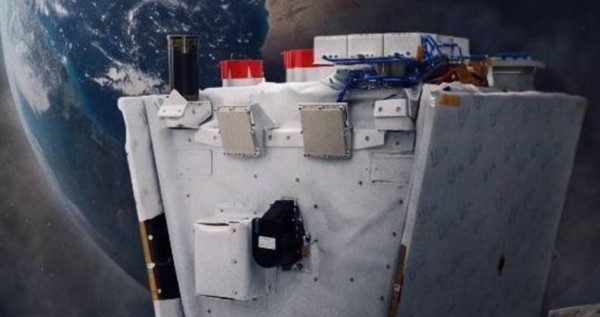
The Al-Tayr-1 satellite successfully launched from California, marking the first UAE commercial AI-powered satellite, part of a constellation of 10 satellites.
Translated by Qiyas from السياسة — Original source
- The first of a constellation of 10 satellites will be completed by 2027, enabling observation of any point on Earth every four hours
The "Al-Tair-1" satellite was successfully launched into its orbit, becoming the first commercial Emirati Earth observation satellite powered by artificial intelligence. This step reflects the rapid advancement of the national space industry and enhances the UAE’s position in the development, manufacturing, and operation of advanced satellites, according to the Emirates News Agency (WAM).
The satellite was launched as part of the joint "Transporter-18" mission aboard a SpaceX rocket from Vandenberg Space Force Base in California, USA. It successfully separated from the launch vehicle and entered its planned orbit. Its signal was captured, and initial indicators confirmed normal operation, marking the beginning of the testing phase.
Opinion Articles
Local News
Economic News
"Al-Tair-1" is the first commercially manufactured satellite in the UAE, integrated by Loft Orbital. It represents the first satellite in the "Al-Tair" constellation, which comprises 10 satellites scheduled for sequential launch completion by 2027. This will form the first fully integrated commercial Emirati Earth observation constellation relying on artificial intelligence.
Dr. Ahmed Belhoul Al Falasi, Minister of State for Sports and Chairman of the Board of Directors of the UAE Space Agency, emphasized that the private sector plays a pivotal role in building advanced, scalable national space industries. He noted that the launch of "Al-Tair-1" demonstrates the strength of the national space ecosystem and its growing capabilities in developing and manufacturing advanced space technologies.
He stated that the UAE continues, in line with the objectives of the National Space Strategy 2031, to enhance integration between scientific research, industry, and investment. This enables national companies to innovate, grow, and contribute to economic diversification.
He added that this achievement proves the capability of technologies and capabilities developed in the UAE to deliver commercially valuable solutions that extend beyond the country’s borders, supporting its ambition to become one of the top ten space economies in the world by 2031.
Each satellite in the "Al-Tair" constellation carries five integrated sensors, including optical imaging with a resolution of less than one meter, short-wave infrared, thermal and hyperspectral imaging, and radio frequency monitoring. This enables the collection of multi-source data and provides a comprehensive view of phenomena and activities on the Earth's surface.
Graphics processing units (GPUs) from Nvidia, installed on board the satellites, enhance their ability to process data and convert it into analyzable information within minutes, compared to the hours typically required for ground-based processing. This allows for faster decision-making based on space data.
The satellites operate independently and in real-time, processing data directly in orbit and taking appropriate actions based on their observations. This supports rapid response to emerging challenges, such as detecting early thermal indicators of forest fires and identifying ships engaged in undisclosed activities.
Once fully operational in 2027, the constellation will enable re-observation of any point on the Earth's surface approximately every four hours. This will support disaster response applications, maritime activity monitoring, environmental observation, food security, infrastructure tracking, and national security.
Dr. Hamad Allah Mahboub, CEO of Orbit Works and CEO of Marlan Space, stated that the launch of "Al-Tair-1" marks a milestone in the development of the national space industry. It embodies the UAE’s transition from utilizing space capabilities to possessing the knowledge and expertise required to manufacture and develop them.
He added that “Al-Tair-1” is the first satellite in a constellation of 10 satellites, marking the beginning of a phase that enables customers to monitor Earth and make decisions based on their needs, relying on information produced and processed directly in orbit.
The satellite was manufactured at Orbital Works’ facility, spanning 50,000 square feet in Khalifa Economic Zone Abu Dhabi (KEZAD), which opened in November 2025 as the first facility of its kind in the Middle East dedicated to commercial satellite production.
The facility includes a cleanroom meeting ISO standards, covering 15,000 square feet, along with infrastructure for electromagnetic interference testing, thermal vacuum testing, and vibration testing. Its full production capacity is 50 satellites annually, equivalent to approximately one satellite per week.
Orbital Works was established as a joint venture between Marlan Space, a subsidiary of the global holding company IHC, and San Francisco-based Loft Orbital.
Pierre-Damien Vaguer, CEO of Loft Orbital, stated that producing the first satellite at Orbital Works paves the way for launching 10 additional satellites within the next 12 months, and 50 more in the coming years, emphasizing the UAE’s readiness to lead globally in the production and operation of AI-enabled satellite constellations.
The Al-Tair constellation allows customers to own a satellite and the data it generates, or access services under a “Capabilities-as-a-Service” model, enabling them to direct satellite missions and directly utilize the provided information in accordance with approved licenses.
The constellation includes a number of customers and end-users in Europe and the Middle East, including entities from the French government, the Abu Dhabi Maritime Academy, and the Abu Dhabi Developmental Holding Company (ADQ). Orbital Works is currently holding discussions with potential clients in North America, Africa, and Asia.
The launch of Al-Tair-1 is part of a broader program. On September 9, Marlan Space and Loft Orbital announced a $1 billion alliance in cooperation with Mistral, BlackSky, and Maya Space to develop AI-enabled satellite infrastructure, with its first phase comprising 50 satellites.
The project aligns with the UAE’s objectives to consolidate its position among the world’s top ten space economies by 2031 and enhance the contribution of advanced industries to national economic diversification.
