President of 'Red Crescent': We continue our 60-year journey of humanitarian giving and consolidating Kuwait's global standing
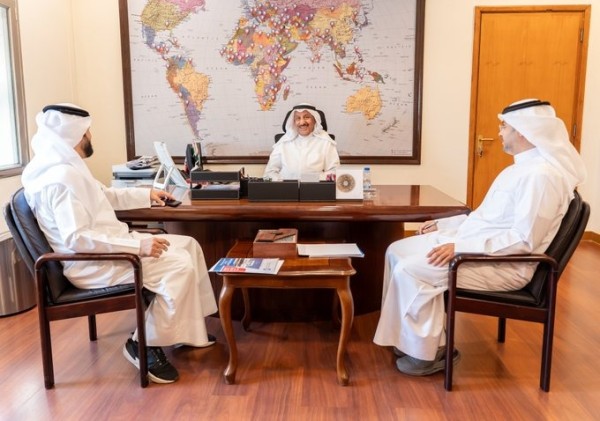
- Al-Mughams: Our activities extended to 13 countries and included 27 flights carrying approximately 550 tons of aid.
Support for 4,000 families within Kuwait and the preparation of shelters in 12 schools to enhance emergency preparedness.
- Future projects in more than 10 countries as the Association enters its seventh decade.
Khaled Al-Mughams, Chairman of the Board of Directors of the Kuwait Red Crescent Society, affirmed the Association’s continued commitment to fulfilling its humanitarian mission, which began 60 years ago. This mission is grounded in a steadfast Kuwaiti approach to aiding those affected, supporting needy peoples, and preserving human dignity, positioning the institution as a national entity that contributes to consolidating Kuwait’s place on the map of international humanitarian action.
Opinion Articles
Education
Live Broadcast
Al-Mughams stated in an interview with the Kuwait News Agency (KUNA) on Thursday, marking the 60th anniversary of the Association’s establishment, that the Kuwait Red Crescent has spent the past six decades transforming humanitarian principles into relief and development programs reaching dozens of countries without discrimination based on religion, gender, or race.
He added that the Association, founded in 1966, has continued its journey with the support of political leadership, official authorities, and philanthropists in Kuwait. He noted that the activities of the current Board of Directors, which assumed responsibility from October 2024 through September 2026, extended to 13 countries. These efforts included organizing 27 relief flights carrying a total of approximately 550 tons of food, medical, and relief supplies, alongside implementing land convoys and development projects in 2025.
He clarified that the most prominent relief efforts included the "Faz'a for Gaza" campaign, which involved preparing 19 flights carrying approximately 400 tons of food supplies. Additionally, six relief flights were dispatched to Syria carrying about 70 tons, and two flights to Sudan carrying around 80 tons. Furthermore, two land convoys were sent to Yemen with a total of 60 tons of medical and relief aid, and one flight to Lebanon carrying approximately 40 tons of humanitarian assistance.
He pointed out that the Association’s Board of Directors paid special attention to health and development projects by supporting medical care for Palestinian wounded individuals, opening a specialized hospital for ophthalmology and eye surgery in Marib Governorate, Yemen, signing a $2 million agreement with the International Committee of the Red Cross to support health services in Sudan, and providing a $300,000 grant to the United Nations High Commissioner for Refugees (UNHCR) to improve living conditions for approximately 2,000 Rohingya refugee families in Bangladesh.
On the local level, Al-Mughams stated that the Association continues to support approximately 4,000 registered families through social, food, and educational programs. These initiatives included distributing 600 school bags and paying tuition fees for 295 students, in addition to providing KD 2 million to the third national campaign for settling the debts of indebted individuals, and KD 200,000 to the Ministry of Justice’s campaign in 2026.
He affirmed the Association’s dedication to enhancing national readiness by training volunteers and preparing shelters in 12 schools, as well as developing the emergency response system during Iranian aggression.
He noted that the Association focused on providing aid to vulnerable groups within Kuwait, emphasizing care for modest families, engaging with residents of social care centers, and visiting patients in hospitals, in cooperation with the Ministry of Health and the Ministry of Social Affairs and Labor.
He confirmed that the Association prioritized enhancing its readiness to face disasters and emergencies by establishing a Disaster Management Operations Center. This center is dedicated to collecting and analyzing data, coordinating field efforts, and training specialized teams for rapid and organized response.
He added that the Association has been keen on strengthening local and international partnerships and participating in high-level regional and international events, as well as signing several agreements, the most prominent of which were a cooperation agreement with the American Institute for Safety and Health, a memorandum of understanding with the Kuwait Institute for Judicial and Legal Studies, and another memorandum of understanding with the Kuwait Journalists Association.
Al-Mugamsi reiterated that the Association, as it enters its seventh decade, aims to develop its humanitarian work framework, enhance local and international partnerships, and leverage modern technologies. This will be achieved through launching the “Red Crescent House for Humanitarian Heritage” project to document its historical journey, and a first aid training project utilizing virtual reality (VR) technology.
He noted that the current board of directors has been committed to empowering national cadres and staff, and organizing administrative affairs by documenting meetings and decisions. Additionally, it has updated financial control systems by implementing the Oracle system, while also developing the organizational structure, enhancing the capacity of staff and volunteers, establishing a mental and social health office, and developing a training center. These initiatives aim to strengthen the sustainability of its humanitarian efforts and consolidate Kuwait’s standing in relief and humanitarian work.
He pointed out that the Association is preparing for several future projects still under study, covering more than 10 countries, most notably Palestine, Sudan, Syria, Somalia, and East African nations. He clarified that the Association’s objective is to propose sustainable projects that address humanitarian needs in the most vulnerable communities.
