Diab: September Stock Market Fluctuations Lean Negative After Two Months of Rise
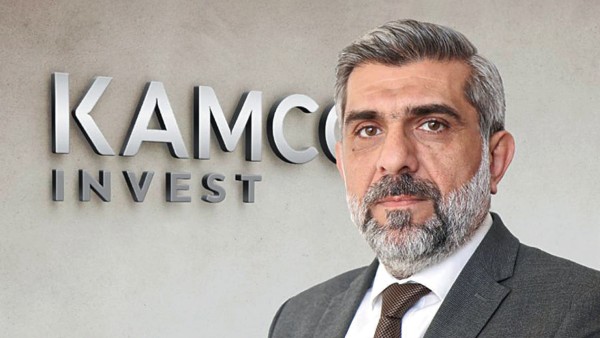
He told "Al-Siyasa" that market indicators have recovered to pre-war levels.
Raed Diab:
"The First Market" rose by 0.1% compared to February 24, while the "Main" and "Main 50" indices stood at 15% and 22%, respectively, and the "General" index rose by 2.4%.
The market capitalization has recovered the losses recorded during the war, rising by 3.5% compared to its value at the close of the session on February 24.
Government Agencies
Political News
News
The stock exchange closed its trading yesterday, the last day of trading in September, with its general index down by 18.25 points, a decrease of 0.21%, reaching a level of 8,779.38 points. A total of 289 million shares were traded through 22,283 cash transactions valued at 88.10 million dinars. The Main Market index fell by 58.63 points, a decrease of 0.64%, reaching a level of 9,094.64 points, with 161.6 million shares traded through 12,932 cash transactions valued at 34 million dinars.
Raed Diab, First Vice President of the Research and Investment Strategies Department at KAMCO Invest, said that the stock exchange experienced fluctuations during September that were largely negative, following two consecutive months of gains. The negativity was more pronounced in the "Main 50" index, which declined by nearly 7% during the month, although it remains the best-performing index since the beginning of the year with growth exceeding 17%. Most market sectors were negative during September, except for the healthcare and insurance sectors.
The First Market index fell yesterday by 10.59 points, a decrease of 0.12%, reaching a level of 9,167.93 points, with 127.4 million shares traded through 9,351 transactions valued at 54 million dinars. The "Main 50" index also fell by 102.35 points, a decrease of 0.99%, with 112.5 million shares traded through 9,096 cash transactions valued at 24.3 million dinars.
Diab added that since the beginning of the year, index performance has varied, with both the "Main Market" and "Main 50" indices recording growth, while pressure continued on the "First Market" index. Sector performance also varied, with continued negativity in large sectors except for the telecommunications sector, which grew by nearly 12%.
On the other hand, market indices managed to recover to pre-war levels. The "First Market" index grew by a marginal 0.1% compared to its session on February 24, while the gains were larger for the "Main" and "Main 50" indices at 15% and 22%, respectively, and the general index grew by 2.4%. This recovery is recorded only in the Kuwaiti stock exchange and the Omani market, while other Gulf markets remain below their pre-war levels. At the same time, market capitalization recovered the losses recorded during the war, rising by 3.5% to reach 53.4 billion dinars, compared to approximately 51.6 billion dinars on February 24.
Overall, there is a sense of optimism and a positive long-term outlook, supported by continued economic activity, project implementation, reforms, and legislation. However, investors currently appear to be waiting for some catalysts, most notably clarity on the geopolitical situation following recent divergent statements, as well as anticipation of the financial results of listed companies for the third quarter of this year, the extent to which companies have adapted to the situation during the war, and the sustainability of the good results recorded in the first half of the year.
Diab predicted stable growth in the third quarter of this year for financial results, supported by the continuation of credit facilities granted by the banking sector, stability in domestic consumption, and inflation rates.
Despite the market retaining its appeal and growing confidence in the Kuwaiti market, the overall regional situation continues to hinder the emergence of further buying momentum. Recently, many major foreign companies have entered Kuwait to seize available opportunities.
He clarified that the stock exchange, like other regional markets, was affected by the war that began in the region in late February last year. Oil exports declined sharply due to the closure of the Strait of Hormuz, supply chains were negatively impacted, and shipping and insurance costs rose. However, the resilience of companies and strong crisis management, alongside continuous government support, enabled these entities to overcome these challenges and adapt. Recent data indicate a recovery in oil exports, which naturally alleviates the burden on the state budget and provides the necessary liquidity to proceed with development and growth. Meanwhile, Kuwait has continued to expand its funding sources, building on the Financial Liquidity (Public Debt) Law, followed by the approval of the Borrowing from Future Generations Law to support the General Reserve, and a decree regulating the issuance of government sukuk. All of this broadens funding options, eases deficit pressures, and supports the continuity of capital expenditure.
Diab pointed out that the government, along with regulatory bodies, has enacted and updated numerous laws and regulations to create a better investment environment and attract additional inflows to the market. The government recently approved the Housing Finance Law for eligible beneficiaries, preceded by the Anti-Monopoly of Vacant Land Law and the Real Estate Developer Law, as part of the government’s objectives to establish a legislative framework for the housing issue. The law will allow eligible citizens to borrow from commercial banks to purchase residential units from real estate developers, with the Kuwait Credit Bank, on behalf of the state, committed to paying interest on subsidized financing. This will have a significant positive long-term impact, supporting real estate, contracting, construction, and retail companies, in addition to the biggest beneficiary, the banking sector, which has sufficient liquidity to meet the expected demand for loans. This will enhance its loan portfolio and positively reflect on its profits.
Market capitalization fell by 608 million dinars over nine months
The First Market Index declined by approximately 3.48%, equivalent to 330.4 points, during the first nine months of the current year, closing trading at 9,167.93 points. The General Index also fell by 1.44%, or 128.2 points, ending the nine-month period at 8,779.38 points.
According to "Mubasher" statistics, the Main Market Index rose by 9.54%, gaining 792.25 points since the beginning of the current year to reach 9,094.64 points. Meanwhile, the "Main 50" Index jumped by 17.54% to 10,212.6 points, adding 1,523.8 points compared to its level at the end of 2025.
The market capitalization of shares reached 52.58 billion dinars at the end of yesterday’s trading, a decline of 1.14%, estimated at 608 million dinars, from its level at the end of 2025, which stood at 53.19 billion dinars.
At the sectoral level, seven sectors declined, led by consumer goods, which fell by 10.13%, while six sectors rose, led by technology, which recorded a surge of 554.97%.
Trading activity declined overall, with 3.97 million transactions executed during the first nine months of the current year, involving 59.82 billion shares, with a liquidity value of 15.64 billion dinars, compared to the same period in 2025.
"Green" dominates the third quarter
Green dominated the performance of Kuwait Stock Exchange’s main indices during the third quarter of 2026, with the “First” index rising by 0.94%, or 85.25 points, while the “General” and “Main” indices increased by approximately 0.84% and 0.37%, respectively. The “Main 50” index also climbed by 3.99% compared to its levels at the end of the second quarter of 2026.
The market capitalization of listed shares rose by approximately 0.81%, or 422 million Kuwaiti dinars, reaching 52.16 billion dinars at the end of the second quarter of the year. The exchange recorded trading liquidity valued at 5.82 billion dinars, distributed across 22.11 billion shares, with 1.50 million transactions executed during the third quarter.
The third quarter saw gains in eight sectors, led by healthcare, which surged by 41.33%, while five sectors declined, headed by insurance, which fell by 10.61%.
