Behind 'Al-Siyasa': Establishment of Kuwait and Region's First Skin Bank
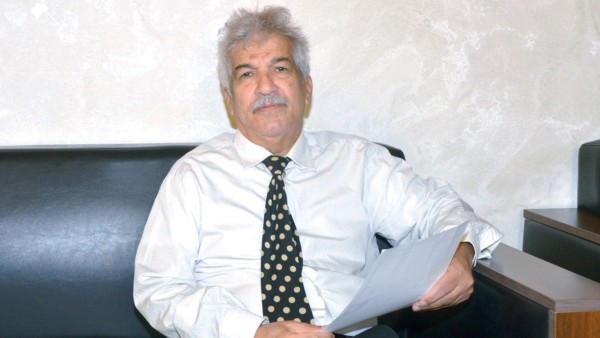
Al-Babtain Center advances microsurgery, establishes a skin bank, and collaborates with Harvard
Translated by Qiyas from السياسة — Original source
Dr. Mohammed Khalaf, Head of the Department of Plastic and Reconstructive Surgery at the Saud Al-Babtain Burns and Plastic Surgery Center, confirmed that the center has entered the era of microsurgery and facial reconstruction.
The bank will preserve skin donated from recently deceased individuals in accordance with medical and legal regulations.
Last year saw 10,000 patients and 1,600 surgeries, alongside a research project with Harvard University.
Dr. Mohammed Khalaf, Head of the Department of Plastic and Reconstructive Surgery at the Saud Al-Babtain Burns and Plastic Surgery Center, stated that the center is witnessing a rapid, qualitative leap in plastic and reconstructive surgeries and burn treatments. This progress is driven by the transition to microsurgery, the attraction of a select group of leading global experts, and the implementation of advanced scientific and surgical programs within Kuwait.
In a special interview with "Al-Siyasa," Dr. Khalaf noted that the center received more than 10,000 patients last year and performed over 1,600 surgeries. This coincided with hosting numerous senior doctors and experts from various countries, aligning with the Ministry of Health’s direction to develop the healthcare system and elevate the standard of medical services provided to patients.
**Microsurgery**
Dr. Khalaf explained that the most prominent development at the center is the shift from traditional plastic surgery concepts to microsurgery and facial reconstruction, as well as complex cases in lymphatic fluid transfer treatments from the brain, in which Professor Hong from Korea participated. He added that the center recently concluded an advanced workshop on complex facial plastic and reconstructive surgery and microsurgery.
The workshop included examining several patients and performing advanced surgeries in collaboration between visiting experts and the Kuwaiti medical team, allowing doctors to practically observe the latest techniques and advanced surgical methods.
**First Skin Bank**
Dr. Khalaf revealed a strategic project to establish the first skin bank in Kuwait and the region, emphasizing that the project responds to an urgent medical need, particularly in managing large and complex burn cases.
He clarified that the skin bank will preserve skin donated from recently deceased individuals, in accordance with approved medical and legal regulations, for use in treating and saving burn patients who require extensive coverage and reconstruction.
He noted that upon completion, the project will be one of the elements of regional medical excellence, given its ability to handle critical and complex cases more efficiently.
**Cooperation with Harvard**
In another step reflecting the center’s direction to expand its international scientific partnerships, Dr. Khalaf disclosed ongoing efforts to launch a research program in cooperation with the Department of Plastic Surgery at Harvard University.
He explained that the cooperation was crowned by the visit of Professor Kavita Raghunathan, Head of the Department of Facial and Craniofacial Reconstructive Surgery at Harvard University, to Kuwait, where she participated in patient examinations and performed several complex reconstructive surgeries.
He stated that work is currently underway to prepare a broader memorandum of understanding for scientific and research cooperation, under the supervision of a national team comprising Dr. Mohammed Khalaf and a select group of Kuwaiti board-certified doctors.
**Foreign Expertise**
Dr. Khalaf confirmed that hosting global expertise is part of the center’s strategy to transfer medical knowledge and technology to Kuwait, not merely to provide advanced surgeries to patients.
He pointed out the hosting of a French team led by Professor Yves Saban, a prominent name in rhinoplasty and facial reconstruction, noting that the team performed several precise surgeries for nasal and facial reconstruction. The team expressed admiration for the center’s facilities and the efficiency of the Kuwaiti medical staff.
The center also hosted a Korean medical team led by Professor G.W. Choi, a specialist in microsurgery and facial reconstruction, which successfully performed a number of advanced surgeries.
He noted that the Korean school is distinguished by its advanced techniques in eyelid and facial surgery and facelifts, alongside significant progress in microsurgery and reconstructive procedures.
He added that the center is preparing to host Professor Naeem Mu’min from the United Kingdom to examine and treat several patients with severe burns, as well as to organize an advanced anatomical workshop on facial reconstruction and cosmetic surgery in collaboration with the Faculty of Medicine at Kuwait University.
Warning against “medical tourism”
Dr. Khalaf warned against the phenomenon he described as “cosmetic tourism doctors,” and the potential for practices that fall outside professional medical and regulatory frameworks.
He stated that the center continuously receives cases that suffered complications and errors due to the injection of unlicensed cosmetic substances or cosmetic procedures conducted outside proper medical standards.
He added: “We receive cases that have suffered serious complications from injections of unlicensed fillers and Botox, or from unsuccessful cosmetic surgeries. In some of these cases, reconstruction or correction of the effects is difficult, and in severe cases, complications can even threaten the patient’s life.”
Localization of treatment... a phase objective
Dr. Khalaf emphasized that the Saud Al-Babtain Burns and Plastic Surgery Center is working to establish a medical model that combines Kuwaiti expertise with modern technologies and international partnerships. He pointed out that attracting leading global experts is part of a comprehensive plan to develop the capabilities of national cadres.
He stressed that the ultimate goal is not merely to perform advanced surgeries within the center, but to build Kuwaiti expertise capable of handling the most complex cases in the future.
