Saudi Foreign Minister: Gulf security is an integral part of global security
- We call for the restoration of the situation in the Strait of Hormuz to its state prior to February 28, and for the imposition of no fees or restrictions.
- Protecting navigation and ensuring the sustainability of energy supplies are shared responsibilities requiring international cooperation.
Saudi Foreign Minister Prince Faisal bin Farhan renewed his affirmation of the Kingdom’s right to protect its security, sovereignty, citizens, residents on its territory, and national assets. He pointed out that the Kingdom and other countries in the region have been subjected to “brazen Iranian aggression” targeting their security, capabilities, and civil and economic activities.
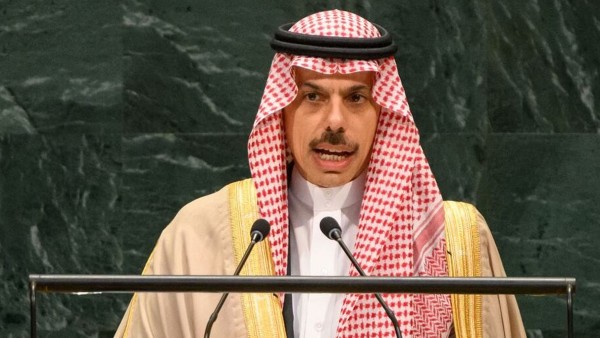
During the Kingdom’s statement at the high-level general debate of the UN General Assembly, Prince Faisal bin Farhan called on the international community to shoulder its responsibilities in confronting threats to international peace and security.
He emphasized that “the security of the Arabian Gulf region is an integral part of the security of the region and the world,” noting that regional stability is directly linked to global energy security, the continuity of international trade, and the sustainability of supply chains.
Kuwaiti consulting services
Shop Islamic books
Plan seasonal trips
He stressed that protecting international navigation and ensuring the sustainability of global supply chains are shared responsibilities requiring international cooperation, warning against exposing the global economy to risks that affect the entire world.
He affirmed the importance of guaranteeing freedom of navigation in all international waterways, foremost among them the Strait of Hormuz, the Bab al-Mandab Strait, the Red Sea, and the Gulf of Aden. He called for “a return to the situation in the Strait of Hormuz as it was before February 28, and the non-imposition of any fees or restrictions.”
He stressed the Kingdom’s rejection of any party using these vital waterways “as a tool for pressure, threat, or harming the interests of states,” in line with international law and relevant UN resolutions.
Yemen
On the Yemeni issue, Prince Faisal bin Farhan emphasized the importance of supporting efforts aimed at reaching a comprehensive political solution that ensures Yemen’s stability, supports its economy, and alleviates the humanitarian suffering of the Yemeni people.
He noted that the Kingdom had provided humanitarian and developmental aid to Yemen exceeding $29 billion, adding that it had been “the highest donor of humanitarian aid to the Republic of Yemen in 2025.”
He welcomed the statement by Security Council members, which included condemnation of the missile and drone attacks launched by the Houthi group against the Kingdom and commercial ships. He called on the international community to reject and condemn the attacks by the “Houthi terrorist militia” and its efforts to threaten navigation security in the Red Sea and the Bab al-Mandab Strait.
Vision 2030
The Saudi Foreign Minister also addressed the economic transformation in the Kingdom, highlighting the achievements realized through Saudi Vision 2030 ten years after its launch.
He stated that the Vision represents a model of comprehensive national transformation based on economic diversification, investment in human capital, enhancing innovation, empowering youth and women, developing the private sector, and consolidating sustainability. It has contributed to strengthening the Kingdom’s position as a regional and international hub for business, investment, tourism, industry, technology, and logistics.
He pointed out that the contribution of non-oil activities to non-oil GDP reached 55 percent, while the unemployment rate among Saudis dropped to 6.4 percent in 2026, compared to 12.3 percent in 2016.
Energy Security
Prince Faisal bin Farhan affirmed that energy security relies on the robustness, resilience, and capacity of the energy system to withstand and adapt to disruptions. He stressed that ensuring stable energy supplies, protecting critical infrastructure, diversifying supply routes, and safeguarding freedom of navigation are “shared responsibilities requiring continuous international cooperation.”
He noted that the Kingdom had maintained the continuity of energy supply flows amid disruptions to maritime navigation through the Strait of Hormuz, thanks to its long-term investments in infrastructure.
He added that the East-West Pipeline, along with the Kingdom’s petroleum reserves located outside the region, helped mitigate the impact of those disruptions and bolstered supply reliability for global markets.
Artificial Intelligence
In the field of artificial intelligence, the Saudi Foreign Minister emphasized the importance of harnessing new technologies to serve humanity and development, and of enhancing international cooperation to ensure their responsible use.
He pointed out that the Kingdom had been a “pioneer in establishing the international network of AI capacity-building centers,” one of the recommendations stemming from the Future Pacts.
He also highlighted the Kingdom’s hosting of the International Centre for AI Research and Ethics in Riyadh under UNESCO’s patronage, which strengthens international cooperation in this field and contributes to entrenching ethical principles for the development and use of AI applications.
In conclusion of his speech, Prince Faisal bin Farhan called for greater wisdom, responsibility, and international cooperation in addressing global challenges, stressing that “the challenges we face cannot be tackled by any single country in isolation.”
He underscored that consolidating security requires adherence to the principles underpinning the UN Charter and respect for international law, affirming that the Kingdom would continue to work with its partners in the international community to promote sustainable development, peaceful solutions to crises, and pathways that entrench stability and enhance mutual trust and respect, in order to build a safer and more prosperous future for the region and the world.
