Nawaf Salam before the United Nations: No one speaks for Lebanon or negotiates on its behalf except the state
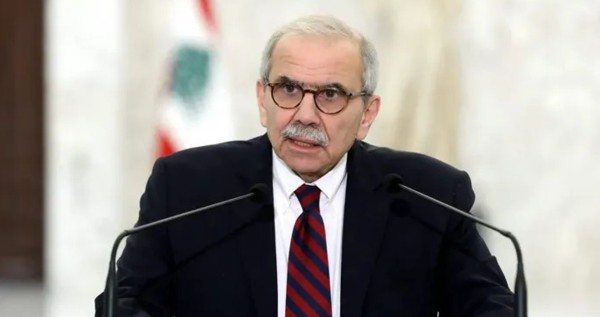
- Committed to restoring national decision-making, confining weapons to the state's hands, and asserting sovereignty over all Lebanese territory
- Warned of the dangers of a vacuum following the withdrawal of UNIFIL and called for a replacement international force
Lebanese Prime Minister Nawaf Salam affirmed on Friday his country's commitment to restoring national decision-making, ensuring that weapons are held exclusively by the state, and asserting sovereignty over its entire territory, alongside the complete withdrawal of the Israeli occupation to the internationally recognized borders.
Speaking before the United Nations General Assembly in New York, Salam stated that Lebanon's future, security, and stability "must not be the price of settlements reached in its absence," emphasizing the need to halt the war, consolidate the ceasefire, and ensure the full withdrawal of Israeli occupation forces to the internationally recognized borders, in accordance with Resolution 1701.
Time and Calendars
Digital Newspaper Archive
Political Training Courses
He added that "no one speaks on behalf of Lebanon, and no one negotiates on its behalf except the Lebanese state through its constitutional institutions," reiterating his country's rejection of Lebanon becoming "a battleground for others' conflicts or a bargaining chip in their hands."
Salam called for the release of all detainees, ensuring the safe and dignified return of residents to their villages and towns, and rebuilding what the war has destroyed. He affirmed that sovereignty "is indivisible" and requires the withdrawal of the occupation, the assertion of state authority through its own forces, and the exclusive control of weapons by the state.
He warned of the "dangerous vacuum" that could result from the withdrawal of the United Nations Interim Force in Lebanon (UNIFIL) at the end of this year, calling for the establishment of a replacement international force to ensure the continuity of monitoring, reporting, and communication tasks, and to complement the requirements for implementing the "Tripartite Framework Agreement" reached with the Israeli occupation under American mediation last June.
He noted that the "Tripartite Framework Agreement" is based on the "principles of reciprocity and monitoring," considering that the success of agreements is "measured by the implementation of commitments and their translation into practical steps within a timeline and a verification mechanism for all provisions."
Salam called on the international community to continue providing the necessary funding to meet the basic needs of those affected and displaced by the occupation's war on Lebanon, in parallel with the requirements for early recovery, reconstruction, and development. He affirmed that "Lebanon does not shirk its responsibilities, nor does it ask others to do what it must do itself."
He explained that Lebanon faces three "existential" challenges: restoring the trust of its people following the financial collapse and the Beirut port explosion; restoring national decision-making "so that no authority exists above the state"; and reclaiming all territories from the Israeli occupation and asserting state sovereignty over its entire territory through its own forces.
In a related context, Salam called for restricting the use of the veto in cases of serious crimes and grave violations of international humanitarian law, making the United Nations "more effective and capable of achieving tangible results."
