Jaber Hospital Successfully Performs Middle East's First Aortic Valve Replacement via Carotid Artery Catheterization
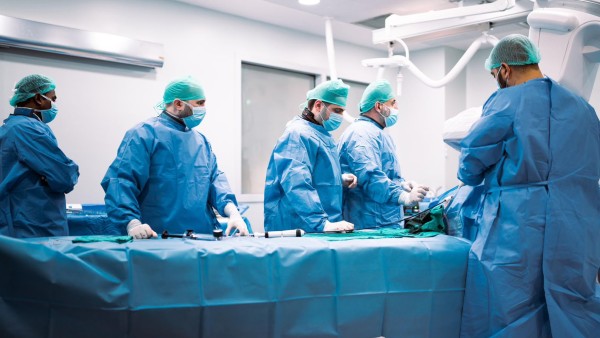
- Patient discharged from the hospital after two days... Heart Valve Program performs over 100 procedures in 18 months
A specialized medical team at Jaber Al-Ahmad Hospital successfully performed the first procedure in the Middle East for transcatheter aortic valve replacement via the carotid artery in the neck ("Transcarotid TAVI"), a significant medical achievement carried out by national experts.
The team included Dr. Ali Sabah and Dr. Mohammed Al-Turki from the structural heart catheterization team, in collaboration with Dr. Ahmed Al-Emir from the vascular surgery team, within the Cardiac Unit team that includes Dr. Ziyad Al-Khudair, Head of the Cardiac Laboratory, and Dr. Fawzia Al-Kandari, Head of the Cardiac Unit.
The procedure was performed on a Kuwaiti citizen in his seventies who suffered from severe aortic stenosis, weakened heart muscle, renal failure, and severe blockages in the arteries of both lower limbs. These conditions precluded valve replacement via the traditional transfemoral approach ("Transfemoral TAVI"), and his overall health status was also unsuitable for open-heart surgery.
The medical team used the carotid artery in the neck as an alternative access route to reach the heart and implant the valve, reflecting precise integration between interventional cardiology and vascular surgery.
The procedure was broadcast live via satellite during the TCT Plus Middle East conference on transcatheter cardiovascular interventions, where it was presented to a distinguished group of experts and specialists in interventional cardiology. This national achievement reflects the advanced level achieved in catheterization and heart valve treatment services in Kuwait.
Transcarotid TAVI is a modern and advanced technique used in selected cases when the femoral arteries are unsuitable for catheter passage. It enables the treatment of patients at high surgical risk through a minimally invasive intervention, without the need for open-heart surgery.
The procedure was successful, the patient’s condition stabilized, and he was discharged from the hospital just two days after the intervention. This highlights the benefits of minimally invasive procedures in accelerating recovery and reducing hospital stay, according to the medical assessment of each case.
This achievement extends the successes of the Heart Valve Treatment Program at Jaber Al-Ahmad Hospital, which launched in September 2024 and has successfully performed more than 100 transcatheter aortic valve replacement procedures over the past 18 months.
The program provides a comprehensive system for assessing and treating patients with structural heart disease through minimally invasive interventions, without the need for open-heart surgery.
