Prince Sultan bin Saad: National Day in Kuwait Has a Different Flavor... And Here the Journey of Unifying the Kingdom Began
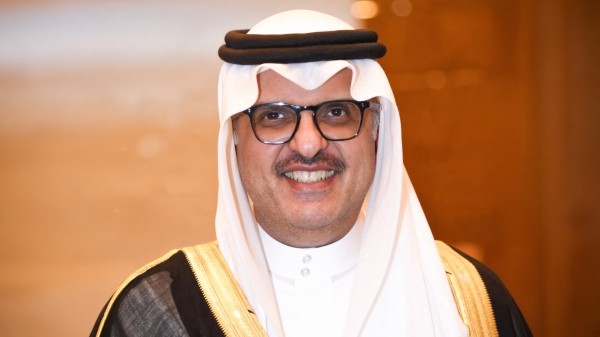
The Saudi Ambassador to Kuwait, Prince Sultan bin Saad, affirmed that Saudi-Kuwaiti relations are exceptional and deeply rooted, noting that the journey of unifying the Kingdom began in Kuwait and that National Day holds a special significance in Kuwait due to this.
Translated by Qiyas from السياسة — Original source
- What unites Saudi Arabia and Kuwait is greater than any framework... and they are bound by ties of religion, customs, and social values.
- The Kingdom’s renaissance is an extension of the journey of unification and nation-building... Building nations requires vision, will, and investment in human capital.
H.E. Prince Sultan bin Saad bin Khalid Al Saud, Dean of the Diplomatic Corps and Ambassador of the Custodian of the Two Holy Mosques to Kuwait, affirmed that Saudi-Kuwaiti relations represent an exceptional model that cannot be reduced to volumes or books. He noted that what unites the two countries and their peoples is greater than what can be confined to a single political, economic, or social framework.
In remarks to Al-Akhbariya Channel on the occasion of the 96th Saudi National Day, the Ambassador stated that this occasion cannot pass without recalling the Founding King and his journey in unifying the homeland, as well as the efforts he made to build a state that today has a presence and influence at both the regional and international levels.
He added that celebrating the National Day is, in essence, a celebration of the Kingdom’s history and achievements, and a remembrance of the renaissance and development achieved, as many dreams and aspirations have turned into tangible realities.
He pointed out that celebrating the Saudi National Day in Kuwait holds a special and distinguished status, saying, “We always say that the journey of unifying the Kingdom of Saudi Arabia started from here, from Kuwait. Therefore, celebrating it in Kuwait has a different flavor.”
He expressed his hope that joy would endure between the Kingdom, Kuwait, and the Gulf countries, saying, “God willing, joy will endure between us and our brothers in Kuwait and in the Gulf countries, and our days will always be celebrations and festivities.”
The Ambassador also touched upon the vision possessed by King Abdulaziz in unifying the Kingdom, affirming that the Founding King had a far-sighted vision and understood that unifying the Kingdom represents the foundation for building a stable state capable of achieving development.
He clarified that the development witnessed by the Kingdom today is an extension of that journey that began with unification, followed by successive stages of construction carried out by the sons of the Founding King, the Kings of the Kingdom, leading to the era of the Custodian of the Two Holy Mosques, King Salman bin Abdulaziz.
He emphasized that the Kingdom’s experience has proven that building nations requires clear vision, will, investment in human capital, and continuity in work. He noted that the Saudi citizen today represents one of the most important fruits of this journey, given the presence and distinction he has achieved in various fields.
He said that the Kingdom continues on the path established by the Founder and followed by his sons, with the aim of continuing to elevate and advance the Saudi citizen and bring the Kingdom to the ranks of major powers.
Speaking about Saudi-Kuwaiti relations, the Ambassador affirmed that they are exceptional relations that cannot be reduced to the framework of traditional diplomatic relations, due to their historical depth and the close ties binding the two countries and their peoples.
He said, “Saudi-Kuwaiti relations are exceptional and cannot be confined to volumes, nor geography books, nor history books, nor natural boundaries can clarify and highlight these relations and distinguish them.”
He added that the relations between the two countries are not diplomatic relations that began at a certain stage, but rather “exceptional historical relations rooted for more than 150 years,” which has made them different and distinct from many traditional relations between states.
He stressed that Saudi-Kuwaiti relations are as steadfast as the foundations upon which they were built, and are capable of overcoming various circumstances and changes, noting that what unites the two countries is greater than what can be limited to a political, economic, or social framework.
Regarding the most prominent commonalities between the Saudi and Kuwaiti peoples, the ambassador stated that there are numerous similarities and ties between the two, adding, “What exists in the Kingdom also exists in Kuwait,” and noting that religion, customs, traditions, and social values are at the forefront of these bonds.
He further emphasized that generosity, chivalry, and noble character also constitute part of the shared values linking the Saudi and Kuwaiti peoples, affirming that these commonalities represent only a small fraction of what the two countries and their peoples share.
On the development underway in the Kingdom under the reign of Custodian of the Two Holy Mosques King Salman bin Abdulaziz and the leadership of His Royal Highness Crown Prince and Prime Minister Mohammed bin Salman, the ambassador affirmed that the significant progress the Kingdom is currently witnessing across various sectors is the result of a cumulative journey that began since the state’s founding, through successive stages of construction and development.
